This remarkable science-history series investigates the blistering pace of human endeavour in space exploration, computing, energy, resources, Earth science and our understanding of the evolution of life itself. Across the last 50 years, humans have set a blistering pace and scientific discovery. We've crossed the boundaries of our solar system, made machines that can learn harnessed the power of the sun and built life from scratch. It's a period like no other in history, where human endeavour is changing everything: this is The Great Acceleration. As we race toward the future, we must examine the journey. In the first episode, Dr Shalin Naik explores the ambitious space shuttle mission that began in the '70s plus the future colonization of Mars. Over the past 50 years, space has become central to everything, from communications to entertainment to climate modelling. And as private enterprise enters space exploration, our understanding of the universe will only continue to expand. We will know if we can survive on other objects - the moon, maybe Mars, maybe even some of the moons of Jupiter and Saturn. Deep space is the last and infinite frontier. That's what we do as human beings. We explore, we learn, we make discoveries, from the moment we're born to the moment we die.
North Koreans cross the border into China illegally every year, some via a modern-day underground railroad to freedom and eventual citizenship in South Korea. VICE visits the most dangerous place in the world: Kashmir's line of control, which partially occupies the Indian state and separates India from Pakistan.
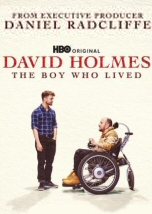
This documentary tells the touching story of David Holmes, Daniel Radcliffe's stunt double in the successful 'Harry Potter' movies, whose work has captivated millions of viewers around the world. The narrative delves into the deep friendship between Radcliffe and Holmes, exploring how it strengthens and evolves following a tragic accident during filming that left Holmes paralyzed. Through an emotional journey of overcoming and resilience, the documentary offers a unique perspective on the challenges and human connection in the world of cinema, inviting viewers to discover a story of friendship and perseverance in adverse times.
The episode, devoted to the planet Mars, begins with scientific and fictional speculation about the Red Planet during the late nineteenth and early twentieth centuries (H. G. Wells' The War of the Worlds, Edgar Rice Burroughs' science fiction books, and Percival Lowell's false vision of canals on Mars). It then moves to Robert Goddard's early experiments in rocket-building, inspired by reading science fiction, and the work by Mars probes, including the Viking, searching for life on Mars. The episode ends with the possibility of the terraforming and colonization of Mars and a Cosmos Update on the relevance of Mars' environment to Earth's and the possibility of a manned mission to Mars.
If you had less than one second to make a life-or-death decision to shoot a man who might be armed with a lethal weapon, what would you do? Would the ethnicity of the man affect your decision? Are you sure? The outcome – whatever your race – will surprise you. Brain imaging studies are showing that negative cultural stereotypes hijack everyone’s subconscious decision-making. But some science says we can overcome bigotry through exposure, self-awareness and flexible social networks… and, most controversially of all, ultra-violent video games!
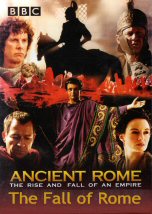
In AD 410, the Goth hordes sacked the city. This event symbolised Rome's collapse. Within 70 years, the western empire - what we think of as Ancient Rome - was abandoned. But it should never have happened at all.











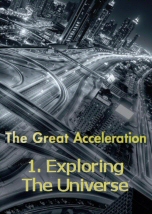










In the first episode, Dr Shalin Naik explores the ambitious space shuttle mission that began in the '70s plus the future colonization of Mars. Over the past 50 years, space has become central to everything, from communications to entertainment to climate modelling. And as private enterprise enters space exploration, our understanding of the universe will only continue to expand. We will know if we can survive on other objects - the moon, maybe Mars, maybe even some of the moons of Jupiter and Saturn. Deep space is the last and infinite frontier. That's what we do as human beings. We explore, we learn, we make discoveries, from the moment we're born to the moment we die.