


Last Watched

Hiding in Colour

   2021    Nature
David Attenborough reveals the extraordinary ways that some animals use colour to hide and disappear into the background. New science reveals how the Bengal tiger in central India uses its orange-black stripes to hide from its colour-blind prey. In Kenya’s Masai Mara, the zebra’s black-and-white pattern confuses predators with an extraordinary effect called motion dazzle. And on the island of Cuba, a small snail uses colourful stripes in a surprising way to hide from its enemies.
Other animals use colour to trick and to deceive. On Australia’s Great Barrier Reef, a blue-striped blenny uses colours to mimic other fish and launch a sudden attack. In the grasslands of Zambia, the chick of a pin-tailed whydah mimics the patterns of its nest mates to ensure that it is not detected as an imposter. And specialist cameras reveal how a tiny crab spider uses bright ultraviolet colours to lure in its victims.
Series: Attenborough Life in Colour

Murder Habit

   2020    Culture
This featured series is a gripping examination of the unsolved crimes of the Golden State Killer who terrorized California in the 1970's and 1980's. Sensitively handled at all turns, I’ll Be Gone in the Dark is different from your standard true crime series. Highly emotional in both a restorative cathartic, but also a genuinely upsetting way.
In the first episode, the writer Michelle McNamara finds a new obsession in the 'East Area Rapist', who terrorized California in the 1970s and '80s, responsible for 50 home-invasion rapes and 12 murders.
Series: I Will Be Gone In The Dark

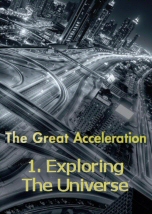
Exploring The Universe

   2020    Science
This remarkable science-history series investigates the blistering pace of human endeavour in space exploration, computing, energy, resources, Earth science and our understanding of the evolution of life itself. Across the last 50 years, humans have set a blistering pace and scientific discovery. We've crossed the boundaries of our solar system, made machines that can learn harnessed the power of the sun and built life from scratch. It's a period like no other in history, where human endeavour is changing everything: this is The Great Acceleration. As we race toward the future, we must examine the journey.
In the first episode, Dr Shalin Naik explores the ambitious space shuttle mission that began in the '70s plus the future colonization of Mars. Over the past 50 years, space has become central to everything, from communications to entertainment to climate modelling. And as private enterprise enters space exploration, our understanding of the universe will only continue to expand. We will know if we can survive on other objects - the moon, maybe Mars, maybe even some of the moons of Jupiter and Saturn. Deep space is the last and infinite frontier. That's what we do as human beings. We explore, we learn, we make discoveries, from the moment we're born to the moment we die.
Series: The Great Acceleration

Stephen Hawking: A Brief History of Mine

   2013    History
This new feature-length biographical film tells the extraordinary and dramatic story of the planet's most famous living scientist, told for the first time in his own words and by those closest to him. Made with unique access to his private life, this is an intimate and moving journey into Stephen Hawking's past and present. Interviewees include Stephen Hawking's sister Mary, his ex-wife Jane, carers and students, as well as colleagues such as Roger Penrose, plus Apollo astronaut Buzz Aldrin, actors Benedict Cumberbatch and Jim Carrey, and Sir Richard Branson This inspirational portrait of an iconic figure relates Hawking's incredible personal journey from boyhood underachiever to scientific genius and multi-million-selling author. And it charts how he overcame being diagnosed with motor neurone disease - and being given just two years to live - to make amazing scientific discoveries and become a symbol of triumph over adversity. Born exactly 300 years after the death of Galileo, Hawking grew up in a family some regarded as eccentric. Always asking questions, he was nicknamed 'Einstein' at school. Hawking blossomed at Oxford, although he only spent an hour a day studying. He noticed that he was becoming clumsy and fell over for no apparent reason. He was diagnosed with motor neurone disease, but nevertheless started a family and embarked on his academic career, finding himself at the heart of a searing scientific debate about the origins of the universe. And as he lost the use of his body, Hawking had to find new ways to think. He went on to write the huge bestseller A Brief History of Time, and the film reveals the high and lows of his resulting fame and fortune.

Conquest and Collapse

   2016    History
The Bronze Age had the first large urban centers, powerful kingdoms and armies, writing, and trade routes across vast areas. What led to the collapse of the city-state entities and the end of the Bronze Age? Possibly a perfect storm of uncontrollable factors that are still being researched.
Series: Bronze Age

David Holmes: The Boy Who Lived

   2023    History
This documentary tells the touching story of David Holmes, Daniel Radcliffe's stunt double in the successful 'Harry Potter' movies, whose work has captivated millions of viewers around the world. The narrative delves into the deep friendship between Radcliffe and Holmes, exploring how it strengthens and evolves following a tragic accident during filming that left Holmes paralyzed.
Through an emotional journey of overcoming and resilience, the documentary offers a unique perspective on the challenges and human connection in the world of cinema, inviting viewers to discover a story of friendship and perseverance in adverse times.
How to Grow a Planet

How to Grow a Planet

2012  Science
Becoming Martian

Becoming Martian

2021  Technology
Unknown

Unknown

2023  Technology
The Hunt

The Hunt

2015  Nature