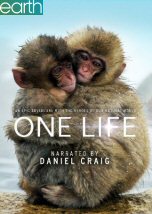
Explore the latest science behind the headlines and the coolest scientific developments that impact our lives. Technology catapults to new heights in 2015, going faster and further than ever before. We have canvassed the world in search of the best and most fascinating science and tech stories of the year for 2015 YEAR IN SCI-TECH". This action-packed hour of fun and intrigue revisits the world’s first glimpse of Pluto and images of water on Mars while exploring what this all could mean for intelligent life in the universe – all while earthling’s inch closer to becoming actual space tourists. Throughout the hour, we revisit the year’s most amazing techological feats and scientific discoveries, including new and elusive animal species discovered deep under the ocean, as well as the hottest tech trends – from hover boards to driverless cars and trucks, and the newest advances in mind-blowing virtual reality.
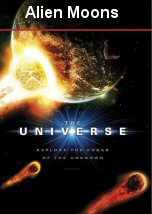
Travel from the inner solar system to the Kuiper Belt and explore the moons surrounding the planets of the solar system. Many of these moons that were once unknown are now on the cutting edge of astronomical study. Some burst with volcanic fury another spews icy geysers and others offer the possibility of alien life. Are these strange worlds simply hostile environments unfit for humans or do other possibilities exist? Cutting-edge computer graphics are used to bring the universe down to earth and to imagine what kind of life forms might evolve in alien atmospheres.
During 1959-1961 both the Americans and Soviets are planning manned space flight, and we see both sides preparing to do so with the development of the Vostok programme (Russia) and Project Mercury (USA). After difficulties and failures on both sides, the Soviets succeed in putting Yuri Gagarin into space first, with the Americans putting Alan Shepard up shortly afterwards.
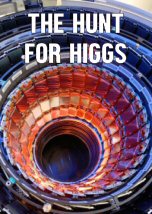
Go with us behind the scenes at CERN to follow one of the most epic and expensive scientific quests of all time: the search for the Higgs particle, believed to give mass to everything in our universe. However, the hunt for Higgs is part of a much grander search for how the universe works. It promises to help answer questions like why we exist and is a vital part of a Grand Unified Theory of nature". At the heart of the pursuit of the elusive particle is the same feature that makes snowflakes beautiful and human faces attractive: the simple and enchanting idea of symmetry. Presenter Jim Al-Khalil
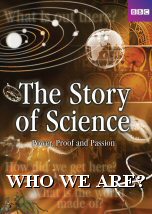
We now know that the brain - the organ that more than any other makes us human - is one of the wonders of the universe, and yet until the 17th century it was barely studied. The twin sciences of brain anatomy and psychology have offered different visions of who we are. Now these sciences are coming together and in the process have revealed some surprising and uncomfortable truths about what really shapes our thoughts, feelings and desires. And the search to understand how our brains work has also revealed that we are all - whether we realise it or not - carrying out science from the moment we are born.