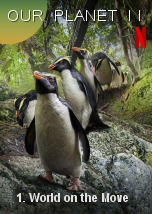
Welcome to the thrilling second season of ‘Our Planet’. Get ready for an astounding journey through breathtaking landscapes and fascinating wildlife. This series, with its captivating cinematography and powerful storytelling, immerses us in Earth's natural beauty and reminds us of the importance of protecting it as we face crucial challenges. Through David Attenborough's masterful narration we will connect with the magnificence of our shared home with other species and be inspired to take action to preserve its splendor. Join us in celebrating the awe-inspiring planet we call home! Be it buffalo, polar bears, humpback whales or albatross chicks, migration is a vital survival strategy for animals to feed, reproduce and find home.
One animal embodies all that is amazing about survival. It has adapted to wildly varying habitats and evolved unique weapons of survival; its greatest asset is its ferocious bite and it is evolutions ultimate survivor, but what species is it? Find out if a new bear species could be about to evolve before our very eyes.
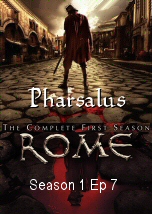
As they prepare their counterattack against Caesar, Pompey's Republicans begin to squabble over both the anticipated spoils and the method of finishing Caesar off. Badly outnumbered, Caesar and Antony make their stand at Pharsalus. As they try to reach Caesar in Greece, the shipwrecked Vorenus and Pullo confront an unexpected dilemma. Back in Rome, Atia again sends Octavia to beg protection from Servilia, who complies readily to encourage her growing friendship with Octavia. Niobe's sister Lyde comes back to see her and comforts her over Vorenus's disappearance.
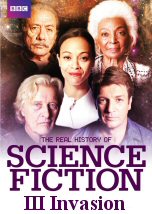
What if aliens landed on Earth? Much of science fiction explores the moment of first contact – what will people do when the aliens land? From H. G. Wells’ pioneering The War of the Worlds to Independence Day, Men in Black, and District 9, Invasion deals with our fears of alien invasions of earth. David Tennant explains the appeal of Doctor Who’s Daleks and Cybermen while John Carpenter and Chris Carter explore the rich appeal of the paranoia fuelled by hidden aliens with The Thing and The X-Files. It also asks, what if the monsters were our own creation? With the aid of rarely seen animation tests, Phil Tippett takes us behind the scenes in the creation of the dinosaurs of Jurassic Park. But not all invasions are hostile. Peter Coyote and Richard Dreyfuss discuss the creation of Spielberg’s spellbinding classics E.T. the Extra-Terrestrial and Close Encounters of the Third Kind. There is more than one kind of invasion.
The Internet is an uncontrollable labyrinth of content and imagery that operates under loose laws and partial anonymity - a new frontier where people can do anything and see anything, whether they should or not. In this lawless landscape, who's in control? The protectors? The abusers? In this episode meet the content moderators who watch the worst of the Internet so you don't have to; a convicted hacker whose punishment was the virtual prison of the unplugged; plus, a blackhat hacker who encrypts and holds computer files hostage.
A single microscopic brain cell cannot think, is not conscious, but if you bring in a few more brain cells, and a few more, and connect them all, at a certain point, the group itself will be able to think and experience emotions and have opinions and a personality and know that it exists. How can such astonishing things be made from such simple ingredients? Well, answering that question means learning not only who we are but, more importantly, how we are. Today, using what neuroscientists know so far, we are going to make a town function like a brain, using people as neurons.









Be it buffalo, polar bears, humpback whales or albatross chicks, migration is a vital survival strategy for animals to feed, reproduce and find home.