Last Watched

The Explorers

   2018    Technology
A look at the probes which explored our Solar System, laying the groundwork for a future spacecraft to search for life on a second Earth. That space craft must communicate, it must navigate, it must have power, it must have propulsion. We will have to give it all the intelligence necessary to make its own decisions. In 'The Explorers' the spacecraft Artemis initiates launch sequence and begins its 4.7 light year journey to Minerva B - an Earth-like exoplanet.
Series: Living Universe
Boko Haram and Unnatural Selection

   2015    Culture
The terrorist group Boko Haram is responsible for thousands of deaths in Nigeria. Now, the government is determined to drive these militants from the country. But is the hunt for insurgents causing as much harm as it's preventing? Former Navy SEAL and new VICE correspondent Kaj Larsen travels to Nigeria to see what this cat-and-mouse game means for the people caught in the middle of the fight. 'Unnatural Selection': For centuries, scientists have been working to change the genetic traits of plants and animals. Now, the new gene-editing method CRISPR has made that process astonishingly simple - so simple it could easily be used on humans. Isobel Yeung reports from Brazil, Scotland, China and the U.S. on the technological advances that could reshape evolution as we know it.

The Persistence of Memory

   1980    Science
The idea of intelligence is explored in the concepts of computers (using bits as their basic units of information), whales (in their songs and their disruptions by human activities), DNA, the human brain (the evolution of the brain stem, frontal lobes, neurons, cerebral hemispheres, and corpus callosum under the Triune Brain Model), and man-made structures for collective intelligence (cities, libraries, books, computers, and satellites). The episode ends with speculation on alien intelligence and the information conveyed on the Voyager Golden Record.
Series: Cosmos

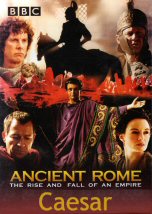
Ancient Rome: Caesar

   2006    History
This programme focuses on the most famous Roman of all - Caesar. Charming, savage, power-crazed, opportunistic and brilliant, he overthrew a 500-year-old Republic and began the age of the emperors.
Series: Ancient Rome

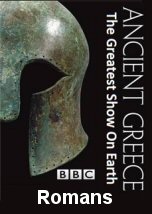
Romans

   2013    History
Dr Michael Scott examines the vital role played by the Romans in the preservation of Greek drama and in the history of theatre. He explores how the Romans absorbed Greek theatre and adapted it to their own, very Roman, ends and looks at how this famous empire provides one of the crucial connections between our modern drama and the great plays of the ancient Greeks.
Series: Ancient Greece

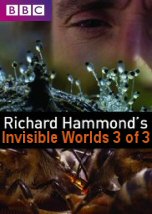
Off the Scale

   2012    Science
The human eye can see extraordinary detail, but the eye of a needle held at arm's length is pretty much at the limit of our vision. Anything smaller is simply invisible, at least to the naked eye. But what if we could see this hidden world all around us in greater detail and magnification than ever before? How different would our familiar surroundings then seem? Richard Hammond explores the astonishing miniature universe all around us, revealing that small is not only beautiful, it can also be very, very powerful. From seeing the microscopic changes to ice crystals that can trigger an avalanche to watching in horror the invisible aftermath of a sneeze on a commuter train and learning how the surface of an ordinary-looking plant hides an astounding secret that will make walking on the moon safer, Richard harnesses cutting-edge technologies to transport the viewer into a spectacular micro realm.
Series: Invisible Worlds
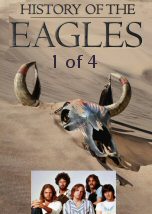
History of the Eagles

History of the Eagles

2013  History
Evolution

Evolution

2004  Science
The Normans

The Normans

2010  History
Leaving Neverland

Leaving Neverland

2019  Culture
Vegan

Vegan

2020  Culture
The Great Acceleration

The Great Acceleration

2020  Technology