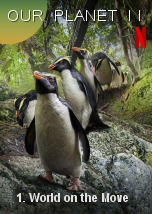
Welcome to the thrilling second season of ‘Our Planet’. Get ready for an astounding journey through breathtaking landscapes and fascinating wildlife. This series, with its captivating cinematography and powerful storytelling, immerses us in Earth's natural beauty and reminds us of the importance of protecting it as we face crucial challenges. Through David Attenborough's masterful narration we will connect with the magnificence of our shared home with other species and be inspired to take action to preserve its splendor. Join us in celebrating the awe-inspiring planet we call home! Be it buffalo, polar bears, humpback whales or albatross chicks, migration is a vital survival strategy for animals to feed, reproduce and find home.
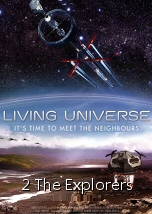
A look at the probes which explored our Solar System, laying the groundwork for a future spacecraft to search for life on a second Earth. That space craft must communicate, it must navigate, it must have power, it must have propulsion. We will have to give it all the intelligence necessary to make its own decisions. In 'The Explorers' the spacecraft Artemis initiates launch sequence and begins its 4.7 light year journey to Minerva B - an Earth-like exoplanet.
The terrorist group Boko Haram is responsible for thousands of deaths in Nigeria. Now, the government is determined to drive these militants from the country. But is the hunt for insurgents causing as much harm as it's preventing? Former Navy SEAL and new VICE correspondent Kaj Larsen travels to Nigeria to see what this cat-and-mouse game means for the people caught in the middle of the fight.
'Unnatural Selection': For centuries, scientists have been working to change the genetic traits of plants and animals. Now, the new gene-editing method CRISPR has made that process astonishingly simple - so simple it could easily be used on humans. Isobel Yeung reports from Brazil, Scotland, China and the U.S. on the technological advances that could reshape evolution as we know it.
The idea of intelligence is explored in the concepts of computers (using bits as their basic units of information), whales (in their songs and their disruptions by human activities), DNA, the human brain (the evolution of the brain stem, frontal lobes, neurons, cerebral hemispheres, and corpus callosum under the Triune Brain Model), and man-made structures for collective intelligence (cities, libraries, books, computers, and satellites). The episode ends with speculation on alien intelligence and the information conveyed on the Voyager Golden Record.
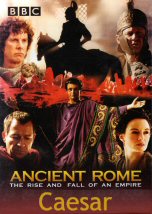
This programme focuses on the most famous Roman of all - Caesar. Charming, savage, power-crazed, opportunistic and brilliant, he overthrew a 500-year-old Republic and began the age of the emperors.
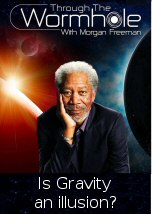
We feel it every moment of our lives but for physicists, gravity is the longest running unsolved mystery of the universe. Why do all objects that have mass pull on one another? Cutting-edge theories are proposing unexpected answers: Gravity could be another force in disguise, a thermodynamic mirage, or even, a shadow of a hidden holographic universe. If so, the force that holds us to the surface of the earth, and holds the earth in orbit around the sun, may be a trick of the mind. We feel it, but it may not be real. Is Gravity an Illusion?






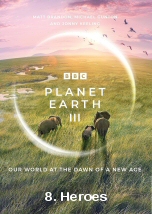



Be it buffalo, polar bears, humpback whales or albatross chicks, migration is a vital survival strategy for animals to feed, reproduce and find home.