




Last Watched

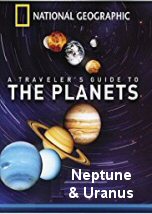
Neptune and Uranus

   2011    Science
Uranus and Neptune: The 'ice giants'. Strap yourselves in for an incredible voyage to the most remote and intriguing planets of all. There has never been a better time to boldly go where no human has gone before to follow in the footsteps of our robot pioneers and visit the planets of the Solar System. Ever wanted to be an astronaut? Imagine heading into the Ice Zone, the frigid, dark realm beyond the orbit of Saturn. So far from the Sun, you wouldn't expect much to be happening here. From orbit, Uranus appears sedate and calm. But why is the planet on its side? And Neptune: The second blue planet, and the last world in our Solar System. But something is driving its wild winds. And what about its Great Dark Spot? this planet just changes its spots. Leopards don't, but Neptune does.
Series: A Traveler Guide to the Planets

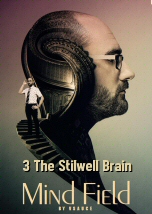
The Stilwell Brain

   2019    Medicine
A single microscopic brain cell cannot think, is not conscious, but if you bring in a few more brain cells, and a few more, and connect them all, at a certain point, the group itself will be able to think and experience emotions and have opinions and a personality and know that it exists. How can such astonishing things be made from such simple ingredients? Well, answering that question means learning not only who we are but, more importantly, how we are.
Today, using what neuroscientists know so far, we are going to make a town function like a brain, using people as neurons.
Series: Mind Field

Boko Haram and Unnatural Selection

   2015    Culture
The terrorist group Boko Haram is responsible for thousands of deaths in Nigeria. Now, the government is determined to drive these militants from the country. But is the hunt for insurgents causing as much harm as it's preventing? Former Navy SEAL and new VICE correspondent Kaj Larsen travels to Nigeria to see what this cat-and-mouse game means for the people caught in the middle of the fight. 'Unnatural Selection': For centuries, scientists have been working to change the genetic traits of plants and animals. Now, the new gene-editing method CRISPR has made that process astonishingly simple - so simple it could easily be used on humans. Isobel Yeung reports from Brazil, Scotland, China and the U.S. on the technological advances that could reshape evolution as we know it.

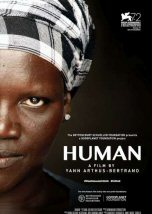
Human (2015)

   2015    Culture
Filmmaker and artist Yann Arthus-Bertrand spent 3 years collecting real-life emotional stories from more than 2,000 women and men in 60 countries. Those emotions, those tears and smiles, those struggles and those laughs are the ones uniting us all. A combination of testimonies and exclusive aerial images, HUMAN is a unique documentary. This sensitive experience is an introspection into whom we are today as a community but also and most importantly as an individual. Through wars, inequalities, discriminations, HUMAN confronts us with the realities and the diversity of our human conditions. Beyond this darker side, testimonies show the empathy and the solidarities which we are capable of. All these contradictions are ours and HUMAN leads us to reflect about the future we wish to give to people and the planet today.

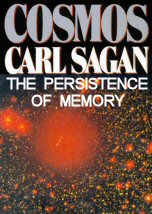
The Persistence of Memory

   1980    Science
The idea of intelligence is explored in the concepts of computers (using bits as their basic units of information), whales (in their songs and their disruptions by human activities), DNA, the human brain (the evolution of the brain stem, frontal lobes, neurons, cerebral hemispheres, and corpus callosum under the Triune Brain Model), and man-made structures for collective intelligence (cities, libraries, books, computers, and satellites). The episode ends with speculation on alien intelligence and the information conveyed on the Voyager Golden Record.
Series: Cosmos