The Great Pyramids of Giza remain one of the enduring wonders of the ancient world. This mesmerizing monument have eluded astronomers and archeologists for centuries. Why and how the ancient pyramids of the pharaohs were built? Were they merely burial tombs, or a cosmic vehicle to the celestial world? What were the motives and methods behind the orientation of the pyramids to face the four cardinal directions with extreme accuracy? The world's renowned Egyptologists, astronomers and engineers join forces to solve some of the long-held mysteries about the pyramids.
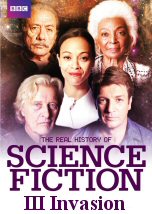
What if aliens landed on Earth? Much of science fiction explores the moment of first contact – what will people do when the aliens land? From H. G. Wells’ pioneering The War of the Worlds to Independence Day, Men in Black, and District 9, Invasion deals with our fears of alien invasions of earth. David Tennant explains the appeal of Doctor Who’s Daleks and Cybermen while John Carpenter and Chris Carter explore the rich appeal of the paranoia fuelled by hidden aliens with The Thing and The X-Files. It also asks, what if the monsters were our own creation? With the aid of rarely seen animation tests, Phil Tippett takes us behind the scenes in the creation of the dinosaurs of Jurassic Park. But not all invasions are hostile. Peter Coyote and Richard Dreyfuss discuss the creation of Spielberg’s spellbinding classics E.T. the Extra-Terrestrial and Close Encounters of the Third Kind. There is more than one kind of invasion.
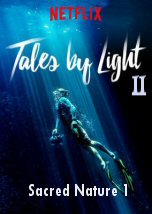
Award winning wildlife photographers Jonathan and Angela Scott have travelled the world, always returning home to Kenya. There they introduced the world to the big cats of the Maasai Mara and now they are part of its fight for survival.
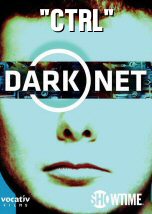
The Internet is an uncontrollable labyrinth of content and imagery that operates under loose laws and partial anonymity - a new frontier where people can do anything and see anything, whether they should or not. In this lawless landscape, who's in control? The protectors? The abusers? In this episode meet the content moderators who watch the worst of the Internet so you don't have to; a convicted hacker whose punishment was the virtual prison of the unplugged; plus, a blackhat hacker who encrypts and holds computer files hostage.
This documentary explores Kate Bush's career and music, from January 1978's Wuthering Heights to her 2011 album 50 Words for Snow, through the testimony of some of her key collaborators and those she has inspired. Contributors include the guitarist who discovered her (Pink Floyd's David Gilmour), the choreographer who taught her to dance (Lindsay Kemp) and the musician who she said 'opened her doors' (Peter Gabriel), as well as her engineer and ex-partner (Del Palmer) and several other collaborators (Elton John, Stephen Fry and Nigel Kennedy). Also exploring their abiding fascination with Kate are fans (John Lydon, Sidi Larbi Cherkaoui) and musicians who have been influenced by her (St Vincent's Annie Clark, Natasha Khan of Bat for Lashes, Tori Amos, Outkast's Big Boi, Guy Garvey and Tricky), as well as writers and comedians who admire her (Jo Brand, Steve Coogan and Neil Gaiman).
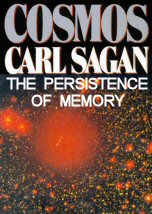
The idea of intelligence is explored in the concepts of computers (using bits as their basic units of information), whales (in their songs and their disruptions by human activities), DNA, the human brain (the evolution of the brain stem, frontal lobes, neurons, cerebral hemispheres, and corpus callosum under the Triune Brain Model), and man-made structures for collective intelligence (cities, libraries, books, computers, and satellites). The episode ends with speculation on alien intelligence and the information conveyed on the Voyager Golden Record.









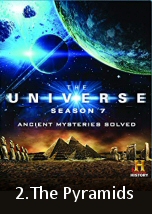





The world's renowned Egyptologists, astronomers and engineers join forces to solve some of the long-held mysteries about the pyramids.