'Speed' investigates mankind's insatiable necessity to move faster and further; for pleasure, for work, to explore, to survive. From ancient outriggers, to modern bullet trains, to the interplanetary travel of tomorrow; This series is a thrilling joyride through the Science and History of travel. 'Across Continents:' Never in the history of humanity have so many of us been mobile, never has our demand for fast, efficient and safe transportation been so high, and never have we relied so heavily on technology to deliver. New innovations propel us into the world of self-driving cars and ultra high-speed trains.
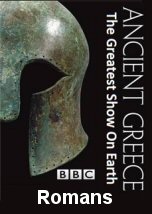
Dr Michael Scott examines the vital role played by the Romans in the preservation of Greek drama and in the history of theatre. He explores how the Romans absorbed Greek theatre and adapted it to their own, very Roman, ends and looks at how this famous empire provides one of the crucial connections between our modern drama and the great plays of the ancient Greeks.
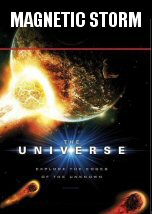
It bursts from the Sun with the power of ten thousand nuclear weapons... and when it hits our planet, it could create the largest disaster in recorded history. A magnetic storm from the Sun could wipe out electrical power, television, radio, military communication, and nearly every piece of electronics in the Northern Hemisphere. It's a "Solar Katrina" -- a planet-wide "hurricane" of magnetic forces that scramble all 21st Century technology, possibly for good. What causes this magnetic superstorm? Why is magnetism so powerful -- and yet so poorly understood? And is there anything we can do to prevent the Magnetic Storm?
Focuses on the fierce rivalry that took place in the laboratories in Britain, Holland, France and Poland as they sought the ultimate extreme of cold. The program will follow the extraordinary discoveries of superconductivity and superfluidity and the attempt to produce a new form of matter that Albert Einstein predicted would exist within a few billionths of degrees above absolute zero.
One of Britain's most celebrated artists, Turner showed exceptional artistic talent from an early age and entered the Royal Academy aged fourteen. His English landscapes made his name but there was a darker side to his paintings that was difficult for the critics to swallow, both in the increasingly informal use of paint and the subject matter that was critical of the romanticised vision of Britain in the late nineteenth century.
Earth's surface is covered in weird and wonderful patterns. The Australian outback is covered in pale spots, the work of wombats; a clearing in the endless green canopy of the Congo rainforest has been created by an incredible elephant gathering; and the twists and turns of the Amazon make a home for rehabilitated manatees. This is our home, as we've never seen it before.











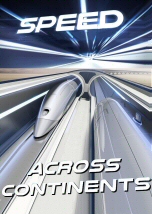



'Across Continents:' Never in the history of humanity have so many of us been mobile, never has our demand for fast, efficient and safe transportation been so high, and never have we relied so heavily on technology to deliver. New innovations propel us into the world of self-driving cars and ultra high-speed trains.