






Last Watched

How Did We Get... Here

   2011    Science
Everywhere we look in the most hospitable of environments and in the most extreme we find life. On Earth, life exists everywhere we look. Yet we have only ever found life on our planet. How did the stuff of stars come together to create life as we know it? What do we really mean by 'life'? And will unlocking this mystery help us find life elsewhere?
Series: Through the Wormhole

Why Islamic State expands so quickly

   2015    Culture
The self-proclaimed 'Islamic State' is a jihadi militia active in the north and east of Syria, and in the west of Iraq, which has shocked the world with its cinematic staging of horrific acts of violence and its unexpected advances towards statehood. But why could IS expand so rapidly?

Comet of the Century

   2013    Science
Comet ISON can well be the brightest and most spectacular comet for a generation. It appeared above the eastern horizon from December 2013 as a glorious streak across the sky. ISON has been travelling towards the sun for ten thousand years and will make only one orbit through its corona before disappearing off into the outer solar system.
But as well as providing a great spectacle, ISON's tail of vaporised gas and water, hundreds of millions of kilometres long, will give insights into some of the greatest mysteries of science; it will help explain the origins of the solar system, whether earth's water was delivered on comets and even whether we are alone in the universe.

Survival

   2018    Science
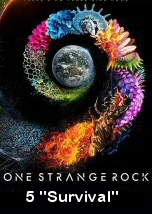
Our strange rock itself can also be lethal. We tend to think of Earth as our life support but it's not there to support us at all. It's a place that's violent, that's beautiful, that's crazy, that's intense. Mother Nature is a serial killer. We wouldn't be here without mass suicide and events so devastating it makes the extinction of the dinosaurs looks like a tea party. There have been 5 mass extinctions on the planet and 99.9 percent of all species that have ever lived are gone.
Explore the story of how life on Earth has evolved, becoming lethal for life to thrive.
Series: One Strange Rock

Expanding Universe

   2013    Science
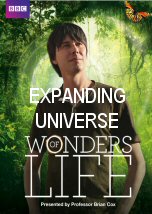
Brian travels across the US and encounters some astonishing creatures that reveal how the senses evolved. It is a story that takes him through life's journey, from single-celled organisms to sentient beings.
Series: Wonders of Life

Mysteries of the Moon

   2007    Science
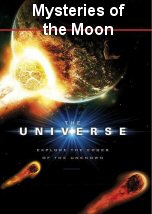
For thousands of years, mankind has found comfort in its presence. It's been a lantern for nighttime travellers, a timekeeper for farmers and a location finder for sailors at sea. For some cultures, it's even been a god. It's the only cosmic body ever visited by human beings. From afar, the Moon's luminance has captivated us since the beginning of time. And a closer look at the beacon in the dark sky reveals an ever-present source of myth, intrigue, controversy and unsolved mysteries. The field of science may cast an empirical light on some things about the Universe, but lunar experts are the first to admit they don't have all the answers when it comes to our Moon. This episode explores the theories behind Lunar Transient Phenomena that have left scientists stumped for centuries; takes to the Canadian waters to see how the Moon effects our planet through tides; and dusts off some age-old myths and weighs arguments that without our Moon, humanity may not even exist.
Series: The Universe