



Last Watched

"Bee"  Sort by

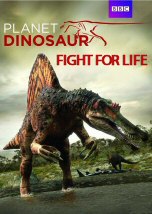
Fight for Life

   2011    Science
This episode focuses on the Jurassic period, a time when the first giant killers stalked the Earth and lurked in the seas; a time when the slightest advantage meant the difference between life and death. In North America the iconic allosaurus, an ambush hunter with a lethal bite, dominated. Not even the heavily-armoured stegosaurus was safe from this killer, and incredible evidence reveals a glimpse of a vicious battle between these two giants. Life in Jurassic oceans was no easier; in 2008, a fossil was dug out of a frozen island high in the Arctic. It was a colossal marine reptile, twice as big as most ocean predators, at 15 metres long and weighing about 45 tonnes. This was Predator X. Its skull alone was nearly twice the size of a tyrannosaurus rex's, and its bite force unmatched by anything in the Jurassic seas. The balance of power between predator and prey is a fine one, as prey continually evolves different ways to avoid predators. But for the most successful and enduring predators, the battle to survive has always been tipped in their favour
Series: Planet Dinosaur
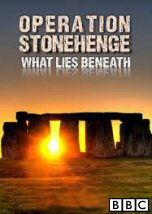
Operation Stonehenge

   2017    History
Stonehenge is an icon of prehistoric British culture, an enigma that has seduced archaeologists and tourists for centuries. Why is it here? What is its significance? And which forces inspired its creators? Now a group of international archaeologists led by the University of Birmingham and the Ludwig Boltzman Institute in Vienna believe that a new state-of-the-art approach is the key to unlocking Stonehenge's secrets. For four years the team have surveyed and mapped every monument, both visible and invisible, across ten square kilometres of the sacred landscape to create the most complete digital picture of Stonehenge and the surrounding area over millennia. Known monuments have yielded more data than ever before, revealing hidden structures within, and new finds are revolutionising the very timeline of Stonehenge. The film takes the viewer on a prehistoric journey from 8000 BC to 2500 BC as the scientists uncover the very origins of Stonehenge, learning why this landscape is sacred, preserved and has been revered by following generations. Evidence of war and conflict, as well as the cultivation of ideas and industry, is explored to reveal complex communities with international trade links as far-reaching as Spain and central Europe.

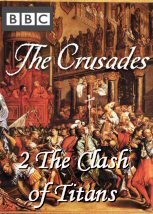
The Clash of Titans

   2012    History
The most famous – and perhaps most misunderstood – episodes in the epic history of the Holy Wars that are known to history as The Crusades – the clash between Richard the Lionheart and Saladin. In July 1192, Richard the Lionheart stood poised for a strike on Jerusalem, while Saladin – mighty sultan of Islam – readied his troops inside the city, preparing for the inevitable attack. During a year-long campaign across Palestine, these two legendary leaders had fought each other to a stand-still. Thousands had perished, appalling atrocities had been perpetrated on both sides. And now they faced each other in a battle for their sacred objective.
Series: The Crusades

Conversations with Dolphins I

   2016    Science
Do dolphins think the way we do or are their brains wired in a very different way from ours? Will we communicate with them one day? Dolphins have been a source of curiosity to humans and have appeared in our stories and myths for thousands of years. What is the link between our two species? Why do we seem to be so interested and curious about each other?
Series: Conversations with Dolphins

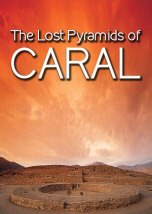
The Lost Pyramids of Caral

   2002    History
The magnificent ancient city of pyramids at Caral in Peru is a thousand years older than the earliest known civilisation in the Americas and, at 2,627 BC, is as old as the pyramids of Egypt. Many now believe it is the fabled missing link of archaeology - a 'mother city'. If so, then these extraordinary findings could finally answer one of the great questions of archaeology: why did humans become civilised?" For over a century, archaeologists have been searching for what they call a mother city. Civilisation began in only six areas of the world: Egypt, Mesopotamia, India, China, Peru and Central America. In each of these regions people moved from small family units to build cities of thousands of people. They crossed the historic divide, one of the great moments in human history. Why? To find the answer archaeologists needed to find a mother city - the first stage of city-building. Caral, is so much older than anything else in South America that it is a clear candidate to be the mother city. It also is in pristine condition. Nothing has been built on it at all. Instead laid out before the world is an elaborate complex of pyramids, temples, an amphitheatre and ordinary houses. Scientists developed a number of theories. Some said it was because of the development of trade, others that it was irrigation. Some even today believe it was all because of aliens. Gradually an uneasy consensus emerged. The key force common to all civilisations was warfare. Crucially, there is not the faintest trace of warfare at Caral; no battlements, no weapons, no mutilated bodies. Instead, Ruth's findings suggest it was a gentle society, built on commerce and pleasure. In one of the pyramids they uncovered beautiful flutes made from condor and pelican bones. They have also found evidence of a culture that took drugs and perhaps aphrodisiacs. Most stunning of all, they have found the remains of a baby, lovingly wrapped and buried with a precious necklace made of stone beads.

Science Britannica: Frankenstein Monsters

   2013    Culture
Professor Brian Cox grapples with science's darker side, asking why, when science has done so much for us, it often gets such a bad press. Starting with the original Frankenstein - the grisly 19th century tale of George Foster's hanging and subsequent 'electrocution', Brian confronts the idea that science can go 'too far'. From the nuclear bomb to genetic modification, British science has always been at the cutting edge of discovery, but are British scientists feckless meddlers, or misunderstood visionaries whose gifts to humanity are corrupted by the unscrupulous?
Conquistadors

Conquistadors

2002  History
Life

Life

2009  Nature
Capitalism A Love Story

Capitalism A Love Story

2009  Culture
Rotten

Rotten

2018  Nature
Chemistry

Chemistry

2010  Science
The Germanic Tribes

The Germanic Tribes

2007  History