The series 'All or Nothing: Arsenal' shows the behind the curtain during a crucial season at one of the world's biggest football clubs, as Arsenal focus their efforts on challenging for domestic success and returning to elite European competition. In the first episode, it's the start of a pivotal season for Arsenal Football Club and pressure is mounting on manager Mikel Arteta, to get the club back into the top 4 in the Premier League. Despite a string of new signings over the summer, the team suffer three defeats in a row, leaving them bottom of the table. Expectations are then high as the squad face Norwich City at the Emirates.
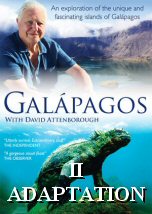
Once life arrived in the Galapagos, it exploded into unique and spectacular forms. David Attenborough investigates the driving forces behind such evolutionary innovations. We learn that life must be able to adapt quickly in these ever-changing volcanic landscapes. It has resulted in species found nowhere else in the world, such as giant whale sharks and marine iguanas that can spit sea-salt from their noses, dandelion seeds that grow into tree-sized plants and spiders that can blend perfectly into the darkness. Adaptation has been the key to survival in these islands so far, but the story of life in the Galapagos doesn’t end here. The catalyst that triggers these explosions of life remains in place.
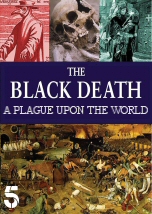
In an enthralling documentary, Dan Snow and archaeologist Raksha Dave delve into the catastrophic impact of the Black Death on Britain 700 years ago, a pandemic that extinguished around half of the population, or three million people. The duo embarks on a journey to trace the origins and merciless spread of the plague, starting from its arrival on Britain's South coast in June 1348, through the bustling trade routes that brought the disease to Melcombe Regis, Dorset. Their investigation takes them to various hotspots of the outbreak, including the Old Operating Theatre in London and Wildwood Animal Sanctuary in Kent, where they explore the role of rats in dispersing the bubonic plague. Through dramatic reconstructions and visits to places like Nottingham University's biomedical laboratories, they uncover the rapid spread and deadly impact of the plague, offering a month-by-month account of how it ravaged the country, decimating cities, towns, and villages alike. The documentary not only showcases the horrific symptoms and desperate attempts at cures through brutal medical practices of the time but also leverages cutting-edge research to explain why the Black Death remains the deadliest pandemic in history. The personal stories of victims, from princes to paupers, are brought to light, revealing the indiscriminate nature of the disease. Dan's visit to Canterbury Cathedral and Raksha's investigation into the recent discovery of mass graves beneath a tranquil London square underline the widespread desperation and devastation. Their journey through the history of the Black Death, culminating in the discovery of its indiscriminate toll and the unveiling of mass graves in London, not only sheds light on the darkest chapters of British history but also ignites a profound understanding of the tragedy, making a compelling case for why this documentary is a must-watch for anyone interested in the profound impacts of pandemics on human society.
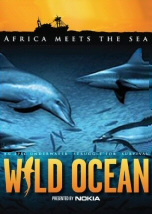
Each year an unbelievable feeding frenzy takes place in the oceans of South Africa as billions of sardines migrate up the KwaZulu-Natal Coast. Wild Ocean captures spectacular breaching whales, feeding sharks, diving gannets, and massive bait balls inside and up close on the screen. The migration has provided an annual food source for both life in the sea and the people living along the African shores for countless generations. The film demonstrates how business, government, and the local people have joined forces to protect this invaluable ecological resource. The film will delve audiences into an epic underwater struggle for survival and reveal the economic and cultural impact the migration has on the coastal communities. Wild Ocean is an explosive, symphonic documentary film about man and nature which captures one of natures greatest migration spectacles through the magic of IMAX.
We offer the complete second series of “Ancient Apocalypse” in a single video. In this series, journalist Graham Hancock travels to the Americas to search for evidence supporting his hypothesis: that an advanced civilization was lost to history during the cataclysms that marked the apocalyptic end of the last Ice Age, between 12,800 and 11,600 years ago. Each episode investigates new discoveries being made in the American hemisphere, which until recently has been largely under-explored by archaeologists interested in humanity’s origins. Graham reveals new findings and speculates about how those findings might suggest the existence of a globe-traveling advanced civilization that left traces of itself in ancient cultures. In episode one, evidence from New Mexico’s White Sands desert confirms the presence of people in the Americas long before it was possible to migrate across the Bering Straits that formed a land bridge during the lowered sea-levels of the Ice Age. The series takes us to multiple locations in the US, Mexico, Brazil, Peru and Easter Island to investigate when people first arrived in the “New World” and how they made the journey. The findings give Graham reason to question the accepted timeline of human history. During his journey, Graham interviews highly regarded archaeologists and historians as well as indigenous elders, who share their unique knowledge of the sites and their oral histories. Hollywood actor, Keanu Reeves, also joins Graham across the series, discussing, among other things, his insights into storytelling as an act of preserving culture. Experts in the series include American archaeologist Dr. Chris Davis, Brazilian palaeontologist Dr. Alceu Ranzi, and archaeo-botanist Dr. Sonia Cardinali of Rapa Nui, Easter Island, among others.
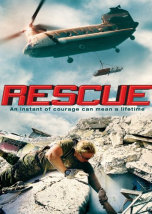
The film captures the dynamics and drama of disaster response, giving the audience an insiders view of a truly remarkable force for good in a world that is increasingly in need of it. From the individual civilian at risk for their life adrift at sea to a massive natural disaster threatening thousands of lives, there is a mechanism and resources in place to help save lives. Oddly, the instrument of hostility, the military, is even more often the instrument for saving civilian lives on both a smaller and larger scale. Disaster Response commands are in place to deploy appropriate resources to trouble spots at a moment's notice, often requiring split second decisions with many lives at stake.







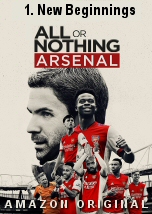







In the first episode, it's the start of a pivotal season for Arsenal Football Club and pressure is mounting on manager Mikel Arteta, to get the club back into the top 4 in the Premier League. Despite a string of new signings over the summer, the team suffer three defeats in a row, leaving them bottom of the table. Expectations are then high as the squad face Norwich City at the Emirates.