Magic mushrooms, long considered sacred by the Indigenous Mazatec in Mexico, become the subject of scientific studies measuring the intense effects of its Psilocybin and its potential therapeutic use. In the second episode, we are introduced to Ben, who’s battled with crippling Obsessive-Compulsive Disorder (OCD) his entire life. When he had his firstborn, Ben’s life became full of panic attacks regarding his son’s safety, and he knew something had to change. Ben signed up for a psilocybin-assisted therapy clinical trial which was testing whether the psychedelic could help people with severe OCD. In the session under the influence of psilocybin, Ben felt decomposed and eventually grew into a tree. While living as a tree, he saw his human self, playing with his child. Though this sounds scary, from Ben’s perspective, it was beautiful. He was one with the universe, seeing himself in the ultimate third-person perspective. Finally, he saw how it could be different if he didn’t let his OCD control him. And several months out, all the symptoms disappeared. Ben’s story is one of many told in this series, which gives hope that help is right around the corner for the millions who suffer —often in silence— with debilitating mental disorders. But Michael Pollan’s work is showcasing the success stories. Often, even in the most successful trials, psychedelic-assisted therapy only helps up to a third of people enter remission. More frequently, patients are helped —sometimes substantially— but they still suffer with their illnesses and some people aren’t helped at all.
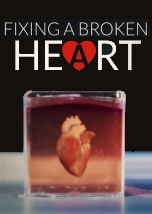
Heart disease is the number one cause of deaths worldwide, killing more than eight million people each year. Cardiac infarction, more commonly known as a heart attack, can happen without warning, killing heart muscle cells immediately. Even if the patient recovers, the damage to their heart may not. But there are researchers frantically working to change that. Meet the people inventing the future of cardiac health, from new ways of imaging the body, to the possibility of 3D printing a functioning heart.
Water plants create some of the most beautiful, bizarre and important habitats on earth. To hold on in torrents, plants use a kind of superglue. Some are armed with vicious weapons to fight titanic battles for space. Others form perfect spheres and escape from animal enemies by rolling. Where nutrients are washed away, plants turn into hunters of animals, laying traps and even counting to ensure their success. In this episode we explore those watery worlds with David Attenborough, from Croatia to Brazil, from Colombia to Thailand, the brilliantly coloured flowers smother lakes, and in one magical river in Brazil, the water bubbles like champagne as plants create the atmosphere itself.
Nancy Silverton describes her life path involving both Los Angeles and Italy, her family and her obsession with bread. She was born in Sherman Oaks, CA in a family where going out to eat was considered a special treat. But when she entered college and found herself 'very attracted by a handsome man' who worked in a kitchen, she landed herself a job and a new passion. These details, which all lead up to her stint at Wolfgang Puck’s celebrated LA restaurant Spago in 1982, are intercut with present-day scenes of Silverton working at Osteria Mozza.
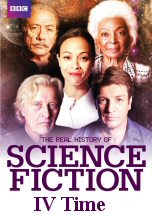
What if we could travel not just through space, but through time itself? If you could travel through time, would you change the past or the future? What if you found it couldn’t be changed? What price does the time traveller -- and the people they are closest to -- pay? This is a journey from H. G. Wells' The Time Machine through ideas like The Grandfather Paradox and The Butterfly Effect to the professional time traveller that is the ever popular Doctor Who. Steven Moffat, David Tennant, Karen Gillan, and Neil Gaiman offer a unique perspective on the Doctor. Edward James Olmos reveals the hidden meaning of the language he created for the vision of the future that is Blade Runner. Bob Gale and Christopher Lloyd take us behind the scenes of Back to the Future, while Ed Solomon describes the joy of solving a time travel conundrum for Bill & Ted’s Excellent Adventure. But what would be the physical and emotional cost to the time traveller? Audrey Niffenegger explains what inspired her novel The Time Traveller’s Wife. And what if someone from the future tried to travel back in time to warn us? Would we believe them? From the apocalyptic tones of 12 Monkeys to the drama of Quantum Leap and the comedy of Groundhog Day, time travel is a subject that has been irresistible to the creators of every type of science fiction.
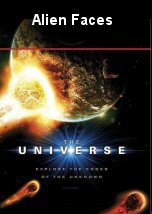
They soar through the heavens, fly through the oceans and glide along land. But these are not creatures found on a wildlife safari. These are life forms from another planet. Armed with scientific fact and a little imagination, experts come together to take you on an unprecedented journey to the edges of our imagination.



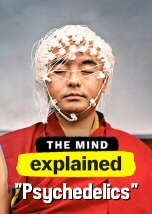








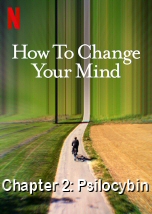



In the second episode, we are introduced to Ben, who’s battled with crippling Obsessive-Compulsive Disorder (OCD) his entire life. When he had his firstborn, Ben’s life became full of panic attacks regarding his son’s safety, and he knew something had to change. Ben signed up for a psilocybin-assisted therapy clinical trial which was testing whether the psychedelic could help people with severe OCD. In the session under the influence of psilocybin, Ben felt decomposed and eventually grew into a tree. While living as a tree, he saw his human self, playing with his child. Though this sounds scary, from Ben’s perspective, it was beautiful. He was one with the universe, seeing himself in the ultimate third-person perspective. Finally, he saw how it could be different if he didn’t let his OCD control him. And several months out, all the symptoms disappeared.
Ben’s story is one of many told in this series, which gives hope that help is right around the corner for the millions who suffer —often in silence— with debilitating mental disorders. But Michael Pollan’s work is showcasing the success stories. Often, even in the most successful trials, psychedelic-assisted therapy only helps up to a third of people enter remission. More frequently, patients are helped —sometimes substantially— but they still suffer with their illnesses and some people aren’t helped at all.