






Last Watched

Weather

   2021    Nature
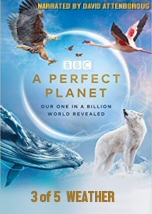
Weather controls the distribution of freshwater on Earth. David Attenborough narrates how this uneven distribution has given rise to an incredible diversity of species and habits, from the driest desert to the lushest tropical rainforest. Featuring a colony of ants banding together into a raft every time its home in the Amazon floods, a rain frog that manages to eke out an existence in one of the world's driest habitats on Earth, and the last wild camels that survive the Gobi Desert's bitter winters by eating snow that blows in from Siberia.
Series: A Perfect Planet
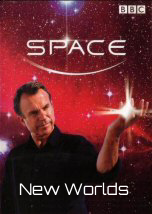
New Worlds

   2001    Nature
Sam Neill explores humanity's long-term future - a future where we make new homes for ourselves on other worlds as we flee from the slow but inevitable death of our sun.
Series: Space

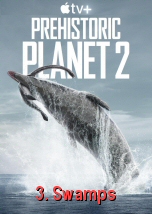
Swamps

   2023    Science
Pterosaur hatchlings take flight to leave their island sanctuary, but are targeted by several Shamosuchus. Several Austroraptor hunt garfish and contend for the best fishing spots. A male Beelzebufo attempts to attract a mate, but his endeavor is interrupted by a herd of Rapetosaurus. A male Pachycephalosaurus must put an upstart youngster in his place. Two Tyrannosaurus brothers hunt Edmontosaurus under the cover of darkness.
Series: Prehistoric Planet II

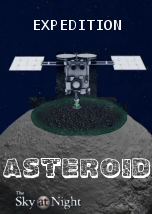
Expedition Asteroid

   2018    Science
A look at two missions attempting one of the most difficult feats of space exploration - to collect a rock from another world. The film checks in on the US and Japanese attempts to bring a piece of an asteroid back to Earth. The missions have taken decades of planning, but the results will be worth it. We find out how studying these space rocks can teach us about the origins of our solar system and may one day help save Earth from a catastrophic collision.
Series: The Sky at Night

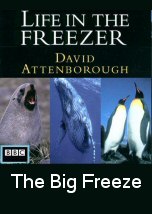
The Big Freeze

   1993    Nature
As almost all animal inhabitants of Antarctica are forced to migrate north, the sea underneath the frozen ice still provides a home to many specially adapted fish whose cells are protected from freezing through an 'antifreeze' liquid. Many of them feed on the faeces of other animals. The most notable larger animal that does not migrate north is perhaps the Weddell Seal, which can be found as close as 1300 kilometres to the pole. Groups of seals tear holes into the ice to dive for food and come up to breathe. The females come back to the ice to give birth. This episode also describes primitive plant life such as lichen, which can still be found on the continent in winter, even in the extremely dry and permanently frozen valleys conditions under which dead animals can lie frozen for many centuries without decomposing. It details the life of the Emperor Penguin, 'the only birds to lay their eggs directly on ice'. While other animals retreat, Emperors migrate not just to the ice, but into the Antarctic continent. The females lay eggs which are incubated by the males under the harshest conditions on Earth (huddling closely together for warmth), while the females return to the sea.
Series: Life in the Freezer

About your Father

       History
With the defeat of the Egyptian fleet at Actium, Mark Antony and Cleopatra retreat to their palace and await their fate. Believing that Cleopatra has taken her life, Mark Antony decides follow her into the afterlife. She has other plans however and is quite prepared to negotiate with Octavian if there is any possibility her life and those of her children will be spared. Cleopatra asks Vorenus to take her son Caesarian to safety and Octavian sends Pullo after them. The old friends are soon together again.
Series: Rome Second Season