








Last Watched

Streetlife

   2012    History
In this programme, Mary descends into the city streets to discover the dirt, crime, sex and slum conditions in the world's first high-rise city. This Rome is not the marble Rome we know, but a vast, messy metropolis with little urban planning, where most Romans lived in high-rise apartment blocks with little space, light, or even sanitation. Forced outdoors into the city streets, she reveals where they went to hang out, get drunk, have sex and get clean. She looks at the Forum as a place of gamblers, dentists and thieves, and she explores the lustiness of Roman bar life and jokes. Finally, exploring law and order from the bottom up, Mary examines how this city really worked. She meets Ancarenus Nothus, an apartment dweller who lived in fear of the rent collector; Notorious Primus, who wrote about his three great pleasures in life - baths, wine and sex; and Unlucky Doris, a seven-year-old girl killed in one of Rome's many fires.
Series: Meet the Romans
The Coldest War

   2014    Culture
'The Coldest War': With the polar ice caps shrinking due to global warming, new trade routes are being exposed, along with billions of dollars' worth of natural-resource reserves. The five nations bordering the Arctic are readying themselves to fight for it. The problem is that there's one non-NATO country that already considers itself rightful owner of the region: Russia. With Vladimir Putin's recent military annexation of Crimea, there's a definite possibility its aggressions will boil over, returning the international community to precarious Cold War footing. We will head north to witness NATO forces participating in the largest polar military exercise in history. 'Heroin Warfare': Since the U.S. occupation of Afghanistan, heroin production in the region has skyrocketed, making the country the number-one producer by a large margin. Though Iran, Afghanistan's neighbor, is an ultraconservative country, Afghan heroin flowing across the border has actually caused Iran to have the worst heroin use problem in the world. Suroosh Alvi gets a rare look inside Iran to meet the suffering heroin addicts, and see how the country is coping with the illegal drug trade.
Series: Vice

Secrets of the Sun

   2021    Science
The Sun is a endless churning cauldron of nuclear reactions and our planet is at its mercy. Revealing its inner workings was once mission impossible, but not any more. We've recruited a fleet of spacecraft that monitor the Sun 24 hours a day, under close surveillance. We just might have what it takes to defend our planet.
Series: How the Universe Works Series 9

The Relic that Sees the Future

   2021    History
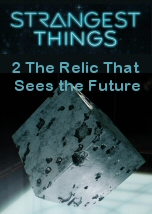
A bizarre 3,000 year-old gold relic crafted with intricately designed cryptic patterns is believed to form a highly complex celestial code; using advanced imaging technology, experts speculate that it could be an ancient device for predicting the future.
Professor Timothy Koeth at Maryland University received a package containing a curiously heavy two-inch black cube. It comes with a message: "Taken from Germany from the nuclear reactor that Hitler tried to build."
Series: Strangest Things

Moral Licensing

   2019    Medicine
Moral psychology isn't always an easy thing to study. Experiments that actually puts people in what feels like a real scenario may get realistic results, but researchers must always balance the benefits of what we could learn with the safety and well-being of the people they study. Often what we learn from moral psychology experiments doesn't make humans look good.
We are imperfect creatures. But the more we learn about why and how we make the moral choices that we do, the better we'll be able to tackle difficult questions in the future.
Series: Mind Field

Mars: the New Evidence

   2010    Science
In the last few years, the Red Planet has yielded up many new clues that life may have once existed there...and may even exist there today. There is now have proof that water once flowed on the surface, that Mars once had lakes, and that the frozen poles are mostly water, not carbon dioxide as previously thought. Mars has snow--an aurora--and lightning generated by dust storms. Most intriguing of all are the seasonal plumes of methane that just may point to bacteria living below the surface.
Series: The Universe