












Last Watched

Roman Engineering

   2016    History
Millions of tourists photograph the ancient monuments of Rome every year. But is there more to them than people guess? There's new evidence that these ruins were once machines, designed by Rome's emperors to connect their power with the sun. Did Roman emperors harness the power of the universe to awe and terrify the people of Rome? We uncover the last, great mysteries of the ancient world's greatest empire.
Series: The Universe Season 8
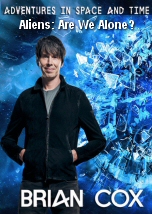
Aliens: Are We Alone

   2021    Science
Brian Cox looks at our attempts to answer one of the most profound questions we can ask – are we alone in the universe? With scientists sending space probes to the furthest reaches of our solar system and beyond, the scientific search for alien life has begun. Inspired by a childhood love of science fiction, Brian still hopes to hear from ET. In this film, he explains why this search deserves to be taken seriously, and he explores the chances of it happening.
Series: Brian Cox Adventures in Space and Time

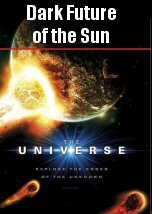
Dark Future of the Sun

   2010    Science
Our Sun has served Earth well for almost five billion years. It's bathed us with heat and energy. But like humans, our home star is mortal. In five billion years, it will stop nurturing its planetary offspring. The aging star will bloat out beyond the orbit of our planet incinerating all living things--including humans if we're still around.
Series: The Universe

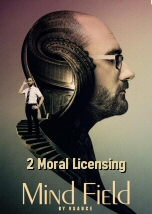
Moral Licensing

   2019    Medicine
Moral psychology isn't always an easy thing to study. Experiments that actually puts people in what feels like a real scenario may get realistic results, but researchers must always balance the benefits of what we could learn with the safety and well-being of the people they study. Often what we learn from moral psychology experiments doesn't make humans look good.
We are imperfect creatures. But the more we learn about why and how we make the moral choices that we do, the better we'll be able to tackle difficult questions in the future.
Series: Mind Field

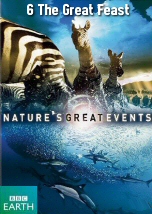
The Great Feast

   2009    Nature
Every summer in the seas off Alaska humpback whales, sea lions and killer whales depend on an explosion of plant life, the plankton bloom. It transforms these seas into the richest on Earth. But will these animals survive to enjoy the great feast? The summer sun sparks the growth of phytoplankton, microscopic floating plants which can bloom in such vast numbers that they eclipse even the Amazon rainforest in sheer abundance of plant life. Remarkably, it is these minute plants that are the basis of all life here. But both whales and sea lions have obstacles to overcome before they can enjoy the feast. Humpback whales migrate 3,000 miles from Hawaii, and during their 3 month voyage lose a third of their body weight. In a heart-rending scene a mother sea lion loses her pup in a violent summer storm, while another dramatic sequence shows a group of killer whales working together to kill a huge male sea lion.
In late summer the plankton bloom is at its height. Vast shoals of herring gather to feed on it, diving birds round the fish up into a bait ball and then a humpback whale roars in to scoop up the entire ball of herring in one huge mouthful. When a dozen whales work together they employ the ultimate method of co-operative fishing - bubble net feeding. One whale blows a ring of bubbles to engulf the fish and then they charge in as one. Filmed from the surface, underwater and, for the first time, from the air, we reveal how these giant hunters can catch a tonne of fish every day.
Series: Nature Great Events

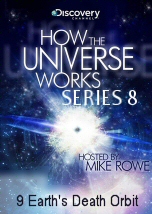
Earth Death Orbit

   2019    Science
We're unlocking the secrets of our planet's voyage and discovering that earth's journey affects us all. The Earth is extremely dynamic. It is spinning on its axis, it's whirling about the sun and it's corkscrewing throughout the this galaxy. And there is the fact than Andromeda and the Milky Way are currently 2.5 million light-years apart, but they're hurtling towards each other at over 250,000 miles an hour. A collision is inevitable. As stars, dust, and gas swirl around each other, gravitational interactions could slingshot our solar system out into intergalactic space.
Series: How the Universe Works Series 8