The Sundarbans mangrove forest, in Bangladesh near the Indian border, is a tidal jungle where Ganges and Brahmaputra enter the Indian Ocean. Its has some 400 Bengal tigers - the largest population in the world, and the only to be hardly scared of men. The downside is tigers kill up the 50 Bangladeshis a year, even from neighbouring villages, so keeping them inside the reserve is key to long-term survival. A recent project tries to train local mongrels, not pets but fiercely self-reliant dogs, to spot and even scare off tigers from villages. An individual tiger can turn into a man-eater in order to survive - this process may occur due to an injury or old age (and so cannot hunt agile prey) or even accidentally tasting human flesh.
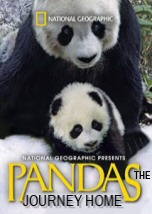
Pandas! Cute, lovable, and iconic...see them as never before on the giant screen in this film. Thanks to the unprecedented access granted to the filmmakers of Pandas, you will go on a truly unique adventure with these amazing creatures. You'll experience their fascinating behavior as you chuckle at their hijinks. Pandas are as much fun as they are cute, and they love getting the best of humans! You will also follow one panda in particular, Tau Tau, as he is released into the bamboo forest to begin a new life living wild. Prepare to lose your hearts!
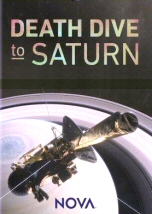
Almost everything we know today about the beautiful giant ringed planet comes from Cassini, the NASA mission that launched in 1997 and arrived at Saturn in 2004. Since then, the space probe has been beaming home miraculous images and scientific data, revealing countless wonders about the planet, its rings and 62 moons - including some that could harbor life. When the mission approached its final days, it attempted one last set of daring maneuvers - diving between the innermost ring and the top of Saturn's atmosphere. Aiming to skim less than 2000 miles above the cloud tops, no spacecraft has ever gone so close to Saturn, and hopes were high for incredible observations that could solve major mysteries about the planet's core. But such a daring maneuver comes with many risks and is no slam dunk. In fact, slamming into rocks in the rings is a real possibility. Join NASA engineers for the tense and triumphant moments as they find out if their bold re-programming has worked, and discover the wonders that Cassini has revealed over the years.
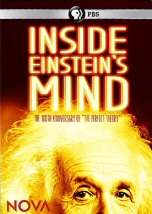
On November 25th, 1915, Einstein published his greatest work: General Relativity. The theory transformed our understanding of nature’s laws and the entire history of the cosmos, reaching back to the origin of time itself. Now, in celebration of the 100th anniversary of Einstein’s achievement, discover the inside story of Einstein’s masterpiece". The story begins with the intuitive thought experiments that set Einstein off on his quest and traces the revolution in cosmology that is still playing out in today’s labs and observatories. Discover the simple but powerful ideas at the heart of relativity, illuminating the theory—and Einstein’s brilliance—as never before. From the first spark of an idea to the discovery of the expanding universe, the Big Bang, black holes, and dark energy, NOVA uncovers the inspired insights and brilliant breakthroughs of “the perfect theory.”
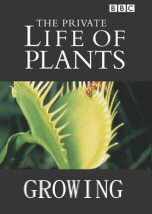
The second episode is about how plants gain their sustenance. Sunlight is one of the essential requirements if a seed is to germinate, and Attenborough highlights the cheese plant as an example whose young shoots head for the nearest tree trunk and then climb to the top of the forest canopy, developing its leaves en route. Using sunshine, air, water and a few minerals, the leaves are, in effect, the "factories" that produce food. However, some, such as the begonia, can thrive without much light. To gain moisture, plants typically use their roots to probe underground. Trees pump water up pipes that run inside their trunks, and Attenborough observes that a sycamore can do this at the rate of 450 litres an hour — in total silence. Too much rainfall can clog up a leaf's pores, and many have specially designed 'gutters' to cope with it. However, their biggest threat is from animals, and some require extreme methods of defence, such as spines, camouflage, or poison. Some can move quickly to deter predators: the mimosa can fold its leaves instantly when touched, and the Venus flytrap eats insects by closing its leaves around its prey when triggered. Another carnivorous plant is the trumpet pitcher that snares insects when they fall into its tubular leaves. Attenborough visits Borneo to see the largest pitcher of them all, Nepenthes rajah, whose traps contain up to two litres of water and have been known to kill small rodents.
This illuminating ten-part series tells the story of World War ll through the ten most pivotal turning points in the conflict. Gripping story-telling illustrated with exquisitely restored and colourised archived films and supported by a global cast of stellar historians bring this crucially important era in history to life. In the first chapter, Britain and France declare war when Hitler invades Poland. In May 1940 the Germans attack Holland and Belgium as a decoy. As the Wehrmacht comes through the Ardennes and the Luftwaffe strikes in force, French leaders are caught like rabbits in headlights. The Germans are on a drug called Pervitin, which beats off fatigue, and reach the Atlantic coast. There is a danger that the Germans will encircle the Allies and cut them off from the sea. But Hitler issues his Halt Order and some 340,000 Allies are evacuated.













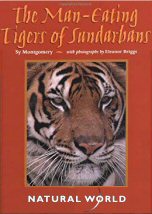





A recent project tries to train local mongrels, not pets but fiercely self-reliant dogs, to spot and even scare off tigers from villages. An individual tiger can turn into a man-eater in order to survive - this process may occur due to an injury or old age (and so cannot hunt agile prey) or even accidentally tasting human flesh.