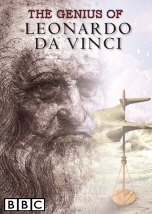
Dr Janina Ramirez embarks on a journey through six decades of the BBC archives to create a television history of one of the most celebrated figures in art - Leonardo Da Vinci. Ramirez shows how experts and art presenters have turned to television to bring Leonardo's artwork out of galleries and into our living rooms. Through television they have explored the origins of Leonardo's boundless curiosity, his pioneering use of light and shade, and his remarkable scientific exploration. Along the way Dr Ramirez discovers Britain's little-known version of The Last Supper, the gruesome ways Leonardo acquired his anatomical knowledge - and even what lies beneath the Mona Lisa.
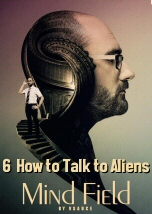
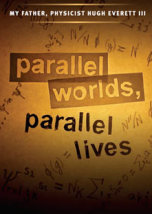
Mark Oliver Everett, singer of the band EELS, on his quest to get to know his later father, quantum physicist Hugh Everett III, who invented the Many Worlds theory. The film follows Mark on his journey across America, where he meets old friends and colleagues of his father. Hugh died of a heart attack in his home in 1982, where his body was found by 19-year-old Mark. Even though they had lived in the same house, the two of them were alienated. Only by entering the paradoxical world of quantum mechanics can Mark hope to understand why he was such a stranger to his own father.
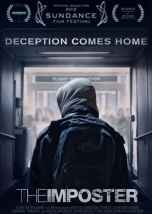
In 1994, a thirteen year old boy disappeared from San Antonio, Texas. Three and a half years later, he is found alive and well thousands of miles away in a village in southern Spain with a story of kidnapping and torture. His family is overjoyed to bring him home. But all is not quite as it seems. The boy bears many of the same distinguishing marks he always had, but why does he now have a strange accent? Why does he look so different? Any why doesn't the family seem to notice these glaring inconsistencies? It's only when an investigator starts asking questions that this strange tale takes an even stranger turn.
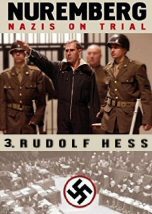
Episode three explores the mind of one of the most fanatical of all Nazis and the insight that gives into the psychology of dictatorship. Hess is brought to Nuremberg from the UK where he had flown 4 years earlier much to the bemusement of the British. Overy explains that they must have quickly realised he was not normal. In the intervening time Hess’s mental state has further deteriorated and when interviewed by Chief Interrogator Colonel John Amen proclaims amnesia. Chief Interpreter Richard Sonnenfeldt explains that they brought in Göring to confront Hess but that he too failed to make an impression. Psychopathologist Prof. Edgar Jones proposes Hess’s behaviour patterns may be his way of escaping reality as he is forced to face the extent of the atrocities and choose between accepting his part of the blame or forsaking his Führer. However, as history Professor Robert Gellatel explains it is difficult to construct a case against Hess as he was imprisoned in England when the worst of the atrocities were carried out so British Prosecutor Mervyn Griffith-Jones must argue a conspiracy charge linking the pre-1939 persecutions to the post-1939 atrocities and a crimes against peace charge proving the flight to Scotland was merely a ruse.
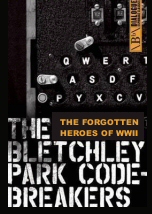
The film reveals the secret story behind one of the greatest intellectual feats of World War II, a feat that gave birth to the digital age. In 1943 Bill Tutte, a 24-year-old maths student and a GPO engineer called Tommy Flowers combined to hack into Hitler's personal super code machine - not Enigma but an even tougher system, which he called his 'secrets writer'. Their break turned the Battle of Kursk, powered the D-day landings and orchestrated the end of the conflict in Europe. But it was also to be used during the Cold War - which meant both men's achievements were hushed up and never officially recognised.
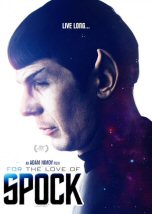
Last year, just before Thanksgiving, I approached my dad, Leonard Nimoy, about the possibility of working together on a film about Mr. Spock. I had skimmed through some of the books on the making of Star Trek and felt there was so much more to explore about the creation and development of Mr. Spock. And the timing seemed right, as the 50th anniversary of Star Trek the original series was not that far away. Dad agreed that now was the right time, and that he was 100% committed to collaborating with me on this project. He also reminded me that we were (then) just days away from the 50th anniversary of the start of production on 'The Cage,' the original pilot for Star Trek in which dad first appeared as Mr. Spock.




Along the way Dr Ramirez discovers Britain's little-known version of The Last Supper, the gruesome ways Leonardo acquired his anatomical knowledge - and even what lies beneath the Mona Lisa.