The film explores the growth of exponential technology and where it is taking us. It focuses on how future technology could significantly change the two inevitable features of the human experience; punching the clock and fading away. 'The Future of Work and Death' explores how advanced automation, AI and technological singularity could be achievable in the next 30 years. How job obsolescence and technological unemployment could consequently occur and how digital immortality can occur may not be a thing of science fiction. But what are the socio-political repercussions of these innovations and are we ready for them? Does working less mean living more and is ending ageing incumbent on us? Worldwide experts in the fields of futurology, anthropology, neuroscience and philosophy share their thoughts on these future advancements.
A tribute to the life and career of one of the best basketball players of all-time. The film chronicles Jordan's triumphs through interviews with former players, coaches and Jordan himself. Follow Michael Jordan's last basketball season as he leads the Chicago Bulls to their sixth NBA championship. Michael Jordan to the Max provides a rare glimpse of Michael Jordan on and off the court. Featuring electrifying on court action and candid interviews with Phil Jackson, Steve Kerr, Doug Collins and Bob Costas. Get ready to experience some of the greatest moments in modern sports history from one of the most dominant sport legends of all time.
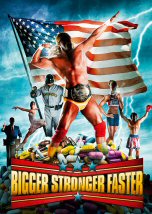
Americans define themselves in the superlative: we are the biggest, strongest, fastest country in the world. They reward above all else: winning – at sport, at business and at war. Metaphorically is a nation on steroids. Is it any wonder that so many of their heroes are on performance enhancing drugs? A film that unflinchingly explores our win-at-all-cost culture. Bigger, Stronger, Faster is a first-person narrative, including US Congressmen, professional athletes, medical experts and everyday gym rats. When you discover that your heroes have all broken the rules, do you follow the rules, or do you follow your heroes?
The National Gallery in London is one of the great museums of the world with 2400 paintings from the 13th to the end of the 19th century. Almost every human experience is represented in one or the other of the paintings. The sequences of the film show the public in various galleries; the education programs, and the scholars, scientists and curators, studying, restoring and planning the exhibitions. The relation between painting and storytelling is explored.
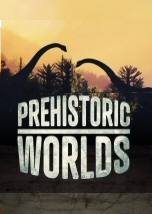
Five times, the Earth has faced apocalyptic events. Cataclysms that have swept away all life forms, or almost. Each time, a handful of species has survived, establishing a new world. What did these prehistoric worlds look like? What catastrophes led to their disappearance? How did our distant ancestors manage to survive the five mass extinctions that the Earth has suffered, finally giving rise to the world we know today? Combining CGI of ancient animal and plant life, VFX and filming, 'Prehistoric Worlds' looks back at the five mass extinctions of life on Earth that allowed the advent of the human race. On the brink of a sixth mass extinction that the scientific community considers imminent – this time caused by mankind – this film gives us an interesting and powerful look at Man's existence on the scale of the history of our planet.
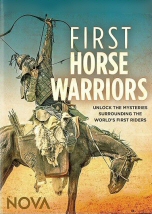
Horses. Powerful, graceful, and thunderously fast. No animal has made a greater impact on society or given humans more freedom and mobility. In a spectacular adventure, the film unlocks the mystery of the first horse warriors on the vast, grassy plains of Kazakhstan, where horses still roam free, and nomadic herders follow their traditional way of life. Investigating clues from archaeology and genetics, researchers reveal vivid evidence of the very first horsemen. They also discover warriors who swept across Europe and turn out to be the ancestors of millions today.







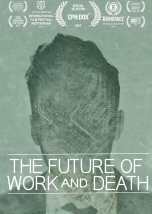





How job obsolescence and technological unemployment could consequently occur and how digital immortality can occur may not be a thing of science fiction. But what are the socio-political repercussions of these innovations and are we ready for them? Does working less mean living more and is ending ageing incumbent on us? Worldwide experts in the fields of futurology, anthropology, neuroscience and philosophy share their thoughts on these future advancements.