How is the universe put together? How is it built? And how does it actually work? How the Universe Works Series 8 shows the inner workings of our planet, the solar system, the galaxies and the universe itself. In the first episode, if a massive asteroid collides with earth, it could end life on our planet as we know it. New discoveries and cutting-edge tech reveal just how close we are to apocalypse and what it would take for the world's leading space agencies to stop it.
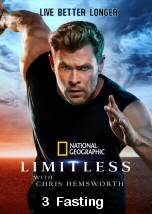
Chris turns to longevity doctor Peter Attia to find out how changing his eating habits can help his quest for longevity. Ironically, the answer is to eat no food at all for four long days. If he can bear the hunger, fasting will unlock his body’s own anti-aging powers and give Chris the edge he needs when he tries to hunt for his next meal … by spearfishing off the Great Barrier Reef.
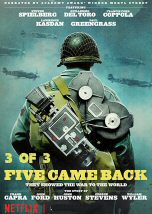
The five directors, John Ford, William Wyler, John Huston, Frank Capra, and George Stevens, return to Hollywood after the war but are forever haunted by what they saw. Ford goes on a drinking bender after filming the carnage at D-Day. Stevens is wholly unprepared for the horrors of Dachau and realizes he is not there to film propaganda but to capture evidence of crimes against humanity. Wyler, who lost his hearing during the war, fears his career is over. Huston chronicles soldiers suffering from postraumatic stress disorder in the film Let There Be Light, only to have it suppressed by the U.S. government.
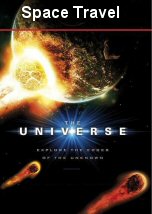
When man finally broke free of the Earth's gravitational pull the dream of travelling to other planets became a reality. Today scientists are proposing a bizarre array of technologies in the hope of travelling faster through space: from space craft sporting sails that catch laser beams, to propulsion engines powered by a bizarre entity known as anti-matter. Finally explore the science behind the seemingly fanciful notion of warp-drive and a theoretical particle that can travel faster than light.
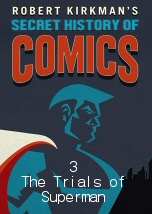
Superman is really the all-father of superheroes. He is the Odin from which all else springs forward. Without Superman, there's no Marvel or DC, no billion-dollar blockbusters. His logo is one of the three most recognizable symbols on the planet, and it stands shoulder to shoulder with the crucifix and the Jewish star. Superman became a worldwide phenomenon and was created by two working-class kids from Cleveland, Jerry Siegel and Joe Shuster. Superman is for justice and it's kind of ironic that there was a great injustice done to his creators. Siegel and Shuster lost everything, and just like Superman, they demanded justice. They fought for years to receive proper credit and compensation.
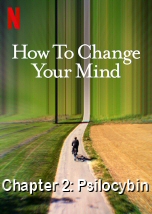
Magic mushrooms, long considered sacred by the Indigenous Mazatec in Mexico, become the subject of scientific studies measuring the intense effects of its Psilocybin and its potential therapeutic use. In the second episode, we are introduced to Ben, who’s battled with crippling Obsessive-Compulsive Disorder (OCD) his entire life. When he had his firstborn, Ben’s life became full of panic attacks regarding his son’s safety, and he knew something had to change. Ben signed up for a psilocybin-assisted therapy clinical trial which was testing whether the psychedelic could help people with severe OCD. In the session under the influence of psilocybin, Ben felt decomposed and eventually grew into a tree. While living as a tree, he saw his human self, playing with his child. Though this sounds scary, from Ben’s perspective, it was beautiful. He was one with the universe, seeing himself in the ultimate third-person perspective. Finally, he saw how it could be different if he didn’t let his OCD control him. And several months out, all the symptoms disappeared. Ben’s story is one of many told in this series, which gives hope that help is right around the corner for the millions who suffer —often in silence— with debilitating mental disorders. But Michael Pollan’s work is showcasing the success stories. Often, even in the most successful trials, psychedelic-assisted therapy only helps up to a third of people enter remission. More frequently, patients are helped —sometimes substantially— but they still suffer with their illnesses and some people aren’t helped at all.





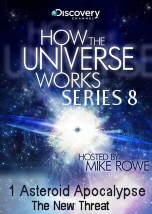


In the first episode, if a massive asteroid collides with earth, it could end life on our planet as we know it. New discoveries and cutting-edge tech reveal just how close we are to apocalypse and what it would take for the world's leading space agencies to stop it.