In 1971, after being rejected by Hollywood, Bruce Lee returned to his parents' homeland, Hong Kong. Over the next two years, he'd complete four iconic films that would define his legacy, a legacy cut short when he died, stunningly, in the summer of 1973. He was 32 years old. Directed by Bao Nguyen, 'Be Water' is a gripping, fascinating, intimate look at not just those final, defining years of Lee's life, but the complex, often difficult, and seismic journey that led to Lee's ultimate emergence as a singular icon in the histories of film, martial arts, and even the connection between the eastern and western worlds. The film chronicles Lee's earliest days, as the son of a Chinese opera star born while his father was on tour in San Francisco, and then raised in Hong Kong over what became an at times troubled childhood. Sent to live in America at the age of 18, he began teaching Kung Fu in Seattle, and established a following that included his future wife, Linda. His ambition ever rising, Lee eventually made his way to Los Angeles, where he strove to break into American film and television. There, despite some success as a fight choreographer and actor, it was clear Hollywood wasn't ready for an Asian leading man - and so he returned to Hong Kong to make the films that would in fact make him a legend, his international star skyrocketing just as his life was cut short. 'Be Water' is told by the family, friends, and collaborators who knew Bruce Lee best, with an extraordinary trove of archive film providing an evocative, immersive visual tapestry that captures Lee's charisma, his passion, his philosophy, and the eternal beauty and wonder of his art.
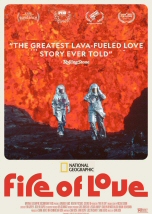
Katia and Maurice Krafft loved two things —each other and volcanoes. For two decades, the daring French volcanologist couple were seduced by the thrill and danger of this elemental love triangle. They roamed the planet, chasing eruptions and their aftermath, documenting their discoveries in stunning photographs and breathtaking film to share with an increasingly curious public in media appearances and lecture tours. This couple of intrepid scientists died in a volcanic explosion doing the very thing that brought them together: unraveling the mysteries of volcanoes by capturing the most explosive imagery ever recorded.
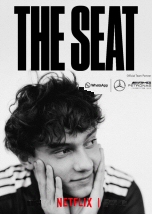
An intimate look at a historic turning point in Formula 1: 18-year-old Andrea Kimi Antonelli stepping into Lewis Hamilton’s seat at Mercedes. Blending unseen WhatsApp exchanges with Toto Wolff and engineers, the film follows his leap from simulator training and workouts to the high-stakes pressure of his FP1 debut at Monza. Beyond the track, personal moments with his family reveal the vulnerability behind the rising star. The documentary captures both the technical spectacle and the emotional weight of a teenager carrying the hopes of a legendary team.
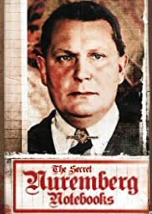
We are familiar with images of the hearings at the Nuremberg trials. But to this day, no one has taken us into the cells and minds of the accused. Leon Goldensohn, a 34-year-old American Jewish psychiatrist, spent six months visiting the 4 main Nazi war criminals. Based on these unique and recently uncovered documents and reconstitutions of the main events, this film discloses for the first time the personal thoughts of the Nazis: Hermann Goering, Rudolf Hess, Hans Franck and Julius Streicher. These interviews raise serious questions concerning the psychic mechanisms and mysteries that set off acts of barbarity.
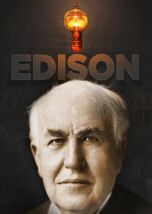
By the time he died in 1931, Thomas Alva Edison was one of the most famous men in the world. The holder of more patents than any other inventor in history, Edison had achieved glory as the genius behind such revolutionary inventions as sound recording, motion pictures, and electric light. Edison's curiosity led him to its cutting edge. With just three months of formal schooling, he took on one seemingly impossible technical challenge after another, and through intuition, persistence, and a unique team approach to innovation, invariably solved it." Driven and intensely competitive, Edison was often neglectful in his private life and could be ruthless in business. Challenged by competition in the industry he'd founded, Edison launched an ugly propaganda campaign against his rivals, and used his credibility as an electrical expert to help ensure that high-voltage electrocution became a form of capital punishment. Edison explores the complex alchemy that accounts for the enduring celebrity of America's most famous inventor, offering new perspectives on the man and his milieu, and illuminating not only the true nature of invention, but its role in turn-of-the-century America's rush into the future.
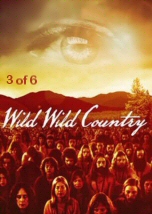
Ma Anand Sheela emerges as a provocative spokeswoman. The Rajneesh control Antelope city council and they establish a police force in the city. Bhagwan tells Sheela it is time to control Wasco County. As Election Day approaches, the Rajneeshees recruit thousands of homeless people to fortify their ranks.





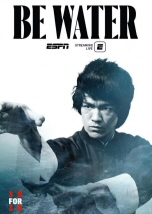



The film chronicles Lee's earliest days, as the son of a Chinese opera star born while his father was on tour in San Francisco, and then raised in Hong Kong over what became an at times troubled childhood. Sent to live in America at the age of 18, he began teaching Kung Fu in Seattle, and established a following that included his future wife, Linda. His ambition ever rising, Lee eventually made his way to Los Angeles, where he strove to break into American film and television. There, despite some success as a fight choreographer and actor, it was clear Hollywood wasn't ready for an Asian leading man - and so he returned to Hong Kong to make the films that would in fact make him a legend, his international star skyrocketing just as his life was cut short.
'Be Water' is told by the family, friends, and collaborators who knew Bruce Lee best, with an extraordinary trove of archive film providing an evocative, immersive visual tapestry that captures Lee's charisma, his passion, his philosophy, and the eternal beauty and wonder of his art.