At a time when the Earth’s surface is changing faster than ever in human history, watch cities grow, forest disappear and glaciers melt. In the ever-growing grey of cities one man is feeding thousands of parakeets; in Sumatra a female orang-utan and her daughter face life in a forest under threat; while in Tanzania local people use satellites to replant a forest, securing the future for a family of chimpanzees. This is our home as we’ve never seen it before.
Brian explores the physics of the size of life through some close encounters with Australia's wildlife. From swimming with great white sharks to tracking red kangaroos, he discovers that the size you are profoundly affects the life you lead and, ultimately, how long you have to enjoy it.
Take another walk on the wild side with our favourite pets. Extraordinary photography reveals their hidden senses and secret communication skills. Dogs take a car trip through Paris, using their legendary sense of smell to show us a very different city. A hamster uses his remarkable senses to stage a great escape and then deploys more navigational talents to find his way home. Cats become intoxicated on the scent of a plant and suffer the consequences. A budgie shows his hidden charms to his mate as, under UV light, his crown and cheeks positively glow. Goldfish reveal secret senses that can detect the slightest water movement. A guinea pig gives birth and the newborns receive surprising care from their father. In South America, where guinea pigs have lived with people for 7,000 years, they express the true meaning of their entertaining calls. When we groom a horse we speak their language, but horses use ears to communicate in ways that we are rarely aware of. In Japan cats show their secret messages and in Peru dogs reveal the hidden signs that allow them to communicate across a city. Packed with extraordinary facts and wild behaviour - you'll never look at your pet in the same way again
In this bird's-eye view of two continents, demoiselle cranes negotiate a dangerous Himalayan pass on their way to India while high-flying bar-headed geese take the fast track five miles above. In Rajasthan, vultures watch hunting tigers hoping for a meal and pigeons visit a temple dedicated solely to sacred rats. Pigeons are also our guide to the greatest gatherings of camels on Earth and learn to dodge buzzards around the battlements of Jodhpur Fort. 9,000 cranes overwinter in the most unlikely of spots - a barbed wire compound in the centre of a desert town. In Australia, rainbow lorikeets drop in on Sydney and patrol Australia's Gold Coast. In the outback, white cockatoos swirl in thousands and budgerigars pass Uluru (Ayers Rock) and gather in the biggest flocks ever recorded. In China, swallows and swifts visit the Great Wall and the Forbidden City of Beijing. In Japan, the country's most revered birds - Japanese cranes are fed fish by appreciative locals and are joined in strange, momentary harmony by hungry red foxes, white-tailed eagles and Steller's eagles. As peace descends, Japanese cranes dance beautifully in the snow.
The sparkling blue waters of the Mediterranean Sea are home to over 700 varieties of fish and almost 10 per cent of the world's marine species. Its coastline is one of the most densely populated in the world and the human pressure on this sea is magnified each summer with the influx of holiday makers. Western civilisation developed around these shores but now human activity is having a profound effect on this endangered sea.
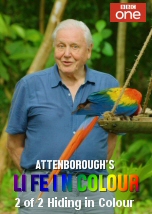
David Attenborough reveals the extraordinary ways that some animals use colour to hide and disappear into the background. New science reveals how the Bengal tiger in central India uses its orange-black stripes to hide from its colour-blind prey. In Kenya’s Masai Mara, the zebra’s black-and-white pattern confuses predators with an extraordinary effect called motion dazzle. And on the island of Cuba, a small snail uses colourful stripes in a surprising way to hide from its enemies. Other animals use colour to trick and to deceive. On Australia’s Great Barrier Reef, a blue-striped blenny uses colours to mimic other fish and launch a sudden attack. In the grasslands of Zambia, the chick of a pin-tailed whydah mimics the patterns of its nest mates to ensure that it is not detected as an imposter. And specialist cameras reveal how a tiny crab spider uses bright ultraviolet colours to lure in its victims.










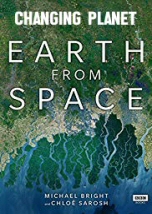







In the ever-growing grey of cities one man is feeding thousands of parakeets; in Sumatra a female orang-utan and her daughter face life in a forest under threat; while in Tanzania local people use satellites to replant a forest, securing the future for a family of chimpanzees. This is our home as we’ve never seen it before.