Most planets we know of are so hellish, it seems impossible that anything could live. But it's amazing where life can take hold in the Earth. Astrobiologists look for simple single-celled microbes known as extremophiles in places as Danakil Depression, known in Ethiopia as 'The Gateway to Hell.' In Episode 2, the fictional world is Janus, a planet in such a close orbit than its rotation is locked by the star's gravity and it always shows the same face to its sun. On one side of the planet, it's always daytime, a searing desert. On the other side, it's forever night, a frozen shadowland. Squeezed between the two, a sliver of perpetual twilight. Freezing meltwater flows from the cold side, carving canyons through the landscape. Deep in these canyons lives an extraordinary five-legged creature.
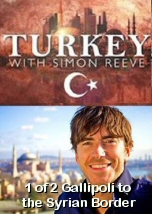
Travel writer Simon Reeve embarks upon two long-distance journeys across Turkey, exploring this dramatic and beautiful country that now finds itself at the centre of world events. In this programme, he visits Istanbul and the beaches and crystal clear waters of the Aegean Sea, before ending up at the war-torn border with Syria. In the region thought to have been the origin of the first vineyards, Simon meets a producer now trying to sell wine in a Muslim country with an increasingly conservative government. In Istanbul, he meets some of the people shaping modern Turkey, from loyal supporters of the nation's controversial and authoritarian president to the master builder constructing one of the world's largest mosques and the notorious billionaire cashing in on a Turkish property boom. Along Turkey's famous Turquoise Coast, Simon has a taste of luxury at the country's most expensive hotel, but discovers an industry on its knees as war in Syria and deadly terror attacks keep millions of holidaymakers away.
Years after Bruce Lee's mysterious death is attributed to the 'Lee Family Curse', his son Brandon's life was cut short due to a tragic on-set accident during the making of The Crow. As Lee had finished most of his scenes before his death, the film was completed through script rewrites, a stunt double, and digital effects. The Crow is dedicated to Brandon Lee and his fiancée, Eliza Hutton.
Someday, I will die. But should I? If I was offered a longer life, I would take that in a second. But how long is too long? Is death something I should deny forever, or is death and the role it plays in the universe something I am better off accepting?
Mars is filled with mysteries, Volcanoes 77 000 feet tall, Huge canyons, 3000 miles across and 6 miles deep, all kinds of interesting features. Awaiting you is some of the greatest scenery in our Solar System, on a world where water once ruled, then vanished into thin air. Where lost microbe empires may still survive underground. We've seen the postcards, and we do wish we were there.
A stellar explosion, the supernova is the sensational death of a star. It can shine as bright as 100 billion Suns and radiate as much energy as the Sun would emit over 10 billion years. Jets of high-energy light and matter are propelled into space and can cause massive Gamma Ray Bursts and emit intense X-ray radiation for thousands of years. Astronomers believe that this process creates the very building blocks of planets, people and plants. Meet the world's leading Supernova hunters, and take a look at recorded supernovas throughout history.







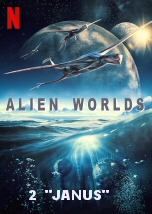

In Episode 2, the fictional world is Janus, a planet in such a close orbit than its rotation is locked by the star's gravity and it always shows the same face to its sun. On one side of the planet, it's always daytime, a searing desert. On the other side, it's forever night, a frozen shadowland. Squeezed between the two, a sliver of perpetual twilight. Freezing meltwater flows from the cold side, carving canyons through the landscape. Deep in these canyons lives an extraordinary five-legged creature.