








Last Watched

"Ant "  Sort by

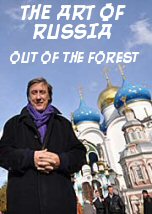
The Art of Russia: Out of the Forest

   2009    Art
Art critic Andrew Graham-Dixon tells the incredible story of Russian art, its mystery and magnificence and until now a story untold. He explores the origins of the Russian icon from its roots in Byzantium and the first great Russian icon, Our Lady of Vladimir to the masterpieces of the country's most famous icon painter, Andrei Rublev. Both epic and awe-inspiring, and producing brilliant art", nevertheless medieval Russia could be a terrifying place. Criss-crossing the epic landscape, Andrew visits the monastery founded by Ivan the Terrible, where his favourite forms of torture found inspiration in religious art. One man would shine a light into Russia's 'dark' ages - Peter the Great who, surprisingly, took as his inspiration Deptford in South London.
Series: The Art of Russia
The Price of Gold

       History
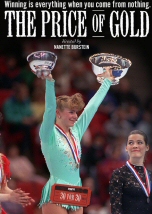
The world couldn't keep its eyes off two athletes at the 1994 Winter Games in Lillehammer - Nancy Kerrigan, the elegant brunette and Tonya Harding, the feisty blonde engulfed in scandal. Just weeks before the Olympics on January 6, 1994 at the U.S. Figure Skating Championships, Kerrigan was stunningly clubbed on the right knee by an unknown assailant and left wailing, 'Why, why, why?'
As the bizarre 'why' mystery unraveled, it was revealed that Harding's ex-husband, Jeff Gillooly, had plotted the attack with his misfit friends to literally eliminate Kerrigan from the competition. Now two decades later, The Price of Gold takes a fresh look at the worldwide spectacle that elevated the popularity of professional figure skating and has Harding still facing questions over what she knew when she knew it.

The Deserts

   2011    Culture
We can survive for weeks without food, but only days without water: it is the essential element of life. Yet many millions of us live in parched deserts around the world. In the second episode of Human Planet, we discover how the eternal quest for water brings huge challenges - and ingenious solutions - in the driest places on Earth. Battling through a sand storm in Mali, Mamadou must get his cows to a remote lake but desert elephants have arrived first. Can he find a safe way through the elephant blockade? Alone for weeks on end, Tubu women and children navigate the endless dunes of the Sahara. How does young Shede know where to find the last oasis, three days walk across the sea of sand? At the height of the drought we witness a spectacular frenzy: two thousand men rushing into Antogo Lake to catch the fish trapped by the evaporating water. When the rain finally arrives in the desert it's a time for flowering and jubilation - and love. The Wodaabe men of Niger put on make-up for an intoxicating courtship dance and beauty contest.
Series: Human Planet

Hermann Goering

       History
The second episode tells the story of the trial of Hermann Goering, Hitler's charismatic and ruthless second-in-command. On trial for his life at Nuremberg, the unrepentant Reich Marshal turned the tables on the Allies. So much so that Chief Prosecutor Justice Robert Jackson began to wish the Allies had followed Churchill's suggestion and shot the leading Nazis out of hand. This documentary drama traces the behind-the-scenes story of Goering's attempt to re-ignite Nazism from the courtroom.
Series: Nuremberg: Nazis on Trial

Solving the Secrets

   2012    Nature
Bladderwort utricularia is a pond-dweller that is among the fastest known, its traps snapping shut in less than a millisecond. As the seasons change, David demonstrates how plants operate on a different time scale to us; how they modify their lives according to the time of year. We discover insects’ hidden links with plants, both as pests and pollinators. UV-sensitive 3D cameras reveal the invisible alter-ego of plants and their flowers’ mesmerizing patterns; a parallel-dimension of strange colours and stunning patterns through which plants communicate with them. With the aid of visual effects, David steps among the swirling vortices of plant scent; communication signals with which plants are inextricably plugged in to the natural world. And using a tuning fork, he demonstrates how plants and insects can even communicate with music. As autumn envelopes the Gardens, fungi reveal themselves not as the enemies of plants but their vital allies. In Kew’s atmospheric Fungarium, David discovers a specimen that has the power of mind control and another that lives underground where it has grown to be so big it can be counted as the largest single organism on the planet. It is 6 times bigger than Kew Gardens itself.
Series: Kingdom of Plants

Flowering

   1995    Nature
The third episode is devoted to the ways in which plants reproduce. Pollen and a stigma are the two components needed for fertilisation. Most plants carry both these within their flowers and rely on animals to transport the pollen from one to the stigma of another. To do this, they attract their couriers with colour, scent and nectar. It isn't just birds that help pollination: some mammals and reptiles also do so. However, it is mostly insects that are recruited to carry out the task. To ensure that pollen is not wasted by being delivered to the wrong flower, some species of plant have developed exclusive relationships with their visitors, and the gentian and its attendant carpenter bees is one example. Since pollen can be expensive to produce in terms of calories, some plants, such as orchids, ration it by means of pollinia and a strategically placed landing platform. Other orchids offer no reward for pollination, but instead mislead their guests by mimicking their markings and aroma, thus enticing males to 'mate' with them (Pseudocopulation). The most extreme fertilisation method is one of imprisonment, and one plant that uses it is the dead horse arum. It is often found near gull colonies, and mimics the appearance and smell of rotting flesh. Blow-flies are attracted to it, and are forced to stay the night before being allowed to depart in the morning, laden with pollen. Finally, Attenborough introduces the world's largest inflorescence: that of the titan arum.
Series: The Private Life of Plants