Recent archaeological sites in England offer a whole new perspective on the life and death of the seafarers and marines who built the British Empire in the 18th and 19th centuries. The bones of sailors reveal surprising and shocking facts. Apparently not only seasoned men but also half children did their service in the Royal Navy; according to the investigations, the youngest were no older than 13 years. A forensic archaeologist studies the injuries on bones discovered at the site of an battle and suggests how these people may have died. Three-hundred-and-fifty skeletons, exhumed from Royal Navy graveyards from the age of Nelson's Navy, are throwing an extraordinary new light on how these sailors lived, fought, outwitted their enemy, and, from the oldest to youngest, suffered for victory. These men were the beating heart of the most victorious fleet in history and never have so many of these sailors' remains been available for forensic investigation. Six remarkable stories stand out: the child sailor, the top man, the American gunner, the freed slave, the marine and the victim of the sailor's most dreaded disease: syphilis. Broken bones, amputations, injuries from blows with a saber or cutlass, sexually transmitted diseases, but also malnutrition - the list of causes of death is long. There is definitely no tale of seafaring romance. These fighters and sailors sailed the globe as cannon fodder, conquered an empire for the crown, and were themselves forgotten. No longer just bones in a box, the men of Nelson's Navy are back from the dead.
Even as the science grew more certain, the oil industry continued to block action to tackle climate change in the new millennium. In a revelatory interview, Christine Todd Whitman, George W. Bush's former environment chief, tells the story of how the industry successfully lobbied President Bush to reverse course on his campaign promise to regulate carbon emissions. Tensions grew between two of the world's biggest oil companies, ExxonMobil and BP, after the latter publicly called for action to tackle climate change. The election of Barack Obama provided hope for supporters of climate action, but the billionaire Koch brothers made an effort to block the new president's attempts to pass climate change legislation, and climate denialism became the mainstream position of the Republican Party. A lawyer who worked for Koch brothers through this period speaks on camera for the first time.
In 1717, the seas of the Caribbean are ruled by the Flying Gang: Black Sam Bellamy, Edward Thatch and Benjamin Hornigold. From their base in the Bahamas, these pirates steal a fortune from the wealthiest empires in Europe and disrupt the lucrative slave trade. English authorities tap Woodes Rogers to put a stop to the pirate attacks. He is on a mission to destroy the Flying Gang of the Caribbean.
Rasputin is gone, but Nicholas II continues his catastrophic policies in war and at home. When Nicholas goes back to military headquarters, he is in fact leaving control of government, exactly when Russia needed to be held together by its Czar. The war by this time is deeply unpopular. It's not only unpopular, it's also arguably the engine that's causing enormous economic crisis, that's causing general unrest. Deprivation pushes the population from unrest to revolution.
In the third episode, during cleanup at the plant, insiders claim that cost-cutting measures and intimidation tactics create a danger war force than the accident itself. Several state and federal government agencies mounted investigations into the crisis, the most prominent of which was the President's Commission on the Accident at Three Mile Island, headed by chairman John G. Kemeny. The investigation strongly criticized Babcock & Wilcox, Met Ed, Graphics processing unit, and the Nuclear Regulatory Commission for lapses in quality assurance and maintenance, inadequate operator training, lack of communication of important safety information, poor management, and complacency. Kemeny said that the procedures and that the control room were greatly inadequate for managing an accident.
In the shadow of the Second World War, entire cities across Britain were plunged into darkness as waves of enemy bombers lit the skies with fire and destruction. Through newly restored archival footage and rare color images, the story unfolds of ordinary men, women, and children enduring nightly raids, shelters, and uncertainty. Survivors’ voices weave a vivid picture of fear, resilience, and solidarity in a nation pushed to the brink. Blending breathtaking visuals with powerful testimonies, this documentary immerses viewers in the heart of the Blitz like never before. It is a journey into the courage and spirit that defined wartime Britain, revealing how a population under siege discovered unity, sacrifice, and hope in the face of devastation.


















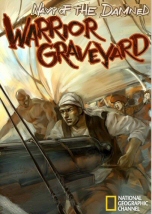











Three-hundred-and-fifty skeletons, exhumed from Royal Navy graveyards from the age of Nelson's Navy, are throwing an extraordinary new light on how these sailors lived, fought, outwitted their enemy, and, from the oldest to youngest, suffered for victory. These men were the beating heart of the most victorious fleet in history and never have so many of these sailors' remains been available for forensic investigation.
Six remarkable stories stand out: the child sailor, the top man, the American gunner, the freed slave, the marine and the victim of the sailor's most dreaded disease: syphilis. Broken bones, amputations, injuries from blows with a saber or cutlass, sexually transmitted diseases, but also malnutrition - the list of causes of death is long. There is definitely no tale of seafaring romance. These fighters and sailors sailed the globe as cannon fodder, conquered an empire for the crown, and were themselves forgotten. No longer just bones in a box, the men of Nelson's Navy are back from the dead.