Huge asteroids have smashed into the earth, and turned it into an enveloped fire, uninhabitable to almost all life on the surface. The world will get hit again. It's just a matter of when. So, what should we do as a species? Should we just, like the dinosaurs, look up and die? The reasons the dinosaurs are extinct is they didn't have a space program. We do. We have the capability to perhaps escape the Earth. Astronaut Chris Hadfield believes the only chance for human survival is to escape from Earth and build a space colony, but there are real barriers.
Scorched by their proximity to the sun, Mercury and Venus are hostile worlds; one gouged with craters from cosmic collisions and the other a vortex of sulphur, carbon dioxide and acid rain. Prime examples of planets gone awry, do they serve as a warning for ominous scenarios that might someday threaten Earth?
The war on drugs was upon them, and despite believing that they were untouchable, the authorities close in. The 'Cowboys' are left with three options: flee, flip or face the music. Falcon and Magluta, along with their associates, were ultimately arrested and tried for their crimes. But they won't go down so easily.
They're the cooling corpses of stars like our sun, but new research proves white dwarfs are one of the driving forces of our universe. And they can tell us literally about the nature of the cosmos itself. Have scientists finally discovered how these small stars could be such massive galactic players?
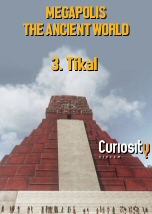
Located in Central America, Tikal is one of the largest of the ancient cities of the Mayan civilization. Occupied for more than a millennium, Tikal, founded in the 8th century BC and nestled in the jungle of Guatemala, will have up to 12,000 structures and reach over 2 million inhabitants. This episode shows its extraordinary pyramid-temples, designed with human power alone. Thanks to new technologies, the ancient Mayan city is revealed there, entirely reconstituted in 3D synthetic images.
The Blue Marble is an image of Earth taken on 1972, from a distance of about 18,000 miles from the planet's surface. It was taken by the crew of the Apollo 17 spacecraft on its way to the Moon. Before it was photographed from space, our perspective of Earth was fragmented and disconnected. Recent discoveries have revealed a dynamic and rapidly changing planet, above the crust and below.




















Astronaut Chris Hadfield believes the only chance for human survival is to escape from Earth and build a space colony, but there are real barriers.