Stars helped create us, building and spreading the ingredients for life to develop. But there will definitely be a point in the future when, in the future when, you look up, you will no longer be able to see stars. For billions of years, stars brought life to the universe. Now, they're dying out in a star apocalypse. What's causing the die-off, and what happens to life when the lights go out?
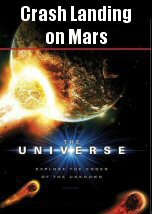
What might happen if the first manned mission to Mars crashes hundreds of miles from the rocket that would take them back home? Could they survive the crash, and travel across the brutal Martian surface to their home ship? We'll show what the astronauts would have to do to survive dust storms and space radiation, while extracting vital resources like water from the Martian soil itself. It's a dramatic vision of the very near future, where survival can depend on pre-industrial technology and human ingenuity.
Andrew Jarecki delves into the complex life of reclusive real estate icon Robert Durst, the key suspect in a series of unsolved crimes. At the conclusion of the original series, ‘The Jinx: The Life and Deaths of Robert Durst,’ viewers worldwide were shocked to hear Robert Durst utter the words, ‘I killed them all, of course.’ Hours earlier, evidence uncovered by the filmmakers had led to Durst's arrest in a New Orleans hotel lobby. Over the next eight years, the filmmakers continued their relentless investigation. This gripping complete series uncovers police files, key witnesses, never-before-seen footage, private prison recordings, and thousands of pages of previously hidden documents. Prepare to be captivated by the shocking revelations and twists in this extraordinary real-life thriller with this complete second part.
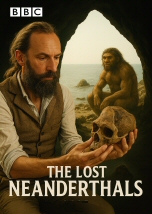
In the heart of southern France, the Mandrin Cave has drawn archaeologists for over three decades, its soils preserving an extraordinary archive of human life stretching back tens of thousands of years. Within its layers lie traces of fire, tools, and bones that tell the story of survival in a harsh prehistoric world. In 2015, the remarkable discovery of a Neanderthal individual—nicknamed Thorin—revealed that these ancient humans once lived side by side with the first Homo sapiens to arrive in the region. Following an international team of scientists, the investigation uncovers fragile relics of the Palaeolithic era that are rewriting our understanding of how two human species encountered one another. With every excavation, new details emerge about resilience, adaptation, and coexistence, offering a powerful re-examination of what it meant to be human 50,000 years ago. This is not only the story of the Neanderthals’ fate, but also of the deep roots of our own identity.
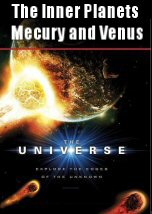
Scorched by their proximity to the sun, Mercury and Venus are hostile worlds; one gouged with craters from cosmic collisions and the other a vortex of sulphur, carbon dioxide and acid rain. Prime examples of planets gone awry, do they serve as a warning for ominous scenarios that might someday threaten Earth?
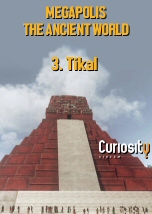
Located in Central America, Tikal is one of the largest of the ancient cities of the Mayan civilization. Occupied for more than a millennium, Tikal, founded in the 8th century BC and nestled in the jungle of Guatemala, will have up to 12,000 structures and reach over 2 million inhabitants. This episode shows its extraordinary pyramid-temples, designed with human power alone. Thanks to new technologies, the ancient Mayan city is revealed there, entirely reconstituted in 3D synthetic images.













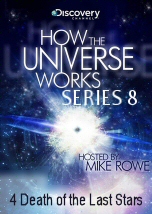




For billions of years, stars brought life to the universe. Now, they're dying out in a star apocalypse. What's causing the die-off, and what happens to life when the lights go out?