After years of anticipation, autonomous vehicles are now being tested on public roads around the world. As ambitious innovators race to develop what they see as the next high-tech pot of gold, some experts warn there are still daunting challenges ahead, including how to train artificial intelligence to be better than humans at making life-and-death decisions. How do self-driving cars work? How close are we to large-scale deployment of them? And will we ever be able to trust AI with our lives?
Is there anyone out there? Astronomers have been pointing their radio telescopes at the skies for decades trying to pick up alien signals, so far without success. But now there's a new way of looking for aliens. Hitch a ride with Dr Graham Philips as he joins astronomers trawling through the galaxy looking for signs of extra-terrestrial intelligence.
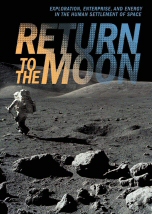
The Apollo equipment has sat abandoned on the lunar surface for over 40 years. Now there is a renewed excitement and drive to return to the moon. This time, not to just plant a flag, but to colonize. How would we accomplish this? And why would we do it? The race is on to colonize the Moon, to uncover its hidden riches and discover if humanity can really survive on another world. The Moon is our gateway to our solar system, it's the stepping stone we have to become a multi-planetary species.
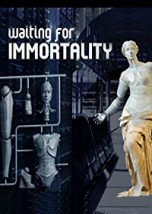
Eternal life is humanity’s oldest dream. It may be finally coming true. Today, at least in the West, the quest for immortality has shifted from the metaphysical to the technical and the scientific. In this film we will investigate the advancement of this research in laboratories around the world. With cryonics technology improving, human cloning now possible, mind uploading and digital brain simulation thriving, reversing the aging of cells and organs feasible, immortality may seem right around the corner.
In some countries, such as the US, Russia and Europe, private companies are financing and promoting the promise of immortality or at least a longer life expectancy. Are they selling a reality or utopia? We will meet scientists, neurophysiologists, computer specialists, geneticists, and biologists, and also hopefuls of immortal life, futurists, sociologists and businessmen. We will film different research laboratories and cities built for the aging; we will interview the experts as well as the anonymous men and women who speak about their relationship with life and death and those who simply embody it.
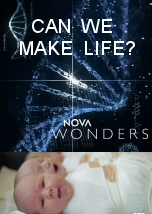
'It's alive!' Since Dr. Frankenstein spoke those famous words, we've been alternately enthralled and terrified by the idea of creating life in the lab. Now, a revolution in genetic engineering and thrilling innovations in synthetic biology are bringing that dream—or nightmare, as the case may be—closer to reality. New tools allow researchers to use cells to create their own DNA and edit it into existing genomes with more ease and less cost than ever before. Along with renewed hopes for treating some genetic diseases, there's serious talk of using the newest technologies to bring long-extinct animals back from the dead – like the team hoping to resurrect the woolly mammoth. Science fiction is quickly becoming science fact. Another daring genetic experiment to bioengineer animals could prevent Lyme disease. But the power to make life comes with deep ethical questions. What are the potential rewards—and dangers—of tinkering with nature? This films explores the benefits and the burden of risk surrounding the controversial new technology.
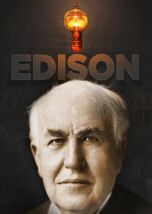
By the time he died in 1931, Thomas Alva Edison was one of the most famous men in the world. The holder of more patents than any other inventor in history, Edison had achieved glory as the genius behind such revolutionary inventions as sound recording, motion pictures, and electric light. Edison's curiosity led him to its cutting edge. With just three months of formal schooling, he took on one seemingly impossible technical challenge after another, and through intuition, persistence, and a unique team approach to innovation, invariably solved it." Driven and intensely competitive, Edison was often neglectful in his private life and could be ruthless in business. Challenged by competition in the industry he'd founded, Edison launched an ugly propaganda campaign against his rivals, and used his credibility as an electrical expert to help ensure that high-voltage electrocution became a form of capital punishment. Edison explores the complex alchemy that accounts for the enduring celebrity of America's most famous inventor, offering new perspectives on the man and his milieu, and illuminating not only the true nature of invention, but its role in turn-of-the-century America's rush into the future.








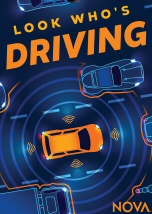



How do self-driving cars work? How close are we to large-scale deployment of them? And will we ever be able to trust AI with our lives?