In the heart of southern France, the Mandrin Cave has drawn archaeologists for over three decades, its soils preserving an extraordinary archive of human life stretching back tens of thousands of years. Within its layers lie traces of fire, tools, and bones that tell the story of survival in a harsh prehistoric world. In 2015, the remarkable discovery of a Neanderthal individual—nicknamed Thorin—revealed that these ancient humans once lived side by side with the first Homo sapiens to arrive in the region. Following an international team of scientists, the investigation uncovers fragile relics of the Palaeolithic era that are rewriting our understanding of how two human species encountered one another. With every excavation, new details emerge about resilience, adaptation, and coexistence, offering a powerful re-examination of what it meant to be human 50,000 years ago. This is not only the story of the Neanderthals’ fate, but also of the deep roots of our own identity.
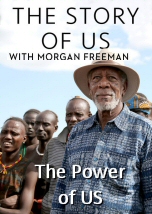
Can we find a way to distribute power so that everyone has their say? A U.S. president explains the challenges of making decisions that affect hundreds of millions of lives, and Freeman learns about an African woman who has created a society without men. He explores how the rise of the internet may fundamentally change how democracy works.
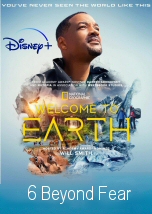
Will Smith confronts his fear of nature on powerful white-water rapids in Iceland. "Over five expeditions, I've followed explorers into situations that were straight-up scary. It was worth it to discover the Earth's wonders. But your boy was tripping more than once. Because when I see wilderness, you know, nothing but nature, I get nervous because I don't understand it."
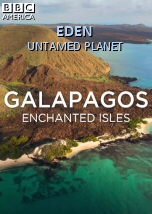
600 miles off the coast of South America in the Pacific Ocean there are 120 tropical islands that erupted from the deep ocean floor more than 10 million years ago. Journey from the lava ramparts to its fiery heart, we'll discover how the Galapagos archipelago became one of the most important areas of biodiversity in the world. Those swept here by storms and currents survived million to one odds to find untouched islands free from competition. These hardy pioneers evolved in remarkable ways in what's known as Nature's Greatest Experiment. Home to bizarre specialists and unexpected giants, the most precious collection of island creatures on Earth.
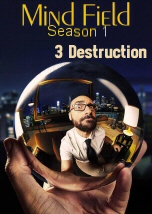
Our relationship with destruction is not a simple one. It can release endorphins and relax our minds. It can amp us up and make us even more aggressive. It can even help us regulate our emotional reactions. Can violently breaking things calm us down? Or does it simply anger us more? Find out as Michael Stevens takes a look into our urge to destroy.
A series of untimely deaths connected to the making of the Poltergeist films inspired rumours that the production was cursed. Supernatural suspicions are stoked by rumours that real human skeletons were used during the making of the film.











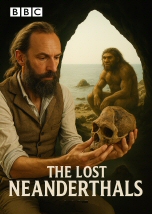




Following an international team of scientists, the investigation uncovers fragile relics of the Palaeolithic era that are rewriting our understanding of how two human species encountered one another. With every excavation, new details emerge about resilience, adaptation, and coexistence, offering a powerful re-examination of what it meant to be human 50,000 years ago. This is not only the story of the Neanderthals’ fate, but also of the deep roots of our own identity.