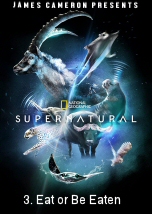
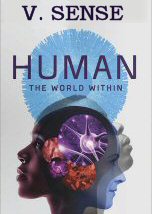
How do the five senses really work? In fact, there are many more than five, and they all work together to create our own version of reality. We dive into the stories of a pairs figure skating team, a perfumer, a cave explorer, and a musician to decipher how different ways of sensing the world all create their own vivid, and unique, picture. This episode explores the world of human sensation and how it defines reality.
This rockumentary-style presidential portrait shows how Jimmy Carter reinvigorated a post-Watergate America-with the music of the counterculture, including the Allman Brothers, Bob Dylan, Willie Nelson, and Jimmy Buffett. Low on campaign funds and lacking in name recognition, Carter relied on support from these artists to give him a crucial boost in the Democratic primaries. Once Carter was elected, the musicians became frequent guests in the White House.
Can we find a way to distribute power so that everyone has their say? A U.S. president explains the challenges of making decisions that affect hundreds of millions of lives, and Freeman learns about an African woman who has created a society without men. He explores how the rise of the internet may fundamentally change how democracy works.
Supermassive black holes are the engines that power our universe and one of the major players in the evolution of galaxies. They're in fact the driving force at the heart of nearly every galaxy in the cosmos. Now, a new mystery has emerged about the oldest supermassive black holes. We see supermassive black holes in the very early universe. And we don't understand how they grew so large so quickly. We have clues about their formation but, can we solve the mystery of this supermassive growth spurt?
Will Smith confronts his fear of nature on powerful white-water rapids in Iceland. "Over five expeditions, I've followed explorers into situations that were straight-up scary. It was worth it to discover the Earth's wonders. But your boy was tripping more than once. Because when I see wilderness, you know, nothing but nature, I get nervous because I don't understand it."
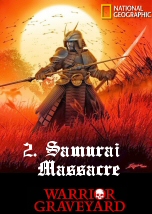
The unearthing of a gruesome grave filled with thousands of skeletons at the beach of Kamakura in Japan could be about to unlock the true extent of the merciless violence and mystery surrounding the true origins of one of the most feared and revered warriors of all time: the Samurai. In the Middle Ages, Kamakura was the capital of Japan. The 'Shogun', a kind of aristocratic military dictator, ruled here. This shogunate ended in 1333 with the Battle of Kamakura. A drastic event in Japanese history, because this resulted in not only political, but also social, philosophical and technical innovations. The remains of the samurai warriors who fell near Kamakura now provide scientists with detailed insights into the time of the Kamakura shogunate and the bloody conflict between the shogun and the emperor. The chilling burial ground dates back to 1333. Kamakura was one of the most heavily fortified regions of Japan. When the Emperor became angered by the growing powers of the ruling Hojo family, he sought to retake control of the region, setting the stage for a war that would change the shape of the nation. Among over 4000 sets of remains, six have a unique story to tell: the husband and wife involved in a sword fight to the death; the warrior monk; a peasant boy soldier; and members of the ruling Hojo family, captured and decapitated, with their heads displayed as trophies of victory. These remains reveal the secrets of the Samurai, their ferocious fighting skills and their merciless killing techniques.
























This episode explores the world of human sensation and how it defines reality.