










A bistro is typically defined by its modesty – they are relatively small, affordable and humble. The bistro has become rather ubiquitous these days but despite its many incarnations, at its core, a bistro is a place where every man can eat, and eat well. With Petit Trois, Ludo Lefebvre has brought the spirit of the bistro to Los Angeles. In this episode, Ludo brings us back to Paris to introduce us to some of the people and places that first inspired him to begin a culinary career.
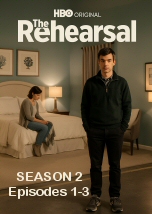
To recruit actors for his rehearsals, Nathan opens an acting studio in Los Angeles, teaching 'the Fielder Method', which involves covertly observing and imitating unaware subjects. Feeling insecure about his own performance, Nathan reenacts the class with actors and a fake Nathan as the teacher while the real Nathan plays the role of Thomas, a student. Nathan makes his students immerse themselves in other people's lives while he immerses himself in Thomas's life, even living in Thomas's home. Nathan returns to Oregon, where his 'son', Adam, is now a teenager. Nathan and Joshua, the actor playing Adam, decide that Adam should lash out due to resentment of his absentee father and develop a drug problem, a situation that mirrors Angela's own past. Adam suffers an overdose and is tended to by emergency responders played by Thomas and another Fielder Method graduate. After he runs away from home, the 15-year-old Adam reverts to a 6-year-old since Nathan plans to relive his son's earlier years.
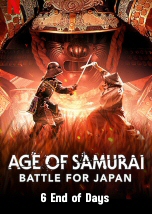
After unifying much of Japan, fearsome samurai Oda Nobunaga is dead. His loyal supporter Toyotomi Hideyoshi has launched a coup and seized power for himself. Enraged, powerful General Katsuie has launched his own bid to control the nation. After defeating Katsuie, Hideyoshi finally ascends to power as the de facto ruler of Japan. Still, Date Masamune, a young daimyo in the north, ignores his missives.
By August 1949 the USSR became the world's second superpower, thanks to its spies who had stolen America's atomic secrets. But by March 1953, Stalin is dead and KGB chief, Beria, is executed later the same year. Nikita Kruschev tries to reduce the power of the security service, splitting it into several sections...but it doesn't last and, soon, the KGB is back. In the USSR, countless KGB operatives spied on opponents of the regime at home, guarded the state and party leadership, and abroad tried to find out as much as possible about the intentions of the NATO countries and, if possible, to sabotage them.
Stanley Kubrick's mark on the legacy of cinema can never be measured. He was a giant in his field, his great works resembling pristine pieces of art, studied by students and masters alike, all searching for answers their maker was notoriously reticent to give. While he's among the most scrutinized filmmakers that ever lived, the chance to hear Kubrick’s own words was a rarity—until now. Unspooling exclusive new recordings of detailed interviews with the mythic director spanning 30 years that ruminate on his philosophies, documentarian Gregory Monro weaves a tapestry of archival footage with the rhythm and care of a consummate historian relishing in his discoveries.
The once-quiet suburbs of Sweden's major cities are the epicenter of a vicious turf war between rival gangs competing for the drug trade. The fierce competition has resulted in a series of tit-for-tat killings with almost daily shootings and bombings. More than 45 people have been shot dead so far this year. Paraic O'Brien steps onto the frontline of Sweden's deadly gang war, as the country becomes one of the most lethal for gun crime in the whole of Europe. From the front line of its lethal drug wars, a look at how Sweden has become one of Europe's deadliest hot spots for gun crime, with shootings often committed by children.
In this episode, Ludo brings us back to Paris to introduce us to some of the people and places that first inspired him to begin a culinary career.