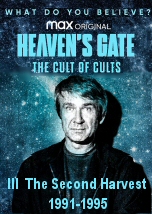
The message of the group begins to change and losing identity and group mentality is pushed. With more lockdowns and rules, longtime members of the group begin to question or leave. With no sex permitted with members, Dick Joslyn’s membership in the cult poses problem for Do... leading to a new request for the group. With dwindling numbers, the group needs a new boost of membership. The Exit begins to be discussed as the Hale-Bopp Comet approaches.
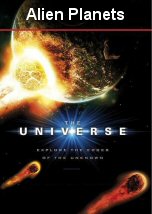
Have planet hunters finally found proof of other Earth like worlds? Astronomers have now discovered over two hundred alien worlds, beyond our solar system, that were unknown just a decade ago. Discover planets that rage with fiery hurricanes and bizarre planets covered by water so dense that it forms a kind of hot ice. Among these weird worlds, Earth actually seems like the oddball.
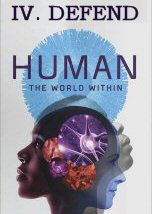
A look into how the body defends itself against all odds through the stories of a nature survivalist, rancher twins, a doctor who survived Ebola and a cancer therapy recipient. The Immune System, essential to our survival every second, is the most complex and least understood piece of our biology.
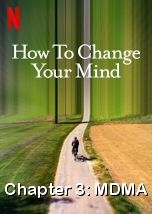
Championed by both therapists and ravers, ecstasy stands out as the first psychedelic likely to become legalized, thanks to passionate advocates. The episode about 3,4-Methylenedioxymethamphetamine (MDMA), is focused on Multidisciplinary Association for Psychedelic Studies (MAPS) clinical trials treating Post-traumatic stress disorder (PTSD).
New discoveries have rewritten the history of our solar system, revealing a complex and violent story that begins with the birth of our Sun from the debris of a massive galactic collision, to its eventual fate as a lone zombie star. It is a dramatic history of elegant beauty and extreme violence. The inner solar system was like a congested highway. Planets crossing lanes, frequent collisions. There were a lot of planets that could have made it but didn't, and we just happen to be one of the lucky ones that did. The players in our solar system's story are more tangled up than we ever imagined. Without all of these things interplaying, the Earth wouldn't have the stable environment that we have today, and life wouldn't be able to exist.
In the first episode, Sir David Attenborough reveals the unexpected wildlife riches of the British Isles, showcasing the dramatic and spectacular habitats that rival any across the globe. This journey uncovers the diversity of life in the UK's unique landscapes, from the intricate world of bumblebees to the swift lives of kingfishers. The episode captures extraordinary scenes of nature, including killer whales preying on seals, golden eagles in the Scottish mountains, the cunning tactics of woodland plants, and the perilous life of puffins evading gulls. It highlights Britain's geological diversity as a cornerstone of its natural wealth, contributing to an array of habitats and supporting a wide range of life. Britain's importance extends to being a haven for migratory birds, with our seas feeding 65% of the world's gannets and supporting the largest colony of northern gannets on Scotland's Bass Rock. The west coast of Scotland offers sanctuary to barnacle geese due to its abundant food and mild climate, though they remain vigilant against hunting sea eagles. Despite these natural treasures, Britain faces challenges as one of the most nature-depleted countries globally. Sir David Attenborough emphasizes the need to conserve and restore these wild isles for the enjoyment and benefit of future generations.














With dwindling numbers, the group needs a new boost of membership. The Exit begins to be discussed as the Hale-Bopp Comet approaches.