New discoveries have rewritten the history of our solar system, revealing a complex and violent story that begins with the birth of our Sun from the debris of a massive galactic collision, to its eventual fate as a lone zombie star. It is a dramatic history of elegant beauty and extreme violence. The inner solar system was like a congested highway. Planets crossing lanes, frequent collisions. There were a lot of planets that could have made it but didn't, and we just happen to be one of the lucky ones that did. The players in our solar system's story are more tangled up than we ever imagined. Without all of these things interplaying, the Earth wouldn't have the stable environment that we have today, and life wouldn't be able to exist.
Stanley Kubrick's mark on the legacy of cinema can never be measured. He was a giant in his field, his great works resembling pristine pieces of art, studied by students and masters alike, all searching for answers their maker was notoriously reticent to give. While he's among the most scrutinized filmmakers that ever lived, the chance to hear Kubrick’s own words was a rarity—until now. Unspooling exclusive new recordings of detailed interviews with the mythic director spanning 30 years that ruminate on his philosophies, documentarian Gregory Monro weaves a tapestry of archival footage with the rhythm and care of a consummate historian relishing in his discoveries.
We’re going back to the moon. Plans are being made, hardware is being designed, built, and tested to return humans to the moon and beyond in a new era of American space exploration. This episode explores how we did it in the past, and how and why we will do it again. The moon is critical to future explorations: it will be where we learn to build sustainable colonies on other worlds.
The Supermodels Naomi Campbell, Cindy Crawford, Linda Evangelista and Christy Turlington will revisit the quartet’s modelling careers and how they disrupted the 90s’ fashion scene, including access to and interviews with all of them. The film show how these four women transformed the modeling industry, maintaining their dignity and respect in an industry that strips women of both much too often. Fighting off the critics, especially when it came to salary, making no excuses for demanding what they were worth, when women were told to shut up and just walk. In the first episode, we rewind to the year 1983, where four teenagers—Naomi, Cindy, Linda, and Christy—took their initial steps onto the runway and in front of the camera. This pivotal moment ignited a seismic chain of events that would forever change the face of fashion. Get ready to witness these trailblazing women in a captivating journey into the past, sparking curiosity about the extraordinary impact and resilience of these iconic supermodels.
The last episode explores Mescaline, the psychoactive molecule in San Pedro and peyote cacti, a sacred medicine that Native Americans have had to fight for the right to use. At the Indigenous practices there's always an elder, someone who knows the territory very well, who's presiding. There's usually a group, a community is involved, There's always an intention, a purpose to what you're doing, and you're treating it as sacred, in order to achieve altered states of consciousness, which contribute to worship in various ways, or celebration or healing. But maybe all this is not so new to Western culture after all. In the old Greek histories of Eleusis, people who were initiated there got the drink, the kykeon, and then they had the illumination. The precise recipe is a mystery, but we know that the kykeon was a psychoactive brew that was used at the Eleusinian mysteries, a sacred annual ritual of enlightenment practiced by some of the world's greatest minds including Socrates, Plato, and Aristotle. So why did this ritual come to an end more than 1,000 years ago? Was the possibility of illumination or achieving a higher consciousness considered threatening to the powers that be? Have the drug wars been merely an extension of that fear? Psychedelics has a major part in how we can heal as a community, how we can heal as a city, and how we can heal as a country. The current renaissance of psychedelics could not come at a better time as the world confronts a crisis in mental health. But psychedelics have much to offer. The psychedelic experience changes the mind in ways that will help scientists better understand how it works. All these altered states allow us to probe what is the greatest mystery in all of nature. The emergence from mere matter of something as miraculous as consciousness. But an even bigger question is whether psychedelics might help us address the environmental crisis of how we think about our place in nature. One of the greatest gifts of psychedelics is how they reanimate the natural world, allowing us to perceive the subject, the spirit of all species, not just our own. And to feel a deeper sense of interconnectedness with nature.
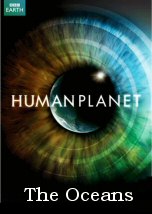
This second episode is a captivating exploration of the ocean's wonders and mysteries. It reveals how a significant part of our planet remains unexplored, primarily due to its vast water coverage. The film emphasizes the extraordinary discoveries awaiting every journey below the water's surface, with over a thousand new species identified annually. Home to 80% of all animal life on Earth, the ocean's diverse habitats host a range of surprising behaviors and life-and-death struggles, often hidden beneath a serene exterior. The shallow tropical seas, appearing as paradises, are actually arenas of intense survival battles. Predatory lionfish, with their patient hunting tactics, and clown frogfish, using a unique fishing rod-like dorsal fin as a lure, demonstrate the ocean's complex food web. The documentary also explores the kelp forests off the North American coast, revealing their role as nurseries for young horn sharks. Amidst these underwater forests lurk giant sea bass, wolf-eels, and various sharks like houndsharks and broadnose sevengills, posing significant threats to the smaller inhabitants. The episode takes viewers to the twilight and midnight zones of the ocean, unveiling alien-like creatures such as the siphonophore, glass squid, and gulper eel, adapted to the extreme conditions of deep waters. The journey concludes with the moving story of the pearl octopus, whose devotion to her eggs in the challenging deep-sea environment is both heartwarming and heartbreaking. This episode is not only a showcase of the ocean's diverse inhabitants but also a reminder of the urgent need to understand and protect this vast, mysterious, and vital part of our planet.



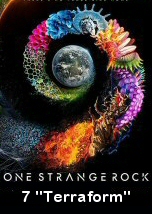



















It is a dramatic history of elegant beauty and extreme violence. The inner solar system was like a congested highway. Planets crossing lanes, frequent collisions. There were a lot of planets that could have made it but didn't, and we just happen to be one of the lucky ones that did. The players in our solar system's story are more tangled up than we ever imagined. Without all of these things interplaying, the Earth wouldn't have the stable environment that we have today, and life wouldn't be able to exist.