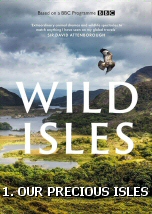
In the first episode, Sir David Attenborough reveals the unexpected wildlife riches of the British Isles, showcasing the dramatic and spectacular habitats that rival any across the globe. This journey uncovers the diversity of life in the UK's unique landscapes, from the intricate world of bumblebees to the swift lives of kingfishers. The episode captures extraordinary scenes of nature, including killer whales preying on seals, golden eagles in the Scottish mountains, the cunning tactics of woodland plants, and the perilous life of puffins evading gulls. It highlights Britain's geological diversity as a cornerstone of its natural wealth, contributing to an array of habitats and supporting a wide range of life. Britain's importance extends to being a haven for migratory birds, with our seas feeding 65% of the world's gannets and supporting the largest colony of northern gannets on Scotland's Bass Rock. The west coast of Scotland offers sanctuary to barnacle geese due to its abundant food and mild climate, though they remain vigilant against hunting sea eagles. Despite these natural treasures, Britain faces challenges as one of the most nature-depleted countries globally. Sir David Attenborough emphasizes the need to conserve and restore these wild isles for the enjoyment and benefit of future generations.
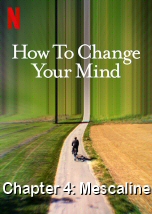
The last episode explores Mescaline, the psychoactive molecule in San Pedro and peyote cacti, a sacred medicine that Native Americans have had to fight for the right to use. At the Indigenous practices there's always an elder, someone who knows the territory very well, who's presiding. There's usually a group, a community is involved, There's always an intention, a purpose to what you're doing, and you're treating it as sacred, in order to achieve altered states of consciousness, which contribute to worship in various ways, or celebration or healing. But maybe all this is not so new to Western culture after all. In the old Greek histories of Eleusis, people who were initiated there got the drink, the kykeon, and then they had the illumination. The precise recipe is a mystery, but we know that the kykeon was a psychoactive brew that was used at the Eleusinian mysteries, a sacred annual ritual of enlightenment practiced by some of the world's greatest minds including Socrates, Plato, and Aristotle. So why did this ritual come to an end more than 1,000 years ago? Was the possibility of illumination or achieving a higher consciousness considered threatening to the powers that be? Have the drug wars been merely an extension of that fear? Psychedelics has a major part in how we can heal as a community, how we can heal as a city, and how we can heal as a country. The current renaissance of psychedelics could not come at a better time as the world confronts a crisis in mental health. But psychedelics have much to offer. The psychedelic experience changes the mind in ways that will help scientists better understand how it works. All these altered states allow us to probe what is the greatest mystery in all of nature. The emergence from mere matter of something as miraculous as consciousness. But an even bigger question is whether psychedelics might help us address the environmental crisis of how we think about our place in nature. One of the greatest gifts of psychedelics is how they reanimate the natural world, allowing us to perceive the subject, the spirit of all species, not just our own. And to feel a deeper sense of interconnectedness with nature.
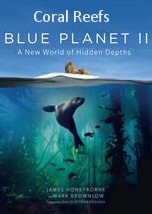
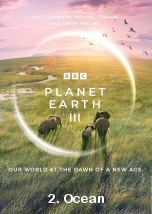
This second episode is a captivating exploration of the ocean's wonders and mysteries. It reveals how a significant part of our planet remains unexplored, primarily due to its vast water coverage. The film emphasizes the extraordinary discoveries awaiting every journey below the water's surface, with over a thousand new species identified annually. Home to 80% of all animal life on Earth, the ocean's diverse habitats host a range of surprising behaviors and life-and-death struggles, often hidden beneath a serene exterior. The shallow tropical seas, appearing as paradises, are actually arenas of intense survival battles. Predatory lionfish, with their patient hunting tactics, and clown frogfish, using a unique fishing rod-like dorsal fin as a lure, demonstrate the ocean's complex food web. The documentary also explores the kelp forests off the North American coast, revealing their role as nurseries for young horn sharks. Amidst these underwater forests lurk giant sea bass, wolf-eels, and various sharks like houndsharks and broadnose sevengills, posing significant threats to the smaller inhabitants. The episode takes viewers to the twilight and midnight zones of the ocean, unveiling alien-like creatures such as the siphonophore, glass squid, and gulper eel, adapted to the extreme conditions of deep waters. The journey concludes with the moving story of the pearl octopus, whose devotion to her eggs in the challenging deep-sea environment is both heartwarming and heartbreaking. This episode is not only a showcase of the ocean's diverse inhabitants but also a reminder of the urgent need to understand and protect this vast, mysterious, and vital part of our planet.
Deep Throat comes forward with the orders of anonymity with the horror story of what happened in 1994 with the charges against Maskell. With the location of a secret grave of documents, Deep Throat’s story contradicts the story of the former state’s attorney Sharon A.H. May. The group begins to investigate Dr. Richter who worked with Maskell to groom girls and their families. As the case prepares for a potential trial, the disappearance of Father Maskell causes problems as the prosecutors find themselves defending the idea of repressed memories. When things fall apart, victims still find themselves seeking justice. Abbie and Gemma seek the links between Jean and the killer... which leads to a man named Brother Bob.
The Romanovs retreat into a bubble of luxury while the czar's forces brutally suppress protests by a starving populace. Rasputin's influence grows, never mind the rumors and scandals. Many people believe Prime minister Peter Stolypin is the last hope of the Romanov Dynasty as reformer-in-chief. He is horrified by the rise of Rasputin. The fight between Stolypin and Rasputin is a battle for influence over Nicholas II. But Stolypin is shot in the Kiev Opera in 1911.
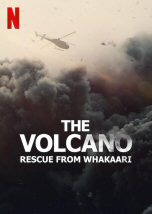
A close examination of the Whakaari / White Island volcanic eruption of 2019, in which 22 lives were lost, the film viscerally recounts a day when ordinary people were called upon to do extraordinary things, placing this tragic event within the larger context of nature's unpredictability and the resilience and power of our shared humanity. The film explores the profound impact on survivors, their unwavering determination to recover and rebuild, and the enduring effects of the eruption. With remarkable personal stories, stunning visuals, and a poignant reflection on the forces of nature, this documentary offers a gripping portrayal of the human spirit and solidarity in the face of adversity. It is a must-watch for those interested in powerful storytelling and the resilience of the human spirit, with a captivating and thought-provoking narrative.
















Britain's importance extends to being a haven for migratory birds, with our seas feeding 65% of the world's gannets and supporting the largest colony of northern gannets on Scotland's Bass Rock. The west coast of Scotland offers sanctuary to barnacle geese due to its abundant food and mild climate, though they remain vigilant against hunting sea eagles. Despite these natural treasures, Britain faces challenges as one of the most nature-depleted countries globally. Sir David Attenborough emphasizes the need to conserve and restore these wild isles for the enjoyment and benefit of future generations.