






Last Watched

" Wildlife"  Sort by

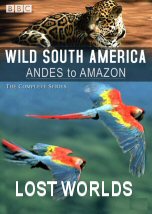
Wild South America: Lost Worlds

   2005    Nature
A major new series exploring the wildlife of South America. This is a breathtaking aerial journey through the most spectacular locations on the continent, from the icy peaks of the Andes to the Amazon jungle and the Atacama desert. These extreme conditions are home to a mind-boggling variety of creatures, many of them rarely seen before on television.
Series: Wild South America

Attenborough and the Giant Egg

   2011    Science
David Attenborough returns to the island of Madagascar on a very personal quest. In 1960, he visited the island to film one of his first ever wildlife series - Zoo Quest. Whilst he was there, he acquired a giant egg belonging to an extinct bird known as the 'elephant bird' - the largest bird that ever lived. It has been one of his most treasured possessions ever since. Fifty years older, he now returns to the island to find out more about this amazing creature and to see how the island has changed. Could the elephant bird's fate provide lessons that may help protect Madagascar's remaining wildlife?
Using Zoo Quest archive and specially shot location footage, this film follows David as he revisits scenes from his youth and meets people at the front line of wildlife protection. On his return, scientists at Oxford University are able to reveal for the first time how old David's egg actually is, and what that might tell us about the legendary elephant bird.

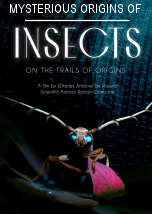
Mysterious Origins of Insects

   2024    Science    HD
The film explores the eye-opening realm of these creatures to better understand how they evolved. Travelling from the rain forests of French Guiana to the Arctic Ocean, scientists use traditional and cutting edge techniques to examine both modern insects and the fossil record in their search for a single common insect ancestor. Insects are vital to life on our planet, yet almost 40% of known species are in danger of extinction.
Insects are the most diverse group of organisms on Earth. The true number of species is unknown, but some estimates suggest that only a fraction have been identified. They have successfully adapted to every ecosystem on our planet. But insects still harbour many mysteries. Where do they come from? When did they first appear on Earth? How and why have they diversified and multiplied so successfully? At a time when certain insect species are in danger of extinction and there is greater interest in their role within ecosystems, this is the fascinating story of their origins.

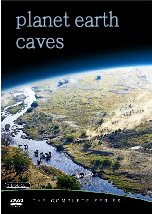
Caves

   2007    Nature
The Cave of Swallows in Mexico is a 400m vertical shaft, deep enough to engulf the Empire State Building. The Lechuguilla cave system in the USA is 193km long and 500m deep with astonishing crystal formations hanging from its chambers. Although often overlooked, caves are remarkable habitats with equally bizarre wildlife. Cave angel fish cling to the walls behind cave waterfalls with microscopic hooks on their flattened fins. Cave swiftlets navigate by echo-location and build nests out of saliva. The Texas cave salamander has neither eyes nor pigment. Unique access to a hidden world of stalactites, stalagmites, snotites and troglodytes brings a wealth of surprises.
Series: Planet Earth

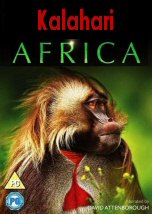
Kalahari

   2013    Nature
In Africa's ancient south west corner, two extraordinary deserts sit side by side. Water is in short supply, yet these deserts are somehow full of life because the creatures that live here have turned the rules of survival on their head. This film celebrates nature's ingenuity, no matter how tough it gets. In the Kalahari scrublands, clever meerkats are outsmarted by a wily bird, solitary and belligerent black rhinos get together to party and giant insects stalk huge flocks of birds. Rain almost never falls in the Namib - instead it must make do with vaporous, vanishing fog. The creatures in this, the world's oldest desert, have gone to the extremes, as spiders wheel to escape and a desert giraffe fights to defend his scant resources in the greatest giraffe battle ever filmed.
Series: Africa with David Attenborough

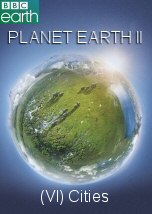
Planet Earth II Cities

   2016    Nature    HD
Cities are growing at a faster rate than any other habitat on Earth. They may seem an unlikely place for animals to thrive, but they can be a world of surprising opportunity. Leopards prowl the streets of Mumbai, peregrine falcons hunt amongst New York's skyscrapers, and a million starlings perform spectacular aerial dances over Rome. In Jodhpur, langurs are revered as religious deities and in Harar, locals live in harmony with wild hyenas. Many animals, however, struggle to cope in the urban jungle. As the architects of this environment, can humans choose to build cities that are homes for both them and wildlife?
Series: Planet Earth II