The series explores the incredible universe inside each and every one of us. Through an examination of diverse personal stories from around the world, Human reveals how our everyday lives, our passions, and our goals are powered by the amazing systems that define our biology as a species. The first episode goes on a journey with parents who are preparing for new life to see how our bodies create and sustain new life. Through their stories we learn about what is fundamentally shared and absolutely unique about the experience of birth.
In households across the world, pets are at the heart of family life. They share our homes, but how well do we really know them? In this series we'll dig deep into our pets' inner lives to discover the secrets they've kept hidden until now. From spectacular feats of communication to extreme athleticism, extraordinary intelligence and incredible super senses. We'll meet remarkable pets from across the globe whose owners have harnessed their hidden skills and shared them with the world and will use groundbreaking technology to reveal how amazing their brains and bodies really are. In the first episode, a base-jumping border collie, a bopping cockatoo, and racing rats show that animal intelligence can get a big boost in the right enriched environment.
Bill Gates is on a mission. He needs to unlock the mysteries of the PDP-10 computer. But the adults won't share the source code with 13-year-old Bill. So he enlists his older friend Paul Allen. Together they boldly go where no one has gone before. If they find the source code, Bill and Paul will finally be able to master the computer. The connections that shaped Bill Gates' life come into focus, including a childhood friendship and his unique bond with Microsoft co-founder Paul Allen.
The end of a decade when the world was in crisis and inspiration and hope needed resurrecting, an influential duo released a masterpiece of popular music, Bridge Over Troubled Water. Through darkness and light, the album takes its listeners on an emotional ride echoing the era and one which continues to inspire an audience the world over 50 years later. Its symphonic hymn of a title track became an anthem for a generation. The Harmony Game tells the story behind what is widely considered Simon and Garfunkel's best work, Bridge Over Troubled Water. The influential duo's last studio album has its legacy shrouded in rock n' roll mythology with legendary tales of inspiration, innovation and separation. Paul Simon, Art Garfunkel and their collaborators share the journey in their own words and reflect back on its impact 50 years later and includes never before seen film, photos and memorabilia.
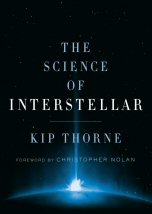
In The Science of Interstellar, Kip Thorne, the physicist who assisted Nolan on the scientific aspects of Interstellar, shows us that the movie's jaw-dropping events and stunning, never-before-attempted visuals are grounded in real science. Thorne shares his experiences working as the science adviser on the film and then moves on to the science itself. In chapters on wormholes, black holes, interstellar travel, and much more, Thorne's scientific insights-many of them triggered during the actual scripting and shooting of Interstellar-describe the physical laws that govern our universe and the truly astounding phenomena that those laws make possible.
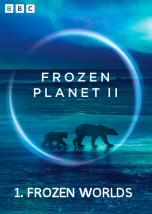
Journeying from pole to pole, The series 'Frozen Planet II' reveals surprising worlds that exist across the planet and the remarkable animals that make them their home. In a fragile world of beauty and hostility, nature finds a way to survive and thrive. David Attenborough explores a planet on the brink of major change. In the first episode, we begin our journey in the far south, in the most hostile place on earth, the frozen continent of Antarctica. After being raised on the ice in winter, emperor penguin chicks find themselves abandoned by their parents in spring. To survive, they must find their own way across the treacherous sea ice to the rich waters of the Southern Ocean. The waters surrounding Antarctica may be the richest of all, but they are also home to an exceptionally sophisticated predator, the killer whale. To reach their favored prey, Weddell seals, a family of killer whales have learnt to generate their own waves, washing the seals off their ice floes. It’s a technique that has been passed down over generations and is coordinated by the family matriarch, who can be over 100 years old. Leaving Antarctica and travelling north, we discover frozen habitats that are created by altitude. The greatest of these is the Himalaya, the tallest mountain range on earth, which contains so much ice and snow it is known as the third pole. In the shadow of the Himalaya lies a vast frozen grassy plain that is home to the fluffiest cat in the world, Pallas’s cat. It may have extremely dense fur, but if it’s to survive the Mongolian winter, it needs to catch lots of gerbils and voles. Easier said than done when you only have short legs and paws that are sensitive to the cold. North of the Great Steppe lies the boreal forest, which encircles the continents of North America, Europe and Asia, and remains frozen for six months of the year. Prowling these forests in the far east of Russia is the Siberian tiger, the largest cat in the world. In winter, it is on the lookout for black bears hibernating in caves, a high-risk strategy that only a cat of this size would attempt. Above the boreal forest, we cross into the Arctic Circle, where conditions become so extreme that trees can no longer grow. This is the tundra. Living here are relics of the last ice age, musk ox. In spring, their calves face a far greater danger than the cold, grizzly bears. Encounters can be brutal, but if just a few calves survive the gauntlet, the herd’s future is secure. To the north of the tundra is the Arctic Ocean, the only ocean that can completely freeze over. Living here is one of the most peculiar animals on earth, the hooded seal. Males have extraordinary inflatable noses, producing a bright red balloon out of their left nostrils. One male hopes this will make him irresistible. All of the frozen habitats share one thing in common: the threat posed by today’s climate change. Travelling to the island of Greenland, home to the largest body of ice in the northern hemisphere, we witness how global warming is melting its ice cap at faster rates than ever before, with profound consequences for global sea levels. Lastly, we visit the Arctic’s most iconic resident, the polar bear, as a mother bear struggles to provide for her cubs in a world of shrinking sea ice.








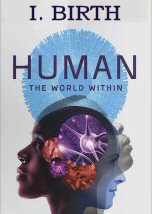







The first episode goes on a journey with parents who are preparing for new life to see how our bodies create and sustain new life. Through their stories we learn about what is fundamentally shared and absolutely unique about the experience of birth.