Dylan Jones is in the driving seat for this authoritative four-part look back. No stone remains unturned, as he revisits the New Romantics, rap, modern dance music, hip-hop, indie jingle, synth-pop, house music and club culture. He makes the case that the 1980s was the most radical, innovative and creative decade in the history of pop because, unlike other decades, unleashed a myriad of new musical genres in just 10 years. In the first part, Dylan Jones explores how in this decade the world-conquering genres of rap, hip-hop and modern dance music were launched, while guitar-driven indie flourished in a constellation of scenes spread out across the world. And a technological revolution was changing how music was made, filling the charts with a starburst of innovative records. Meanwhile, the launch of MTV turned pop into a visual medium, allowing artists as varied as U2 and Eurythmics to take charge of how they presented themselves. Featuring interviews with Nile Rodgers, Bananarama, Primal Scream's Bobby Gillespie, Mark Ronson, Trevor Horn and Soul II Soul's Jazzie B.
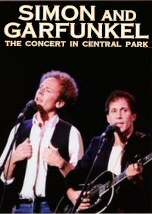
The film is the long-awaited reunion concert of the renowned folk pop music duo, more than a decade after their separation as musical performers. It was recorded on the 19th September 1981 at a free benefit concert on the Great Lawn in Central Park, New York City, where the pair performed in front of an audience reported at the time as 500,000 people. The film includes two songs that had not appeared on the album. Rolling Stone called the concert 'one of the finest performances, one that vividly recaptured another time, an era when well-crafted, melodic pop bore meanings that stretched beyond the musical sphere and into the realms of culture and politics.'
Autistic minds provide windows into how we all think, feel, and behave. A complete brain science should be able to account for all kinds of minds and brains. As long as some minds remain a mystery, so too will all minds. Michael Stevens travels to London to meet a blind, autistic savant with astonishing musical abilities, and volunteers to have his brain's function temporarily disrupted at UCLA's Neuromodulation Lab.
The band heads to Nashville, Tenn. Dave sits down with Dolly Parton, Tony Joe White, Steve Earle, Willie Nelson, Emmylou Harris and producer Tony Brown to discuss Nashville's musical influences and the Nashville sound. Foo Fighters prepare to record at Southern Ground studio, owned by country musician Zac Brown, who also guests on the song 'Congregation'.
Dave Grohl returns to his musical roots, while the Foo Fighters prepare to record at Seattle's Robert Lang Studio with Death Cab for Cutie's Benjamin Gibbard. Dave sets his focus on the Seattle music scene, mainly the grunge movement and its implications in American Rock Music. Interviews with Chris Cornell, Nancy Wilson, Bruce Pavitt.
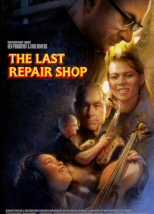
Winner of the Best Documentary Short Award, the film tells the story of four unassuming heroes who ensure no student is deprived of the joy of music. It is also a reminder of how music can be the best medicine, stress reliever and even an escape from poverty. Since 1959, Los Angeles has been one of the few United States cities to offer and fix musical instruments for its public school students at no cost. Those instruments, numbering around 80,000, are maintained at a Los Angeles downtown warehouse by a handful of craftspeople. The film profiles four of them, each specializing in an orchestra section, as well as students whose lives have been enriched by the repair shop's work. The film concludes with a performance by district alumni.







In the first part, Dylan Jones explores how in this decade the world-conquering genres of rap, hip-hop and modern dance music were launched, while guitar-driven indie flourished in a constellation of scenes spread out across the world. And a technological revolution was changing how music was made, filling the charts with a starburst of innovative records. Meanwhile, the launch of MTV turned pop into a visual medium, allowing artists as varied as U2 and Eurythmics to take charge of how they presented themselves. Featuring interviews with Nile Rodgers, Bananarama, Primal Scream's Bobby Gillespie, Mark Ronson, Trevor Horn and Soul II Soul's Jazzie B.