In episode 3, Artemis arrives on the exoplanet Minerva B, but will she find evidence of life? This is a vision of our future, the fateful day in a far-flung corner of the universe, when a probe from Earth initiates the first descent onto an alien world, looking for proof of life beyond our solar system. There are no witnesses, no cheering crowds in the control room. A decade or more will pass before news finally reaches us, back across the dark oceans of space. But the seeds of this mission are already being sowed today by the first generation of scientists bold enough to believe it could be possible.
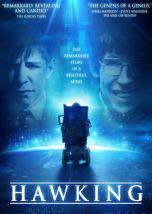
Hawking is the extraordinary story of the planet's most famous living scientist, told for the first time in his own words and by those closest to him. Made with unique access to Hawking's private life, this is an intimate and moving journey into Stephen's world, both past and present. An inspirational portrait of an iconic figure, Hawking relates his incredible personal journey from boyhood under-achiever, to PhD genius, to being diagnosed with Motor Neuron Disease and given just two years to live. Despite the constant threat of death, Hawking manages to make many remarkable scientific discoveries and rises to fame and super-stardom. Hawking - a remarkable man, and a remarkable movie.
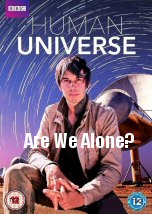
Is mankind alone, or are there aliens out there, either waiting to be discovered, or on their way to find Earth? Professor Brian Cox spends this episode asking such questions, and what he discovers may raise a few eyebrows. He begins by exploring the human race's efforts to find neighbours in outer space, including the launch of two golden discs containing a greeting from Earth in the 1970s; they are still travelling and are now the most distant man-made objects from the planet. Brian also meets members of the Search for Extra-Terrestrial Intelligence, who have been monitoring radio signals for 50 years without success, before discussing the ingredients needed to make an intelligent civilisation with astrophysicist Dr Frank Drake.
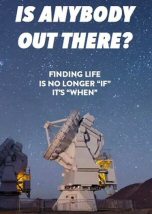
In August 1977, the Big Ear Radio-telescope in Ohio received a strange signal from the Sagittarius constellation while searching for intelligent extra-terrestrial life. It had a duration of 72 seconds and an intensity 30 times higher than usual. Named the Wow signal, it is still being considered as one of the best examples of having being sent by intelligent extraterrestrial life. But, nothing has revolutionised the search of extra-terrestrial intelligent life as much as the recent discovery by the Kepler Satellite, of thousands of Earth-like planets where life could be possible. Join the debate with this stunning documentary, as we ask Is Anybody Out There?
Humans are so clever they’ve built their own habitat, designed to keep wild nature out. Yet as we discover the urban environment is totally dependant on the natural world. Over the three years of filming for Human Planet, the teams have spent time with over seventy different communities in countries across the planet. Despite seeing many different ways of living, there are some aspects of family life that remain the same whether you live in a tree house in West Papua, or a brick house in Bolton. These similarities became very clear when the urban team went to film on a rubbish dump in Kenya. Here on the Kibarani dump on the outskirts of Mombasa, Ali, Ashe and their family live and survive amongst the rubbish, and even here, just like anywhere on the planet, everything stops for a nice cup of tea!
David Attenborough brings us the universal story that unites each of us with every animal on the planet, the story of the greatest of all adventures - the journey through life. For animals there is just one goal in life - to continue their bloodline in the form of offspring, the next best thing to immortality. The series shows how animals attempt to overcome the challenges that face them at each of the six crucial stages of life as they strive towards ultimate success." In the journey towards adulthood, a moment comes for all animals when they must strike out on their own. With their parents absent they must learn to survive in a dangerous world. At this stage of life every small success may mean the difference between life and death.














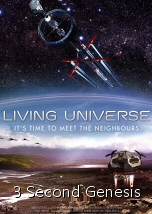









There are no witnesses, no cheering crowds in the control room. A decade or more will pass before news finally reaches us, back across the dark oceans of space. But the seeds of this mission are already being sowed today by the first generation of scientists bold enough to believe it could be possible.