The second episode of the series immerses the viewer in a fascinating journey through the history of life on our planet, focusing on the evolution and adaptation of life in the seas. It begins billions of years ago, when the Earth was an inhospitable place and life was impossible on the surface due to a hostile environment. The documentary highlights how, beneath the waves, life began to flourish, protected from storms and other elements of nature. It addresses the development of photosynthesis by plankton and how this led to a significant change in the Earth's atmosphere, allowing the emergence of animal life. This visually stunning narrative chronicles the evolution of various forms of marine life, from the earliest complex life forms to the appearance of the first fish and cephalopods. The documentary shows how marine life has influenced terrestrial life, emphasizing the impact of the 'greening' of planet Earth.
Jean Hargadon Wehner discusses how she came to remember years later the sexual abuse she suffered at Archbishop Keough High School. She also talks about what happened when she reported the abuse to Church officials and how she realized she was connected to the death of Sister Cathy Cesnik. As the can of worms is opened on the hidden world in the high school and the people begin to talk about what happened behind closed doors. With the Jean’s accusations, Abbie Schaub, Gemma Hoskins, and Tom Nugent learn about a story of a graveyard and a source nicknamed 'Deep Throat' who could hold the key.
The film takes you on a gripping journey through one of history’s most devastating natural disasters—the 2004 Indian Ocean Boxing Day tsunami. With intimate, first-hand accounts from survivors around the globe, the documentary unveils the terrifying sequence of events on the morning of December 26th, 2004. Through raw and compelling personal narratives, viewers are transported to the chaotic moments when the colossal wave struck, forever altering lives and reshaping entire communities. Among these unforgettable stories is that of Rob, an Englishman whose harrowing account of trying to rescue his family from a serene Sri Lankan beach brings the human cost of the disaster into stark focus. The film not only chronicles the tragic loss of approximately 230,000 lives and the displacement of 1.4 million people but also examines the enduring impact of the tsunami on a generation defined by both profound loss and incredible resilience. This riveting portrayal promises to captivate audiences with its blend of human drama and historical significance, urging viewers to reflect on the power of nature and the strength of the human spirit.
Rasputin is gone, but Nicholas II continues his catastrophic policies in war and at home. When Nicholas goes back to military headquarters, he is in fact leaving control of government, exactly when Russia needed to be held together by its Czar. The war by this time is deeply unpopular. It's not only unpopular, it's also arguably the engine that's causing enormous economic crisis, that's causing general unrest. Deprivation pushes the population from unrest to revolution.
As Michelle's loved ones cope with her sudden death, her work to unmask the Golden State Killer lives on. After inheriting Michelle's 37 boxes of case files, Paul Haynes and Billy Jensen work alongside Patton Oswalt, to finish her book.
The film offers an unprecedented exploration into the life of Elizabeth Taylor, Hollywood's quintessential star. With extraordinary access to Taylor's personal archives and 40 hours of newly unearthed, intimate audio interviews with journalist Richard Meryman, audiences are invited to rediscover, not just a mega star of Hollywood's Golden Age, but a complex woman who navigated lifelong fame, personal identity, and public scrutiny on a global stage from early childhood. These candid conversations peel back the layers of one of cinema's most enduring icons, revealing a woman at odds with her public image, yearning for respect and agency. The film follows the life of an actress who defied the era's expectations by portraying strong-willed women on-screen, offering a nuanced portrait of the intersection of vulnerability and strength.



















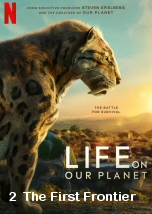





This visually stunning narrative chronicles the evolution of various forms of marine life, from the earliest complex life forms to the appearance of the first fish and cephalopods. The documentary shows how marine life has influenced terrestrial life, emphasizing the impact of the 'greening' of planet Earth.