The last chapter explains how the 2010s became another lost decade in the fight against climate change – as the move to natural gas delayed a transition to more renewable sources of energy. Engineer Tony Ingraffea, in the 1980s, helped develop a new technique for extracting gas and oil from shale rock, which ultimately became known as 'Fracking'. It was to unleash vast new reserves of fossil fuels and was promoted as a cleaner energy source. But Ingraffea explains how he later came to regret his work when he realized that gas could be even worse for climate change than coal and oil. Dar-Lon Chang, a former ExxonMobil engineer, speaks for the first time on camera alleging that as the company increased its natural gas operations, it was not sufficiently monitoring methane leaks that were contributing to climate change. Now, after a year of unprecedented wildfires, drought and other climate-related disasters, multiple lawsuits are being brought in US courts in efforts to hold Big Oil legally accountable for the climate crisis.
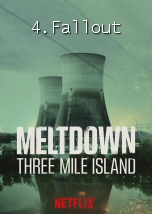
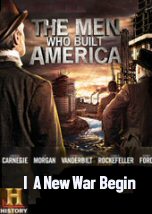
In the last episode, despite disturbing revelations of wrongdoing at Three Mile Island before and after the accident, the utility fights to bring the plant back online. Its Unit 1 had its license temporarily suspended following the incident at Unit 2. Although the citizens of the three counties surrounding the site voted by an overwhelming margin to retire Unit 1 permanently in a non-binding resolution in 1982, it was permitted to resume operations in 1985 following a 4–1 vote by the Nuclear Regulatory Commission. In 2017, it was announced that operations would cease by 2019 due to financial pressure from cheap natural gas, unless lawmakers stepped in to keep it open. Unit 1 shut down on September 20, 2019. Billed as the worst nuclear incident in U.S. history, what’s particularly scary here is how close Three Mile Island incident came to becoming a national disaster. Without giving away the whole story, cost-cutting 'solutions' almost cause a catastrophic disaster.
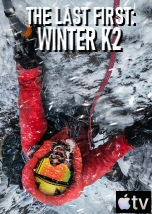
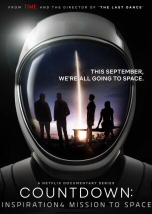
As training begins, the crew members process the physical, mental and technical demands being placed on them. The group is going to be in some intentionally uncomfortable situations and, to see how they do as a team. A climb of Mt. Rainier puts them to the test.
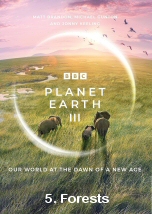
Journey to secret worlds where lives are wrapped in unexpected of ways. The fifth episode of the series takes viewers into the fascinating world of forests, revealing their hidden complexities and the intricate relationships within. Initially perceived as tranquil, forests are in fact bustling with life and intricate ecological interactions. The episode showcases various species, each with its unique lifestyle and survival strategies. Highlights include the Oriental pied hornbills in Borneo, whose extraordinary nesting rituals and partner dynamics are captivating. The Amazon rainforest is explored, introducing the peculiar treehoppers and their unique communication methods, vital for survival amidst numerous predators like ants and assassin bugs. The episode also delves into the intelligent and cooperative hunting techniques of dholes in the forests of India. The narrative takes a turn to China, focusing on the visually stunning courtship displays of Temminck's tragopans and golden pheasants. In the temperate rainforests of Western Canada, the rare spirit bear and its unique relationship with its habitat are examined. The episode concludes with an insightful look at the impact of human activity on forests and their inhabitants, particularly focusing on chimpanzees in Uganda, whose survival is increasingly intertwined with human expansion.
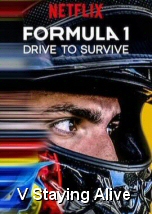
Ricciardo is still trying to get to grips with that pesky papaya number, whilst things get tetchier and tetchier between the Macca team-mate as races go by. 'We’re very different,' says Norris darkly. Luckily there's a sprint race for Ricciardo to get his Mansell-esque chops into, then it all falls into place. Bottas gets a grid penalty, Verstappen and Hamilton waltz off the track together and Norris promises not to overtake the old man in front a la Damon Hill / Ralf Schumacher at Spa ’98. The Honey Badger is back!
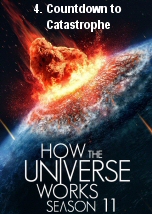
November 4, 2029. We face a countdown to catastrophe. A giant asteroid hurtles towards Earth at 40,000 mph. It's heading straight for the eastern seaboard of the United States. The space rock could wipe out an entire city and cause widespread devastation. Can Earth survive? Now, experts confront the story of this fictional asteroid event to determine what could happen, and how it might be stopped.











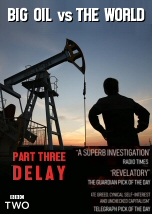





Engineer Tony Ingraffea, in the 1980s, helped develop a new technique for extracting gas and oil from shale rock, which ultimately became known as 'Fracking'. It was to unleash vast new reserves of fossil fuels and was promoted as a cleaner energy source. But Ingraffea explains how he later came to regret his work when he realized that gas could be even worse for climate change than coal and oil.
Dar-Lon Chang, a former ExxonMobil engineer, speaks for the first time on camera alleging that as the company increased its natural gas operations, it was not sufficiently monitoring methane leaks that were contributing to climate change. Now, after a year of unprecedented wildfires, drought and other climate-related disasters, multiple lawsuits are being brought in US courts in efforts to hold Big Oil legally accountable for the climate crisis.