The fourth episode of the series takes you on an epic journey through time, beginning 252 million years ago, in a world devastated by the greatest mass extinction in history. Discover how, from the ashes of this cataclysm, fungi become the dominant form of life in an almost apocalyptic landscape. Witness the astonishing story of survival and adaptation of the Lystrosaurus, curious ancestors of mammals, who emerge as the unlikely heirs of the Earth and transform into the dominant creatures, only to be eventually dethroned by new giant predators like the Erythrosuchus. The documentary culminates with the impressive era of dinosaurs and how they adapted to a constantly changing world, and the reigns of the plesiosaurs and pterosaurs, rulers of the oceans and the air. Finally, learn how these titans gave way to modern reptiles and current birds, leaving a legacy that endures to this day. This documentary is a window into the fascinating evolutionary history of our planet, showing the resilience and diversity of life through the ages. Prepare to be amazed, informed, and deeply moved by this spectacular chronicle of life on our planet.
Charles Franz talks about his relationship with Father Maskell as a young student and reveals what he knows about the Church’s involvement with Maskell. Cathy’s sister sees the necklace given by Edgar Davidson and questions if it has significance. Potential DNA and evidence could exist for the crime, and the police might be forced to act. A push for victims’ rights in Maryland goes to a committee but getting justice might be more difficult... and time doesn’t stand still for anyone.
Our super friends in the animal world possess so many hidden superpowers. In the third episode we meet heat-seeking dogs, GPS-outfitted cats, and a sporty goldfish with squad goals. When we think we know them inside out, dogs surprise us with something new. what sensory superpower have dogs been hiding all this time? They have a thermal sensor in the tip of his nose. In the wild, a dog could use his thermal nose to spot the heat of a prey animal, allowing him to hunt even if his other senses were impaired. It also explains that uncanny knack for stealing a warm seat.
Narrated by Morgan Freeman, this ambitious documentary series unfolds the extraordinary story of the universe across millions of years, weaving together its deep connection to life on Earth. In the first part of the series, we offer the first three episodes, beginning with an intense exploration of the sun as a life-giving force, following one cheetah’s hunt for survival across the vast plains of the Serengeti. From there, we witness the steady pulse of the universe through the eyes of a chimpanzee, tracing life’s path from birth to a final moment of calm. Finally, we immerse ourselves in the challenging year of an Alaskan brown bear as it endures the harsh winter, emerging into the warmth and renewal of summer. Each scene offers a breathtaking glimpse into the delicate and awe-inspiring rhythms of life, nature, and the cosmos.
The film offers an unprecedented exploration into the life of Elizabeth Taylor, Hollywood's quintessential star. With extraordinary access to Taylor's personal archives and 40 hours of newly unearthed, intimate audio interviews with journalist Richard Meryman, audiences are invited to rediscover, not just a mega star of Hollywood's Golden Age, but a complex woman who navigated lifelong fame, personal identity, and public scrutiny on a global stage from early childhood. These candid conversations peel back the layers of one of cinema's most enduring icons, revealing a woman at odds with her public image, yearning for respect and agency. The film follows the life of an actress who defied the era's expectations by portraying strong-willed women on-screen, offering a nuanced portrait of the intersection of vulnerability and strength.
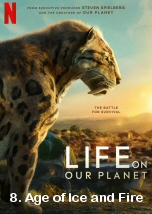
The final episode begins with a description of the extreme cold conditions that characterized the beginning of the Holocene period, and how species like the bison and the wolf adapted to survive in these hostile environments. We will witness the majesty of the woolly mammoth and the fierce cave lion, with a vivid reconstruction of their struggles for survival. We'll see the impact of climate change during this period, from the expansion of the deserts to the transformation of the tropical rainforests of Africa into grasslands, deeply affecting primates and other animals. It highlights how these changes forced primates to adapt to life on the ground, facing new challenges and predators. A crucial turn occurred with the emergence of humans as dominant predators and their influence on the extinction of large mammals. The documentary describes humanity's transition from hunter-gatherers to farmers, a change that radically altered the landscape and biodiversity of the planet. Finally, it poses a reflection on the current challenges of climate change and the sixth mass extinction, inviting viewers to consider humanity's crucial role in shaping the future of the Earth.






















This documentary is a window into the fascinating evolutionary history of our planet, showing the resilience and diversity of life through the ages. Prepare to be amazed, informed, and deeply moved by this spectacular chronicle of life on our planet.