In episodes 11 and 12, the Allies try to turn victory in North Africa into a direct road toward Nazi Germany, only to discover that Italy will be anything but the “soft underbelly” Winston Churchill imagined. From Sicily to Salerno, Anzio, Monte Cassino and the long road to Rome, the campaign becomes a grinding test of endurance, strategy and sacrifice. What was hoped to be a swift breakthrough into the heart of Hitler’s Reich turns into months of mud, mountains, shattered towns and devastating losses, revealing the brutal cost of forcing open a new front in Europe. The story then rises into the skies, where another deadly battle is being fought above the continent. Allied bomber crews fly from England into the heart of Nazi-occupied Europe, facing freezing altitude, flak, fear and the lethal power of the German Luftwaffe. As B-17s, fighter escorts and air commanders struggle to win control of the air, every mission becomes a gamble between destruction and survival. Together, these episodes show a war closing in on Germany from the ground and from the sky, where courage, technology and human endurance collide on a terrifying scale.
From an early age, a Hungarian prodigy named Judit Polgar was raised to believe that genius could be trained — and that she would prove it to the world. Guided by an ambitious father who rejected convention and educated his daughters at home through relentless chess training, she entered a battlefield long dominated by men. What followed was a 15-year journey of discipline, pressure, and defiance, as she refused to compete in women-only tournaments and instead took on the strongest grandmasters on earth. Facing the towering presence of world champion Garry Kasparov and the weight of global skepticism, she shattered barriers move by move, redefining what was thought possible for women in elite competition. This inspiring documentary reveals not only the brilliance of her mind, but the emotional cost of greatness — a story of talent, ambition, control, and liberation played out across the 64 squares of the chessboard.
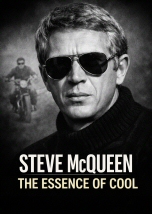
Few actors have ever defined cool the way Steve McQueen did. This compelling documentary traces the rise of a rebellious outsider who became one of Hollywood’s most iconic stars, blending raw charisma with a quiet intensity that captivated audiences worldwide. Through rare footage, interviews and personal insights, it reveals the man behind the legend — driven, restless and determined to live life on his own terms. Beyond the fame, the film explores the contradictions that shaped him: a troubled past, a relentless pursuit of freedom and a passion for speed, risk and authenticity that bled into every role he played. From unforgettable performances to his enduring cultural influence, it offers a powerful portrait of a man who didn’t just play heroes — he became one.
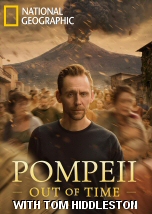
Tom Hiddleston returns to the ancient city that first awakened his fascination with the Roman world, determined to uncover a story far more human than the familiar tale of sudden destruction. Drawing on new archaeological evidence, expert analysis and vivid dramatic reconstruction, he follows three real Romans through the final hours before and during the eruption of Mount Vesuvius: Avianius, a headstrong young apprentice searching for his mother; Julia Felix, a wealthy and independent businesswoman responsible for an entire household; and a veteran soldier who risks everything to help others escape. As earthquakes intensify, ash begins to fall and burning avalanches race towards Pompeii and Herculaneum, every decision becomes a struggle between fear, loyalty and survival. Who understood the warning signs? Who fled, who stayed behind—and whose courage gave others a chance to live? Presented here as one uninterrupted feature containing all three episodes, this extraordinary journey allows viewers to experience the complete disaster from its first tremors to its devastating final surge, revealing Pompeii not simply as a city of death, but as an unforgettable story of ordinary people facing the end of their world.
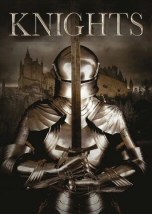
From ordinary mounted warriors to the legendary figures who came to embody courage, honour and chivalry, medieval knights dominated European life for centuries. Through dramatic reconstructions, historical experiments and surviving evidence, this series reveals the harsh reality behind the romantic image: brutal battles and personal feuds, swordsmanship and tournaments, the construction and defense of castles, courtly love and the strict codes of honour that could turn an insult into a fight to the death. It also follows knights to the Holy Land, where crusaders risked everything in pursuit of glory, wealth and salvation, while figures such as John of Bohemia and Joan of Arc show how courage and legend became inseparable from the medieval warrior. Presented here as all three episodes consecutively in a single video, the complete story also reveals how the world that created the knight eventually destroyed him. The rise of robber knights such as Götz von Berlichingen, the spread of mercenary warfare and increasingly spectacular tournaments mark the final years of an old order, while longbows, cannon, artillery and massed infantry transform the battlefield forever. Emperor Maximilian, celebrated as the “Last of the Knights,” embraces these new weapons even as he glorifies the traditions of chivalry. By the end, the armoured horseman who had ruled castles, battlefields and entire communities for centuries has become obsolete in war—but immortal in legend.
In the final three episodes of the series, Chris Packham follows three extraordinary evolutionary journeys to discover how the relentless demands of survival transformed simple early animals into some of the most remarkable creatures alive today. In Borneo, the voracious appetite of the bat leads back more than half a billion years to the origins of the through-gut, the first anus, heads and jaws, revealing how the need to find and consume food helped reshape animal life and ultimately produced the bat’s extraordinary powers of hearing. In the Bahamas, the intelligence of dolphins opens an even deeper story: from ancient cells able to sense light to the evolution of eyes, complex brains, sophisticated senses and the remarkable minds of modern dolphins. The journey culminates with one of nature’s supreme athletes. Tracing the horse’s ancestry through hundreds of millions of years, Packham reveals how primitive muscle cells evolved into increasingly powerful systems for movement, how beating hearts supplied those muscles with oxygen, and how limbs became ever more effective tools for locomotion. Slithering, swimming, walking and running eventually converge in an animal built for extraordinary speed and endurance. Together, these final episodes reveal a breathtaking truth: hunger, perception and movement were not merely necessities of survival—they were powerful evolutionary forces that helped create the astonishing complexity of animal life.

















The story then rises into the skies, where another deadly battle is being fought above the continent. Allied bomber crews fly from England into the heart of Nazi-occupied Europe, facing freezing altitude, flak, fear and the lethal power of the German Luftwaffe. As B-17s, fighter escorts and air commanders struggle to win control of the air, every mission becomes a gamble between destruction and survival. Together, these episodes show a war closing in on Germany from the ground and from the sky, where courage, technology and human endurance collide on a terrifying scale.