Physicist Bob Lazar claims he was recruited in the late 1980s to work at a secret facility known as S4, near Area 51, where his task was to study and reverse-engineer advanced craft of unknown origin. With a background linked to Los Alamos, he describes in detail the technology he encountered, including propulsion systems unlike anything publicly known and materials that seem to defy conventional physics. Through his testimony, archival footage and interviews, the film reconstructs what he says happened inside one of the most secretive programs ever alleged. As his story unfolds, it raises concrete questions about classified research, government secrecy and whether some technological breakthroughs may already exist beyond public reach.
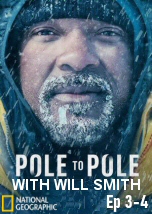
In episodes 3 and 4, the journey intensifies as Will Smith pushes deeper into both the physical and emotional extremes of the planet. In the Amazon, he ventures into dense, unforgiving jungle in search of the elusive green anaconda, confronting fear, danger, and the raw power of one of Earth’s most mysterious predators. Guided by local experts, the expedition becomes a test of courage and trust in a world where nature sets all the rules. The adventure then shifts dramatically to the Himalayas, where the challenge is no longer survival but meaning. High above the clouds, Will explores the idea of happiness alongside monks, scientists, and mountain communities, discovering how isolation, altitude, and ancient wisdom reshape the human mind. Together, these episodes connect the wildness of nature with the inner journey of self-discovery, revealing that the greatest expedition may be the one within.
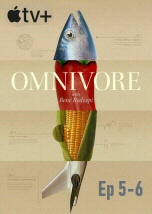
In episodes 5 and 6, you can see how two everyday foods open the door to something far bigger: Memory, survival, tradition and the uneasy bond between humans and the natural world. One journey takes you to La Alberca, in Spain, where the pig is not just an animal but part of a living ritual charged with history, pride and contradiction. The other leads into the rice fields of Kerala, India, where every grain carries the weight of climate, heritage and the fight to preserve ways of life that are slipping away. These chapters do far more than show food on a plate: they reveal beauty, tension and the hidden forces that sustain entire cultures, making each scene feel rich, intimate and impossible to forget.
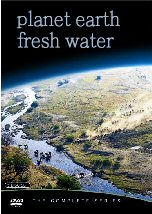
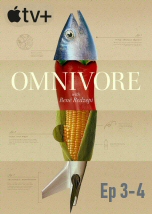
In episodes 3 and 4, a seemingly simple ingredient becomes the invisible force that has shaped civilizations, fueled exploration, and quietly dictated the fate of empires. From ancient trade routes to modern industry, salt emerges not just as a seasoning, but as a powerful driver of human history and survival. At the same time, the story shifts to something far more familiar yet equally unsettling: the global dominance of a single type of banana. What appears to be abundance hides a fragile system built on uniformity, where one disease could wipe out a staple food relied upon by millions. As the journey unfolds, the narrative exposes the hidden cost of convenience and monoculture, revealing how the loss of biodiversity is not a distant ecological concern but an immediate threat to our food security and future. With striking connections between past and present, these episodes invite you to rethink what you eat, where it comes from, and how something as ordinary as salt or a banana could hold the key to understanding the balance—and imbalance—of our world.
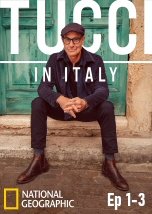
Guided by Stanley Tucci, this documentary journeys into the heart of Italy to reveal the country as it truly is, complex, contradictory, and deeply rooted in its culinary traditions. Through food, Tucci uncovers stories of history, identity, and innovation, showing how every dish reflects centuries of culture, migration, and local pride. What emerges is not a postcard Italy, but a living, evolving nation where cuisine is a language spoken by everyone. In the first three episodes, Tucci immerses himself in Tuscany, savoring the artistry of its cuisine while exploring Florence and Siena, where Renaissance creativity still shapes the table. He then heads north to Italy’s industrial regions, discovering cutting-edge gastronomy and futuristic farming, from high-tech agricultural labs to unexpected gourmet food found at service stations. Finally, in the German-speaking Alpine north, he explores a dual cultural identity through mountain dishes, skiing traditions, and glacial river fishing, revealing how history, borders, and landscape have forged a cuisine unlike any other in Italy.
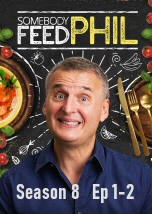
This beloved culinary travel series follows Phil as he journeys across the globe with boundless curiosity, a contagious laugh, and an appetite for connection. More than just a food show, each episode blends local traditions, heartfelt conversations, and cultural discoveries, as Phil shares meals with chefs, families, and friends who reveal the soul of their cities through flavor. With warmth, humor, and genuine enthusiasm, the series celebrates how food brings people together in the most unexpected and joyful ways. In the first two episodes, Phil dives into Amsterdam’s vibrant culinary landscape, tasting everything from herring and smoked eel to sweet stroopwafels and fluffy pancakes, while sharing a memorable meal with Bridgerton star Claudia Jessie. He then heads to San Sebastián, the gastronomic jewel of Spain, indulging in exquisite pintxos, world-renowned seafood, and crisp Txakoli wine, savoring every bite in a city where culinary artistry is a way of life.









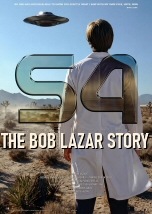



Through his testimony, archival footage and interviews, the film reconstructs what he says happened inside one of the most secretive programs ever alleged. As his story unfolds, it raises concrete questions about classified research, government secrecy and whether some technological breakthroughs may already exist beyond public reach.