In episodes 7 and 8, we see how World War II descends into one of the darkest chapters in human history while the Allies prepare to strike back for the first time on a new front. As Hitler’s power spreads across Europe, Nazi hatred turns persecution into policy, pushing Jewish families from discrimination and public humiliation into ghettos, deportations, mass murder, and the horror that will become known as the Holocaust. The war is no longer only a struggle for territory, armies, and empires; it becomes a confrontation with an ideology built on cruelty, fear, and the destruction of an entire people. The story then shifts to North Africa, where the Western Allies must prove they can fight Germany on land. In Operation Torch, inexperienced American troops and their untested commander, Dwight D. Eisenhower, join British forces in a dangerous gamble against the battle-hardened Afrika Korps and the legendary Erwin Rommel. Across deserts, ports, and unforgiving battlefields, the campaign becomes a harsh lesson in modern war, exposing Allied weaknesses while opening the road toward Europe. These two episodes combine moral catastrophe and military turning point, showing both the depths of Nazi evil and the first difficult steps toward its defeat.
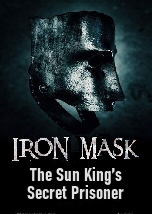
France, 17th Century. For more than three decades, a mysterious prisoner was moved from fortress to fortress under extraordinary secrecy, his identity concealed behind a mask and known only to a handful of powerful men. Ordered into confinement by the minister of Louis XIV in 1669, he would remain locked away until his death in 1703 — alive, but erased. Why was he hidden so carefully? What secret was so dangerous that it demanded absolute silence? Drawing on archival research, expert analysis, and the turbulent politics of the Sun King’s reign, this gripping historical investigation revisits one of France’s greatest unsolved enigmas. From theories of royal bloodlines and forbidden romances to diplomatic conspiracies and mistaken identities, the film explores the many faces behind the mask and the fragile power structures of absolutist France. A tale of intrigue, paranoia, and state secrecy that continues to fascinate more than 350 years later.
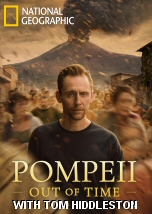
Tom Hiddleston returns to the ancient city that first awakened his fascination with the Roman world, determined to uncover a story far more human than the familiar tale of sudden destruction. Drawing on new archaeological evidence, expert analysis and vivid dramatic reconstruction, he follows three real Romans through the final hours before and during the eruption of Mount Vesuvius: Avianius, a headstrong young apprentice searching for his mother; Julia Felix, a wealthy and independent businesswoman responsible for an entire household; and a veteran soldier who risks everything to help others escape. As earthquakes intensify, ash begins to fall and burning avalanches race towards Pompeii and Herculaneum, every decision becomes a struggle between fear, loyalty and survival. Who understood the warning signs? Who fled, who stayed behind—and whose courage gave others a chance to live? Presented here as one uninterrupted feature containing all three episodes, this extraordinary journey allows viewers to experience the complete disaster from its first tremors to its devastating final surge, revealing Pompeii not simply as a city of death, but as an unforgettable story of ordinary people facing the end of their world.
This behind-the-scenes documentary offers an exclusive first look at HBO’s new television adaptation of the Harry Potter books, discovering how a new series is being built for a new generation. Narrated by Nick Frost, who plays Hagrid in the series, it opens the doors to the creative process behind the first season, from the search for the new young cast to the design of Hogwarts, the teachers, the costumes, the creatures and the magical world being carefully reimagined for television. Through interviews with key cast members and craftspeople, the documentary reveals the scale, responsibility and emotion behind bringing such an iconic story back to the screen. It is a fascinating preview for anyone curious about how the filmakers intends to transform the beloved books into a long-form series, showing the artistic care, technical ambition and enormous pressure involved in creating a new version of this legendary universe.
In the final two episodes, Dean Potter’s dream of pushing free solo climbing beyond anything seen before collides with the arrival of Alex Honnold, a younger climber capable of taking the sport into terrifying new territory. As both men circle the impossible challenge of El Capitan, Dean is forced to confront not only a rival, but the fear that his place at the edge of climbing history may be slipping away. What begins as a battle for greatness becomes something far more personal: A struggle with ego, identity, isolation and the dangerous need to keep proving himself when the world is already watching. As Dean’s mental health declines and some of his closest supporters begin to drift away, he takes a risky job in China and seems to move even closer to the edge. But a new relationship gives him a fragile sense of grounding, and his lifelong dream of flight finally comes into focus through the radical world of wingsuit flying. The final chapters become both breathtaking and haunting, following a man who searched for freedom in the air, in the mountains and in the spaces where fear becomes almost spiritual. Intimate, tense and deeply emotional, they reveal the beauty and tragedy of a life lived in pursuit of the impossible.
In the final two episodes of this series, the war enters its most devastating and transformative phase. As American forces endure the horrors of Okinawa and Japan refuses to surrender, President Harry Truman faces an almost unimaginable decision: whether to unleash the most terrible weapon ever created. The atomic bombings of Hiroshima and Nagasaki bring the conflict to a shocking end, but victory comes at a cost that will haunt humanity forever. With the Axis defeated, the world attempts to rebuild from unprecedented destruction. Yet the alliance between the United States and the Soviet Union rapidly collapses into suspicion and confrontation. From the division of Germany and the Berlin Blockade to the creation of NATO and the Soviet Union’s first atomic test, former allies become nuclear adversaries. The Second World War is over—but a new and even more dangerous struggle has begun, placing the entire world beneath the shadow of annihilation.


























The story then shifts to North Africa, where the Western Allies must prove they can fight Germany on land. In Operation Torch, inexperienced American troops and their untested commander, Dwight D. Eisenhower, join British forces in a dangerous gamble against the battle-hardened Afrika Korps and the legendary Erwin Rommel. Across deserts, ports, and unforgiving battlefields, the campaign becomes a harsh lesson in modern war, exposing Allied weaknesses while opening the road toward Europe. These two episodes combine moral catastrophe and military turning point, showing both the depths of Nazi evil and the first difficult steps toward its defeat.