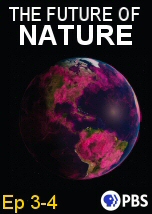
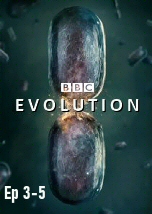
In the final two episodes, the focus shifts to forests and humanity’s defining role in the planet’s future. Ancient woodlands emerge as powerful engines of climate balance, storing vast amounts of carbon while sustaining intricate webs of life. Through striking visuals and frontline science, the documentary reveals how the health of the world’s forests is inseparable from the stability of Earth’s climate—and how their decline accelerates global risk. The story then turns inward, asking what responsibility humans bear in shaping what comes next. From indigenous stewardship to bold restoration projects, these episodes explore how human choices can either deepen the crisis or unlock nature’s capacity to heal. It’s a compelling conclusion that reframes our relationship with the natural world, showing that the future of nature is, ultimately, the future of humanity itself.
In July 1970, Jimi Hendrix stepped onto the stage of the Atlanta Pop Festival before an audience of more than 300,000 people—the largest American crowd of his career. This film presents rare, restored footage of that historic Independence Day performance, where he delivered unforgettable renditions of classics like Hey Joe, Voodoo Child (Slight Return), and The Star-Spangled Banner. Alongside the music, interviews with Hendrix, his bandmates Mitch Mitchell and Billy Cox, and contemporaries such as Paul McCartney provide insight into his artistry and state of mind at the time. Framed against the cultural backdrop of Vietnam, civil rights struggles, and the countercultural movement, this documentary captures not only a milestone concert, but also the moment Hendrix became both a symbol and a voice for a restless generation.
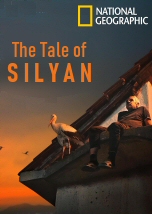
Click CC for subtitles. In a quiet North Macedonian village, a farmer forms an extraordinary bond with a white stork, a creature deeply rooted in local legend and seasonal ritual. What begins as a simple act of care gradually unfolds into a story where nature, folklore, and everyday life merge. Through patient observation and intimate storytelling, the documentary reveals how ancient beliefs still breathe beneath the surface of modern rural life. As the stork becomes both companion and symbol, the film explores themes of belonging, migration, and the fragile balance between humans and the natural world. Blending myth with reality, it offers a poetic meditation on tradition, resilience, and the invisible threads that tie a community to the rhythms of the land and sky.
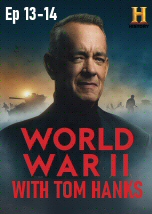
In episodes 13 and 14, the war reaches a decisive new stage as the Allies prepare to launch Operation Overlord and open the long-awaited second front in Nazi-occupied France. Behind the invasion of Normandy lies an enormous gamble of planning, deception, weather, timing and nerve, with Dwight D. Eisenhower carrying the weight of one of the most dangerous military decisions in history. From the beaches of D-Day to the struggle to break through Hitler’s Atlantic Wall, the episode captures the fear, scale and sacrifice of the operation that begins the liberation of Western Europe. The story then moves to World War II’s often overlooked Asian theater, where Allied forces and Japan fight across jungles, mountains, plains and impossible supply routes. In Burma, India and China, commanders such as Joseph Stilwell, William Slim and Lord Mountbatten face a brutal war of disease, exhaustion, monsoon terrain and relentless Japanese resistance. From the Burma Road and the deadly airlift over the Hump to the fighting at Myitkyina, Imphal and Saipan, these episodes reveal a vast and punishing conflict far from Europe’s headlines, where survival itself becomes a battle and victory demands endurance on a staggering scale.
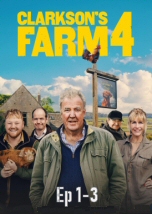
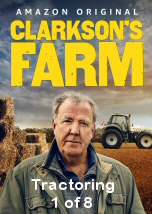
With a humorous and surprisingly revealing look at modern farming, this documentary series follows Jeremy Clarkson as he trades fast cars and city life for the unpredictable challenges of running a working farm in the English countryside. What begins as an ambitious new venture soon becomes a constant battle against weather, bureaucracy, livestock, machinery, and the harsh realities faced by farmers every day. Combining stunning rural landscapes with Clarkson's trademark humor, the series offers an entertaining and eye-opening glimpse into life on the land. In the first three episodes, Jeremy finds himself largely on his own as key members of the team are away, forcing him to take greater responsibility for the farm's daily operations. Persistent rain threatens crucial planting schedules, while new equipment, a new farmhand, and even a potential new business opportunity provide fresh challenges and unexpected lessons. As he searches for a local pub to expand his ambitions, Jeremy also faces competition, difficult decisions, and the constant pressure of keeping the farm running in an environment where success often depends on factors completely beyond his control.
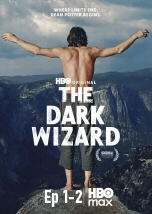
Dean Potter emerges as one of the most daring and controversial figures in modern adventure, a climber, highline walker and BASE jumper driven by an almost mystical need to move toward fear. Through breathtaking footage, personal reflections and the voices of those who knew him, this documentary explores how he turned cliffs, voids and impossible lines into places of freedom, beauty and danger. But behind the legendary ascents and world records lies a more fragile and divided man, struggling with relationships, identity, obsession and the heavy cost of living as if every boundary were meant to be broken. In the first two episodes, Dean finds escape and joy in extreme climbing, pushing himself through bold ascents, speed records and free-solo feats that make him both admired and misunderstood. As his rebellious image grows, so do the pressures around his personal life and the risks he is willing to take. He searches for peace in highlining, BASE jumping and the terrifying purity of climbing without a rope, while his “Dark Wizard” persona attracts devoted followers and fierce criticism. Then a new force enters the climbing world: Alex Honnold, whose arrival threatens Dean’s place at the edge of the sport and turns admiration, rivalry and fear into a powerful new chapter.










The story then turns inward, asking what responsibility humans bear in shaping what comes next. From indigenous stewardship to bold restoration projects, these episodes explore how human choices can either deepen the crisis or unlock nature’s capacity to heal. It’s a compelling conclusion that reframes our relationship with the natural world, showing that the future of nature is, ultimately, the future of humanity itself.