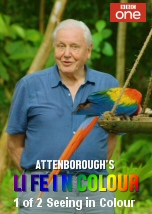
The natural world is full of colours. For us, they are a source of beauty, but for animals they are a tool for survival. David Attenborough reveals the extraordinary ways in which animals use colour: to win a mate, to fight off rivals and to warn enemies. New camera technologies - some developed especially for this series – also allow us to see colours and patterns usually invisible to human eyes. Ultraviolet cameras reveal bright signals on a butterfly’s wings and facial markings on yellow damselfish that are used as secret communication channels. Some animals can also detect polarized light, and specialist cameras can now show us how fiddler crabs see the world, and how mantis shrimp have strange polarization patterns on their bodies to signal to a mate or rival.
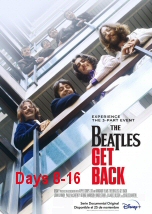
Step into the Beatlemania Era: Beatles '64 takes you back to February 1964, when four young musicians from Liverpool turned the United States upside down. Relive the frenzy of their iconic debut on The Ed Sullivan Show, watched by over 73 million viewers, and feel the pulse of their groundbreaking performance at the Washington Coliseum. Featuring rare, never-before-seen footage captured by acclaimed filmmakers Albert and David Maysles, digitally restored, this documentary unearths the Beatles’ meteoric rise to superstardom and the cultural revolution they ignited. Experience History Reimagined: With fresh insights from Paul McCartney and Ringo Starr, and audio remixed using cutting-edge technology by Giles Martin, Beatles '64 brings the spirit of the era to life like never before. Explore the personal dynamics of the Fab Four as they navigate a whirlwind of fame, fan hysteria, and musical innovation. Accompanied by a vibrant soundtrack featuring their timeless hits, this film immerses you in an extraordinary moment when music and culture collided, changing the world forever.
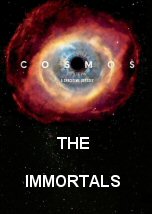
This episode covers the nature of how life may have developed on Earth and the possibility of life on other planets. Tyson begins by explaining how the human development of writing systems enabled the transfer of information through generations, describing how Princess Enheduanna ca. 2280 BCE would be one of the first to sign her name to her works, and how Gilgamesh collected stories, including that of Utnapishtim documenting a great flood comparable to the story of Noah's Ark. Tyson explains how DNA similarly records information to propagate life, and postulates theories of how DNA originated on Earth, including evolution from a shallow tide pool, or from the ejecta of meteor collisions from other planets. In the latter case, Tyson explains how comparing the composition of the Nakhla meteorite in 1911 to results collected by the Viking program demonstrated that material from Mars could transit to Earth, and the ability of some microbes to survive the harsh conditions of space. With the motions of solar systems through the galaxy over billions of years, life could conceivably propagate from planet to planet in the same manner. Tyson then moves on to consider if life on other planets could exist. He explains how Project Diana performed in the 1960s showed that radio waves are able to travel in space, and that all of humanity's broadcast signals continue to radiate into space from our planet. Tyson notes that projects have since looked for similar signals potentially emanating from other solar systems. Tyson then explains that the development and lifespan of extraterrestrial civilizations must be considered for such detection to be realized. He notes that civilizations can be wiped out by cosmic events like supernovae, natural disasters such as the Toba disaster, or even self-destruct through war or other means, making probability estimates difficult. Tyson describes how elliptical galaxies, in which some of the oldest red dwarf stars exist, would offer the best chance of finding established civilizations. Tyson concludes that human intelligence properly applied should allow our species to avoid such disasters and enable us to migrate beyond the Earth before the Sun's eventual transformation into a red giant.
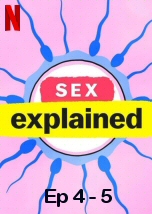
In Episodes 4 and 5, you can see how the most universal human desire—to bring new life into the world—collides with science, culture, and the limits of our own biology. From groundbreaking fertility treatments that promise hope to countless families, to the hidden struggles behind why so many people still can’t conceive, these episodes reveal the fascinating and often heartbreaking reality of reproduction today. You’ll also witness the raw, unfiltered experience of itself: the intense pain, the unexpected complications, and the inspiring ways doctors and parents try to make this incredible ordeal safer and more humane.
It's a timeless classic of children's literature and the third most-quoted book in English after the Bible and Shakespeare. But what lies behind the extraordinary appeal of Alice's Adventures in Wonderland to generations of adults and children alike? To mark the 150th anniversary of its publication, this documentary explores the life and imagination of the man who wrote it, the Reverend Charles Dodgson, better known as Lewis Carroll." Broadcaster and journalist Martha Kearney delves into the biographies of both Carroll himself and of the young girl, Alice Liddell, who inspired his most famous creation. Kearney's lifelong passion for Carroll's work began as a young girl, when she starred as Carroll's heroine Alice in her local village play. She discusses the book with a range of experts, biographers and distinguished cultural figures - from the actor Richard E Grant to children's author Philip Pullman - and explores with them the mystery of how a retiring, buttoned-up and meticulous mathematics don, who spent almost his entire life within the cloistered confines of Christ Church Oxford, was able to capture the world of childhood in such a captivating way
Take a ride through the formation of the third planet from the Sun, Earth. A survivor of one of the most violent neighbourhoods in the universe, learn how earth was created and discover what creatures hold clues to how life began. What evil forces threaten the demise of Earth?














Ultraviolet cameras reveal bright signals on a butterfly’s wings and facial markings on yellow damselfish that are used as secret communication channels. Some animals can also detect polarized light, and specialist cameras can now show us how fiddler crabs see the world, and how mantis shrimp have strange polarization patterns on their bodies to signal to a mate or rival.