Minerva B is a small rocky planet just like earth, where spacecraft Artemis has found water, organic molecules, and complex creatures. Is there something more to find? 'I am the mind of the spaceship, alone among the stars. 50 years ago, from a planet far away, the planet you call home, I launched. A journey of 28 trillion miles across the yawning time of space to the exoplanet, Minerva B: a small, rocky planet, much like Earth, but orbiting another sun. Here, I have found water, organic molecules, and microorganisms. When the news of my discovery reaches Earth years from now, some of you will be amazed. But others will remain unsatisfied, and you will ask, have I not found animals or birds? Have I not met intelligent life like us? And so, my search continues. I will find life of marvellous complexity, and the traces of a devastating loss.'
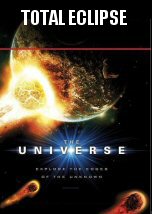
Once they were dreaded and thought to be dragons eating the sun--but modern science has dispelled mythology and we now look forward to total Solar Eclipses as one of the most spectacular phenomena in the heavens. Explore the complex movements of Earth, Moon and Sun that produce these unusual events and hear details why we may be the only intelligent beings in the known Universe to witness eclipses like we see on Earth. Man-made eclipses also figure into the science in the form of instruments called "coronagraphs." They blot out the sun and reveal its corona, uncovering secrets which, while enlightening, also warn of a disaster that could make our advanced technology crash and burn. Finally, travel into deep space, where the tiny eclipses caused by planets circling distant stars is now beginning to reveal hundreds more stars where "exoplanets" exist... perhaps even those in habitable zones like the Earth.
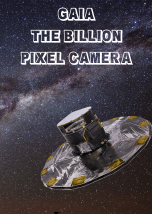
The Milky Way, our galaxy, is a magnificent sight in the night sky, but we know surprisingly little about it for certain. What is its shape? How many stars does it actually contain? What lies at its centre? The Gaia space telescope will answer these questions, being armed with the most advanced camera to leave our planet, and it will allow us to see our galaxy as we've never seen it before. The Sky at Night visits the factory in Chelmsford that made the astonishing sensor at the heart of the mission.
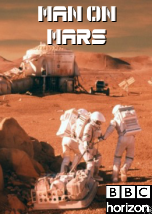
Let's go behind the scenes at NASA to discover how it is preparing for its most ambitious and daring mission: to land men - and possibly women - on the surface of Mars. It's over 40 years since Neil Armstrong made the first human footprint on the moon. But getting to the red planet would involve a journey of at least three years. Meet the scientists and engineers who are designing new rockets, new space suits and finding ways to help astronauts survive the perils of this long voyage. And it turns out that having the 'right stuff' for a mission to mars might not be quite what you expect.
Over the last years, the world has experienced an energy revolution, driven by an urgent need to green the grid and save life on Earth as we know it. 50 years ago, a devastating oil crisis kicked off an energy revolution. The world set course to cut the costly habit of burning fossil fuels. With the urgent new threat of a changing climate, the drive to unleash the power of the sun, earth and wind has accelerated into a race for humanity's survival. Change is taken place but, is it happening fast enough to secure our future? Technologies are right here, right now, and they will enable the transition to 100% renewables, because winning the energy race means a win for the entire world.
The climate is changing faster than ever, which is why 'fix our climate' is one of the five goals of the Earthshot Prize. Prince William, Sir David Attenborough and Christiana Figueres highlight inspiring and often unexpected solutions to the challenge. In this film, we'll explain the scale of the problem posed by climate change and will introduce you to some amazing people already working on climate crisis. One of these three finalists will win the Earthshot Prize and get the platform and resources they need to scale their ground-breaking work. Nine more solutions for fixing our climate will receive the same support over the course of this decade.















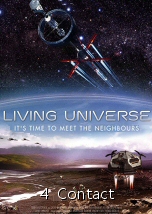







'I am the mind of the spaceship, alone among the stars. 50 years ago, from a planet far away, the planet you call home, I launched. A journey of 28 trillion miles across the yawning time of space to the exoplanet, Minerva B: a small, rocky planet, much like Earth, but orbiting another sun. Here, I have found water, organic molecules, and microorganisms. When the news of my discovery reaches Earth years from now, some of you will be amazed. But others will remain unsatisfied, and you will ask, have I not found animals or birds? Have I not met intelligent life like us? And so, my search continues. I will find life of marvellous complexity, and the traces of a devastating loss.'