A harrowing yet essential documentary uncovers the avoidable disaster that claimed 72 lives in one of the UK’s worst residential fires. Through powerful testimonies of survivors, families and firefighters, the film reveals how a series of decisions—by authorities, contractors and building managers—turned a seemingly routine refurbishment into a catastrophic inferno. Exploring decades of warnings ignored, regulatory failure and corporate negligence, the documentary stitches together hidden emails, inquiry evidence and personal pain to show exactly how this tragedy wasn't just a fire, but a systemic collapse. It is both a memorial for the lost and a call for justice for those still fighting the consequences.
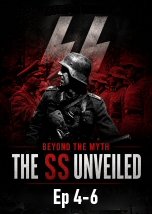
In the final three episodes of the series, the image of elite discipline surrounding the SS is stripped away to reveal a far darker and more disturbing reality. Behind the façade of military excellence lay poorly trained recruits driven not by honor, but by blind ideology and a complete absence of remorse. As their role expands from the battlefield to the brutal control of concentration camps, the narrative exposes how ordinary men became perpetrators of systematic violence, carrying out atrocities with chilling efficiency while maintaining the appearance of normal lives beyond their crimes. These episodes push further into the unsettling contrast between barbarity and everyday existence, showing how members of the SS could participate in unimaginable acts and then return to social settings as if nothing had happened. The story then draws a direct line to the present, confronting the uncomfortable truth that, despite overwhelming historical evidence, remnants of admiration and myth still persist in certain circles. It’s a gripping and unsettling conclusion that forces viewers to question how such distortion of memory can endure—and why it still matters today.
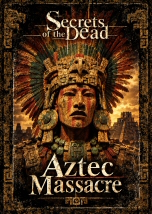
A mass grave at Zultepec, Mexico, containing more than 400 mutilated skeletons forces archaeologists to reconsider one of the most familiar stories of the Spanish conquest. Led by Aztec specialist Elizabeth Baquedano, the investigation follows forensic clues hidden in skulls, bones and artifacts to identify the victims and reconstruct what happened. Some remains prove to be European, including women, while Spanish-made iron objects and evidence of horses link the dead directly to the conquistadors who entered Mexico in the early sixteenth century. The evidence reveals a far more violent confrontation than the traditional image of an easy Spanish victory. Captured Spaniards and members of their entourage appear to have been imprisoned, ritually sacrificed, dismembered and, in some cases, consumed as part of ceremonial practices. By combining archaeology, forensic anthropology and Aztec codices, the documentary shows that indigenous resistance to the conquistadors could be organized, successful and terrifyingly effective, transforming Zultepec into crucial physical evidence of a conflict that history had long oversimplified.
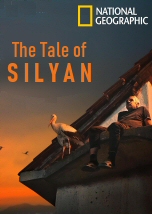
Click CC for subtitles. In a quiet North Macedonian village, a farmer forms an extraordinary bond with a white stork, a creature deeply rooted in local legend and seasonal ritual. What begins as a simple act of care gradually unfolds into a story where nature, folklore, and everyday life merge. Through patient observation and intimate storytelling, the documentary reveals how ancient beliefs still breathe beneath the surface of modern rural life. As the stork becomes both companion and symbol, the film explores themes of belonging, migration, and the fragile balance between humans and the natural world. Blending myth with reality, it offers a poetic meditation on tradition, resilience, and the invisible threads that tie a community to the rhythms of the land and sky.
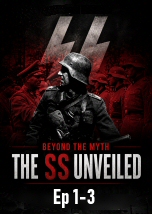
This powerful documentary examines the origins, ideology and evolution of one of the most feared organizations of Nazi Germany. It explores how the SS (Schutzstaffel) transformed from a small protective unit into a vast and ruthless machine that played a central role in the Holocaust. Through detailed analysis and historical evidence, it reveals the distorted beliefs, calculated strategies and systematic brutality that defined its actions, offering a chilling insight into how ordinary structures were turned into instruments of terror on an unprecedented scale. In the first three episodes, the focus turns to the rise of the SS and the individuals who helped shape its power. It traces how recruits were selected and why the organization appealed to certain men, uncovering the mindset behind their commitment. The story delves into the figure of Heinrich Himmler, an unlikely leader whose vision and ambition drove the expansion of the SS, as well as Reinhard Heydrich, whose cold and methodical approach made him one of the key architects of the Holocaust. Together, these episodes reveal how leadership, ideology and personal ambition combined to fuel one of history’s darkest forces.
In episodes 9 and 10 of this series, the war moves from the secrecy of codebreaking rooms to one of the most brutal battlefields in history. Far from the front lines, in the quiet English countryside, a hidden struggle unfolds at Bletchley Park, where brilliant mathematicians, linguists and intelligence officers race to crack Germany’s Enigma code. Every intercepted message could save ships, reveal enemy plans and alter the fate of entire campaigns, turning silence, patience and genius into weapons as powerful as tanks or bombers. The story then shifts to the Eastern Front, where Hitler launches Operation Blue in a desperate drive toward the Soviet oil fields and the city of Stalingrad. What begins as a strategic offensive becomes a nightmare of street-by-street combat, starvation, freezing conditions and unimaginable sacrifice. As German forces are pulled deeper into the ruins and Soviet resistance hardens, Stalingrad becomes more than a battle for a city; it becomes a turning point in World War II, where ambition, endurance and catastrophe collide on a scale that changed the course of the war.













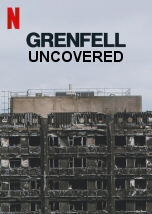

Exploring decades of warnings ignored, regulatory failure and corporate negligence, the documentary stitches together hidden emails, inquiry evidence and personal pain to show exactly how this tragedy wasn't just a fire, but a systemic collapse. It is both a memorial for the lost and a call for justice for those still fighting the consequences.