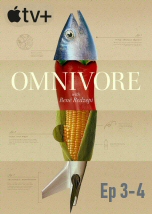
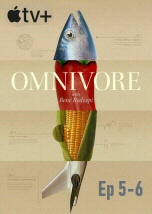
In episodes 3 and 4, a seemingly simple ingredient becomes the invisible force that has shaped civilizations, fueled exploration, and quietly dictated the fate of empires. From ancient trade routes to modern industry, salt emerges not just as a seasoning, but as a powerful driver of human history and survival. At the same time, the story shifts to something far more familiar yet equally unsettling: the global dominance of a single type of banana. What appears to be abundance hides a fragile system built on uniformity, where one disease could wipe out a staple food relied upon by millions. As the journey unfolds, the narrative exposes the hidden cost of convenience and monoculture, revealing how the loss of biodiversity is not a distant ecological concern but an immediate threat to our food security and future. With striking connections between past and present, these episodes invite you to rethink what you eat, where it comes from, and how something as ordinary as salt or a banana could hold the key to understanding the balance—and imbalance—of our world.
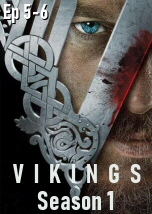
In episodes 5 and 6, Ragnar’s rise becomes a mortal threat to Earl Haraldson, as prophecy, fear and ambition turn Kattegat into the center of a brutal struggle for power. After the Seer warns that Ragnar seeks his death, Haraldson moves from suspicion to violence, attacking Ragnar’s home and torturing Rollo in an attempt to destroy the challenger before he can grow stronger. Wounded, hunted and betrayed, Ragnar must decide whether survival is enough, or whether the time has come to confront the man who has ruled his people through fear. The conflict explodes into a direct challenge that will decide the future of Kattegat. Still weakened but driven by destiny, Ragnar faces the Earl in a duel where honor, vengeance and leadership are at stake. What follows is not only a fight between two men, but the collapse of an old order and the birth of a new one. With funerals, rituals, loyalty and sacrifice surrounding the change of power, these episodes reveal the dark beauty of Viking tradition and the moment when Ragnar Lothbrok’s legend truly begins to rise.
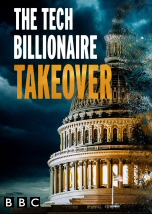
As a handful of tech billionaires accumulate unprecedented wealth, they are no longer just disrupting industries—they are challenging the very foundations of democracy, finance, and national sovereignty. With remarkable access to their world, this eye-opening investigation encounters figures such as cryptocurrency mogul Justin Sun, venture capitalist Tim Draper, and influential technology investor Peter Thiel, uncovering ambitious plans to create private cities, experimental micronations, and new technology-driven forms of government. From blockchain empires such as Tron to radical schemes designed to bypass traditional institutions, their ultimate goal may be nothing less than reshaping the global financial and political order. Travelling from Silicon Valley to controversial territories where these ideas are being tested, the film reveals the extraordinary ambitions of a new technological elite. As private fortunes gain influence once reserved for governments, one unsettling question emerges: are these visionaries building a freer future—or quietly creating a world governed by rules written by the ultra-rich?
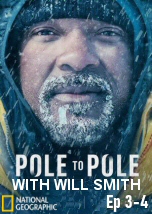
In episodes 3 and 4, the journey intensifies as Will Smith pushes deeper into both the physical and emotional extremes of the planet. In the Amazon, he ventures into dense, unforgiving jungle in search of the elusive green anaconda, confronting fear, danger, and the raw power of one of Earth’s most mysterious predators. Guided by local experts, the expedition becomes a test of courage and trust in a world where nature sets all the rules. The adventure then shifts dramatically to the Himalayas, where the challenge is no longer survival but meaning. High above the clouds, Will explores the idea of happiness alongside monks, scientists, and mountain communities, discovering how isolation, altitude, and ancient wisdom reshape the human mind. Together, these episodes connect the wildness of nature with the inner journey of self-discovery, revealing that the greatest expedition may be the one within.
In episodes 5 and 6, you can see how two everyday foods open the door to something far bigger: Memory, survival, tradition and the uneasy bond between humans and the natural world. One journey takes you to La Alberca, in Spain, where the pig is not just an animal but part of a living ritual charged with history, pride and contradiction. The other leads into the rice fields of Kerala, India, where every grain carries the weight of climate, heritage and the fight to preserve ways of life that are slipping away. These chapters do far more than show food on a plate: they reveal beauty, tension and the hidden forces that sustain entire cultures, making each scene feel rich, intimate and impossible to forget.
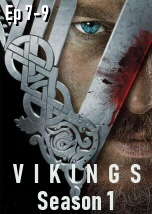
In the final three episodes of Season 1, Ragnar's ambition drives him toward his boldest gamble yet as a daring raid strikes at the heart of one of England's most powerful kingdoms. While victory promises unimaginable wealth and lasting fame, every decision carries devastating consequences, forcing alliances to shift and loyalties to be tested in ways no one expects. As the Vikings make their sacred pilgrimage to Uppsala, faith, sacrifice, and destiny collide in an unforgettable journey that changes the lives of Ragnar, Lagertha, and Athelstan forever. Political intrigue soon follows when Ragnar is sent to negotiate with the dangerous Jarl Borg, where diplomacy hangs by a thread and a single mistake could ignite a brutal conflict. Filled with epic battles, emotional turning points, and unforgettable characters, these episodes deliver a gripping conclusion that leaves you eager for the next season.











As the journey unfolds, the narrative exposes the hidden cost of convenience and monoculture, revealing how the loss of biodiversity is not a distant ecological concern but an immediate threat to our food security and future. With striking connections between past and present, these episodes invite you to rethink what you eat, where it comes from, and how something as ordinary as salt or a banana could hold the key to understanding the balance—and imbalance—of our world.