What begins as a fascination with rare and dangerous reptiles grows into a lucrative global underground built on smuggling, obsession and rivalry. From the eccentric dealers who helped create the exotic animal trade to the investigators determined to stop it, the series exposes a hidden world where protected species, major zoos, criminal networks and enormous sums of money collide. At its center are men such as Tommy Crutchfield and Hank Molt, whose bitter feud reveals how quickly passion for reptiles can turn into betrayal, trafficking and environmental damage. The documentary also shows how this trade helped reshape ecosystems and drove entire species closer to extinction. In the first three episodes, the story traces the rise of the reptile-smuggling world from the 1970s onward. The obsession with owning animals no one else could obtain fuels a booming illegal market, while authorities begin taking notice of dealers operating across borders. In Florida, Ray Van Nostrand enters the business and becomes entangled with Miami’s darker underworld of drug trafficking and gun-running, drawing the attention of the DEA. Later, his son Mike attempts to transform the family operation into a legitimate international import-export empire, only for old criminal connections and his father’s return to threaten everything he has built.
Eugene Levy, a celebrated actor and self-confessed travel skeptic forces himself into the discomfort of jetting across the globe, visiting dazzling destinations he would normally avoid. With his trademark wit and unease, he peels back the gloss of travel, dipping toes into local customs, natural wonders, and cultural rituals, transforming each journey into a quietly emotional reckoning with what it means to explore, to connect, and to grow. In episodes 1 through 4, the adventure starts in the Arctic north of Finland, where he tries ice fishing, feeds reindeer, rides in a husky sled and chases the aurora borealis. Then he plunges into the Costa Rican jungle, sleeping high among trees and confronting wild creatures. In Venice he lounges at a historic palazzo, bonds with a gondolier and reflects on his life and family. Finally, a helicopter drops him into the stark desert at Amangiri in Utah, where he absorbs breathtaking landscapes and engages with the Navajo Nation while battling his own nerves.
In the final three episodes, the investigation takes a decisive turn when the Frankfurt luggage records and bomb-damaged clothing recovered from the wreckage lead Scottish detectives to Malta. A small clothes shop and the memory of a mysterious customer begin to connect the bomb to a wider international network, while cooperation between Scottish police, the FBI and the CIA becomes increasingly strained. As investigators follow the trail toward Libya, a secret CIA source and similarities with another aircraft bombing appear to offer the breakthrough they have been searching for. More than a decade after Pan Am Flight 103 was destroyed, the case finally reaches the courtroom. Following years of political negotiation, two Libyan suspects stand trial under Scottish law at Camp Zeist in the Netherlands. But the prosecution still depends on fragile witness testimony and painstaking forensic evidence assembled across several countries. As key witnesses are challenged and doubts emerge, the series builds toward a tense question that has haunted the victims’ families since 1988: will the investigation finally deliver justice?
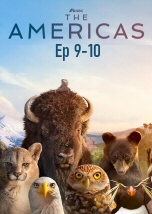
In the final two episodes, the journey reaches the Pacific edge of North America and the remote wilderness of Patagonia, two spectacular regions shaped by powerful oceans, towering forests and extreme weather. Along the West Coast, wolves comb the shoreline for food, sea otters battle crashing surf, blue whales gather in a rare display of speed and movement, and giant Pacific octopuses devote everything to protecting the next generation. High in the redwood canopy, even tiny salamanders perform extraordinary leaps to survive, revealing how life has adapted to one of the continent’s most dramatic coastal environments. The series then travels to the far south of the Americas, where Patagonia delivers a fittingly wild finale. Pumas stalk guanacos through snowy mountains, rockhopper penguins fight their way through violent waves to reach their colonies, giant stag beetles climb immense trees to compete for mates, and elephant seals clash for dominance along the coast. In one of the most remarkable scenes, a family of orcas passes down a dangerous hunting technique from one generation to the next, showing how survival here depends not only on strength, but also on experience, cooperation and learning.
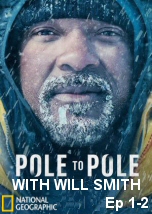
Inspired by his late mentor, Will Smith embarks on a 100-day, pole-to-pole odyssey that pushes him far beyond his comfort zone. Traveling alongside scientists, explorers, and local experts, he climbs remote mountains, dives beneath polar ice, and confronts the raw power of nature. The journey blends adrenaline and curiosity, revealing how extreme environments shape life—and how facing the planet’s edges can reshape us, too. In the first two episodes, the adventure begins with sweeping ambition and immediate immersion. Smith sets out on the global route with National Geographic, then plunges into the Amazon rainforest, tracking dangerous wildlife and learning from those who know the jungle best. It’s a vivid opening that sets the tone for a quest defined by discovery, risk, and awe at the natural world.
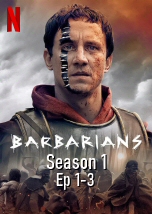
Click CC for subtitles. Torn between the Roman Empire that raised him and the Germanic people into which he was born, a Roman officer finds himself trapped between loyalty, identity and rebellion. As Rome tightens its grip over the tribes beyond the Rhine, resentment grows and old bonds are tested. At the center of the conflict stands Arminius, a man shaped by Roman discipline but increasingly confronted with the suffering of his own people, while Thusnelda and Folkwin become symbols of defiance against an empire that demands obedience at any cost. Based on real historical events and figures, the series reinforces its sense of authenticity by using Latin and Germanic dialogue, helping recreate the cultural and historical setting of the period as faithfully as possible. In the first three episodes, tensions erupt when the Cherusci are pushed beyond endurance by Governor Varus’s demands. Thusnelda and Folkwin strike a provocative blow against Roman authority by stealing the legion’s sacred eagle standard, triggering a brutal response. The crisis brings Arminius back face to face with his father Segimer and with the childhood friends he left behind. Ordered by Varus to hunt down Folkwin and return with his head, Arminius is forced into an impossible choice as Roman reprisals threaten Folkwin’s family, his village and the fragile loyalties that bind them all together.










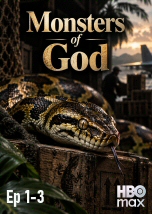




In the first three episodes, the story traces the rise of the reptile-smuggling world from the 1970s onward. The obsession with owning animals no one else could obtain fuels a booming illegal market, while authorities begin taking notice of dealers operating across borders. In Florida, Ray Van Nostrand enters the business and becomes entangled with Miami’s darker underworld of drug trafficking and gun-running, drawing the attention of the DEA. Later, his son Mike attempts to transform the family operation into a legitimate international import-export empire, only for old criminal connections and his father’s return to threaten everything he has built.